Dubai grew up around the car. Wide highways, dispersed districts and long summers made driving the default for decades. Over the past fifteen years, however, the emirate has invested heavily in alternatives: a driverless metro, a tram, a large bus network, water transport and a fast-growing web of cycling tracks. Its long-term plan now aims for neighbourhoods where most daily needs are reachable on foot or by bike.
This article summarises where Dubai's mobility system stands, using figures published by the Roads and Transport Authority (RTA) and the Government of Dubai Media Office, and looks at the particular challenge heat poses for low-carbon travel. All figures are dated; check official sources for later updates.
The metro: the backbone of the network
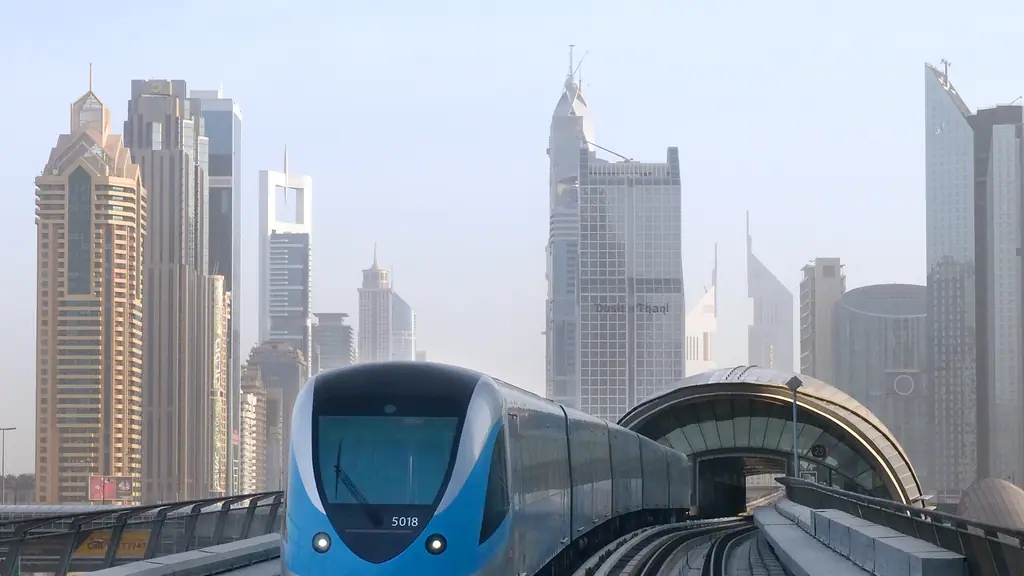
The Dubai Metro opened on 9 September 2009. By its fifteenth anniversary in September 2024, the Government of Dubai Media Office reported that the network had grown from 52 km to 90 km of lines, from 10 to 53 stations, and from 79 to 129 operating trains. The RTA describes it as the world's longest driverless metro.
Ridership has grown steadily. The metro's Red and Green lines carried 275.4 million riders in 2024, and 294.7 million in 2025, a 7% increase.
The Blue Line
The next major expansion is the Blue Line, approved in November 2023. At its foundation stone ceremony in June 2025, the Media Office described a 30 km line with 14 stations, including three interchanges, serving nine districts projected to house more than one million residents. It will be the first metro line to cross Dubai Creek, on a 1,300-metre viaduct, and is due to open in 2029. Once it does, Dubai's rail network (metro and tram combined) is expected to reach 131 km and 78 stations.
Tram, buses and water transport
The RTA describes the Dubai Tram as a 10.6 km line with 11 stations running along Al Sufouh Road and Jumeirah Beach Road, linking the metro with the Palm Monorail. It began operating in 2014.
According to the RTA's figures for 2025, published by the Media Office in February 2026:
| Mode | Riders in 2025 | Change from 2024 |
|---|---|---|
| Dubai Metro | 294.7 million | +7% |
| Public buses | 197.2 million | +5% |
| Marine transport (abras, water taxis, ferry) | 18.4 million | +3% |
| Dubai Tram | 9.9 million | +5% |
| Shared mobility | 72.9 million | +30% |
Counting taxis and shared mobility as well, total ridership reached 802.1 million in 2025, up from 747.1 million in 2024, with an average of 2.2 million riders a day. The metro accounted for 37% of all users, buses 25% and taxis 26%. The RTA noted that the taxi share fell for the third year in a row, which it interprets as a shift towards public transport.
The RTA also announced plans to extend dedicated bus and taxi lanes during 2025 and 2026, adding six corridors totalling 13 km and bringing the dedicated-lane network to 20 km. It is also studying a trackless tram, an electric vehicle guided by painted road markings, for eight locations.
Cycling: from leisure tracks to a transport network
Some of Dubai's best-known cycling tracks, such as those at Al Qudra and Saih Al Salam on the desert edge, mainly serve sport and leisure riding. Official policy now puts more weight on everyday trips, particularly first- and last-mile connections between homes and public transport stations.
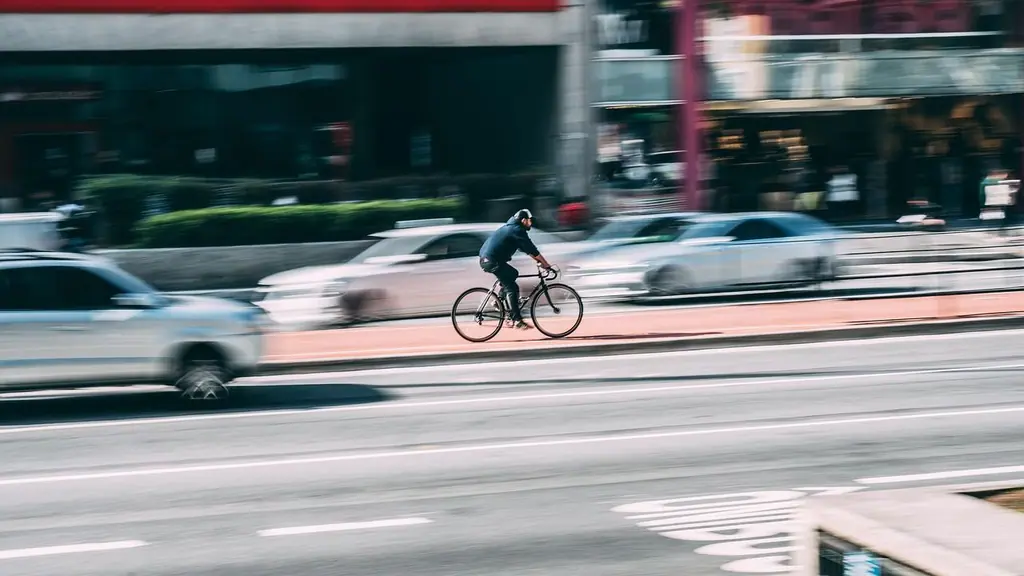
The RTA reported in March 2026 that its cycling track network grew from 560 km at the end of 2024 to 636 km by the end of 2025. Cycling trips rose from 46.6 million in 2024 to 57.3 million in 2025, and the RTA said 22.3% of Dubai's population now has access to cycling infrastructure. The stated target is 1,000 km of cycling tracks by 2030.
The same announcement described 13 newly completed tracks within a 15-track master plan totalling 162 km, linking areas such as Al Khawaneej, Al Mamzar Beach, Al Warqa'a, Saih Al Salam, DIFC and Jumeirah. Several large pedestrian and cycling bridges over major highways, including Sheikh Zayed Road and Al Khail Road, were under construction to stitch the network together across roads that are otherwise major barriers.
Rules for riders
Cycling and micromobility in Dubai are governed by Executive Council Resolution No. 13 of 2022. Among its provisions, as set out in the resolution and the Media Office's summary of it: children under 12 may ride a pedal cycle only when accompanied by a cyclist aged at least 18; riders of e-bikes and e-scooters must be at least 16; cycling is not allowed on roads with speed limits above 60 km/h; and helmets and reflective vests are required. Our article on cycling to school covers what this means for families.
Dubai 2040 and the 20-minute city
The long-term framework is the Dubai 2040 Urban Master Plan, launched in March 2021. It projects the resident population rising from 3.3 million in 2020 to 5.8 million by 2040, and concentrates growth in five urban centres rather than spreading it outward. The plan aims to double green and recreational space, keep nature reserves and rural areas at 60% of the emirate's land, increase population densities around key mass transit stations, and encourage mass transit, walking and cycling.
Phase II, approved in December 2022, added a 20-Minute City Policy and a Pedestrian Network Master Plan. The goal is for residents to reach 80% of their daily needs and destinations within 20 minutes on foot or by bicycle, supported by integrated service centres and higher densities around transit stations.
This matters for the climate because the IPCC identifies compact, mixed-use urban form as one of the most effective long-term ways to reduce transport demand. A metro line delivers more when homes, schools and shops cluster within walking or cycling distance of its stations.
The heat challenge
No discussion of low-carbon travel in Dubai is complete without the climate. The Government of Dubai Media Office describes summers as extremely hot and humid, with average highs around 41.8 °C and overnight lows around 29.7 °C. Walking ten minutes to a station at midday in August is a very different proposition from doing so in January.
Dubai's responses include:
- Cooled waiting areas. In May 2026 the RTA said its air-conditioned bus shelter network comprised 895 shelters at 621 locations, inspected ahead of each summer.
- Bridges and continuous routes. Grade-separated crossings reduce waiting time in the sun at junctions.
- Station-focused cycling. Short feeder trips to air-conditioned trains are more realistic in summer than long rides.
Even so, heat shapes when and how people travel. Continuous shade along walking and cycling routes is hard to provide in a desert city, where every street tree needs irrigation; we discuss this in sustainable mobility in arid regions. We look at practical design responses in sustainable transportation in hot climates.
What to watch
Dubai's mobility indicators are moving in a lower-carbon direction: rising public transport ridership, a falling taxi share and rapid growth in cycling infrastructure. The open questions are about integration and land use. Will new districts be built densely enough around stations? Will cycling tracks form a continuous, shaded network rather than isolated loops? And can the 20-minute city target be met in neighbourhoods originally laid out for driving?
Key takeaways
- As of September 2024, the Dubai Metro had 90 km of lines and 53 stations; it carried 294.7 million riders in 2025.
- Total public transport, shared mobility and taxi ridership reached 802.1 million in 2025, with the metro the largest single mode.
- Cycling tracks grew from 560 km (end of 2024) to 636 km (end of 2025), with a 1,000 km target for 2030.
- The Dubai 2040 Urban Master Plan aims for 80% of daily needs within 20 minutes on foot or by bicycle.
- Extreme summer heat makes shaded, cooled and well-connected infrastructure essential for car-free trips.
Frequently asked questions
How long is the Dubai Metro?
The Government of Dubai Media Office gave the network as 90 km with 53 stations in September 2024. The Blue Line, scheduled for 2029, will add 30 km and 14 stations.
Can children cycle in Dubai?
Yes, with conditions. Under Executive Council Resolution No. 13 of 2022, children under 12 must be accompanied by a cyclist aged 18 or over, and e-bikes and e-scooters are limited to riders aged 16 and above. Helmets and reflective vests are required.
What is the 20-minute city?
It is a policy within Phase II of the Dubai 2040 Urban Master Plan that aims to let residents reach 80% of daily needs and destinations within 20 minutes on foot or by bicycle.
Sources
- Dubai Metro marks 15 years of transforming urban mass transit, carrying 2.4 billion riders across the city Government of Dubai Media Office, 2024
- 802 Million Riders Used Public Transport, Shared Mobility and Taxis in 2025 Government of Dubai Media Office, 2026
- Mohammed bin Rashid lays foundation stone for Dubai Metro Blue Line Government of Dubai Media Office, 2025
- Executive Council Resolution No. (13) of 2022 Regulating the Use of Bicycles in the Emirate of Dubai Roads and Transport Authority (RTA), Dubai, 2022
- Public Transport Roads and Transport Authority (RTA), Dubai, n.d.
- RTA Completes 13 Cycling Tracks Across Dubai Government of Dubai Media Office, 2026
- Mohammed bin Rashid launches Dubai 2040 Urban Master Plan Government of Dubai Media Office, 2021
- Mohammed bin Rashid approves Phase II of Dubai 2040 Urban Master Plan, reviews progress of the plan's first phase Government of Dubai Media Office, 2022
- RTA conducts field campaign to verify Bus shelter readiness ahead of Summer 2026 Government of Dubai Media Office, 2026
- Geographic Location & Climate Government of Dubai Media Office, n.d.
How this article was made: researched and drafted with the help of AI tools, then checked against the sources listed above. Read our editorial policy. Spotted an error? Tell us.