Cycling is often described as the cleanest way to get around a city, and the evidence broadly supports that reputation. A bicycle burns no fuel, takes up little road space and turns the trip itself into exercise. But the size of the environmental benefit is not fixed. It depends on which journeys the bicycle replaces, how long the bike stays in use, and whether streets are designed so that people feel safe riding.
This explainer sets out what the research says, drawing on the Intergovernmental Panel on Climate Change (IPCC), the World Health Organization (WHO) and peer-reviewed lifecycle studies.
Why transport matters for the climate
Transport is one of the hardest sectors to decarbonise. According to Chapter 10 of the IPCC's Sixth Assessment Report, direct greenhouse gas emissions from transport reached 8.7 gigatonnes of CO2-equivalent in 2019, up from 5.0 gigatonnes in 1990. That was 23% of global energy-related CO2 emissions, and road vehicles accounted for 70% of direct transport emissions.
The same chapter notes a growing recognition that technology alone will not be enough. Alongside electric vehicles and cleaner fuels, the IPCC points to demand-side measures: changes in urban form, behaviour and infrastructure that reduce the need for car travel or shift it to more efficient modes. It specifically notes that protected pedestrian and bike pathways can support much more local active travel, which it defines as journeys that require physical effort, such as walking or cycling.
How low are cycling's lifecycle emissions?
No vehicle is truly zero-emission once you count its whole life: extracting materials, manufacturing, shipping, use, maintenance and disposal. Lifecycle assessment (LCA) is the method used to add these up per passenger-kilometre (pkm).
A 2022 review chapter by Christian Brand and colleagues, Cycling, climate change and air pollution, summarises central estimates from an assessment by the OECD's International Transport Forum (ITF). Excluding road and path infrastructure, those estimates were roughly:
| Vehicle | Lifecycle emissions (g CO2-eq per pkm) | Share from production |
|---|---|---|
| Privately owned bicycle | about 7 | almost all |
| Privately owned e-bike | about 24 | about half |
| Shared bicycle | about 48 | about half |
| Shared e-bike | about 74 | about half |
The authors note that infrastructure adds roughly 9 to 10 g CO2-eq per pkm for both conventional bikes and e-bikes, and that the figures are central estimates with real uncertainty. Their broader conclusion is that privately owned bikes and e-bikes that are used regularly have the lowest lifecycle greenhouse gas emissions per kilometre of the urban modes compared.
Two details in that analysis are worth highlighting:
- Lifetime matters. The ITF assumptions used a typical private bike lifetime of eight years, cut to 5.6 years once theft, crashes and vandalism are accounted for. Because manufacturing dominates a bicycle's footprint, every extra year of use lowers emissions per kilometre. We explore this further in extending the useful life of a bicycle.
- Shared fleets carry extra overheads. Shared bikes had much shorter assumed lifetimes and needed vans to redistribute and recharge them, which raised their per-kilometre emissions.
What about the food a cyclist eats?
Some estimates add the extra food needed to power a rider. Brand and colleagues found the evidence inconclusive on whether everyday active travel, as opposed to sport, significantly increases how much people eat. Figures that include a large dietary component should therefore be read with caution.
The key question: which trip is being replaced?
A low per-kilometre figure only becomes a climate benefit if cycling replaces something more carbon-intensive. If an e-bike mainly replaces walking, emissions can actually rise slightly. If it replaces car trips, the savings can be substantial.
The best evidence on this comes from a longitudinal study published in Global Environmental Change in 2021. Researchers followed 1,849 people across seven European cities and calculated their mobility-related lifecycle CO2 emissions over time. They found that:
- When people cycled or walked more, their mobility emissions fell, which suggests active travel substituted for motorised trips rather than adding to them.
- An average person who cycled one more trip a day and drove one fewer, for 200 days a year, would cut mobility-related lifecycle CO2 by about half a tonne a year.
- The largest gains came from switching business trips, followed by social and recreational trips, then commuting.
These benefits appeared even in cities that already had high walking and cycling shares. The authors concluded that promoting active travel while discouraging private car use should be central to net-zero strategies in urban areas.
Cleaner air and quieter streets
Bicycles produce no exhaust. That matters because air pollution is a major health threat: the WHO estimates that ambient outdoor air pollution caused 4.2 million premature deaths worldwide in 2019, and it lists cleaner transport among the policies that would reduce key sources of outdoor pollution.
Cycling does not eliminate all pollution. Brakes, tyres and road surfaces shed particles, and e-bikes draw electricity whose emissions depend on how it is generated. But compared with motor traffic, the local pollution from cycling is very small.
Space is another environmental factor that is easy to overlook. Brand and colleagues note that infrastructure-related emissions are most relevant for vehicles that need a lot of road lane and parking space, chiefly private cars. Land that is not needed for car lanes and car parks can be used for trees, shade, housing or public space. Our guide to nature-based solutions in cities looks at how that space can be used.
Health co-benefits
The environmental case for cycling is strengthened by its health benefits, which in turn reduce pressure on health systems.
According to the WHO's physical activity fact sheet, people who are insufficiently active have a 20 to 30% higher risk of death than those who are sufficiently active. The WHO estimates that 31% of adults worldwide, about 1.8 billion people, do not meet recommended activity levels, and it lists cycling among the popular ways to stay active. Among the policies it recommends are those that ensure access to walking, cycling and other non-motorised transport.
To help planners put a value on these effects, the WHO developed the Health Economic Assessment Tool (HEAT) for walking and cycling. It estimates the health and economic impacts of changes in walking and cycling, and also considers road crashes, air pollution exposure and carbon effects. The WHO says the tool has been adapted for global use, and its 2024 methods update added an e-biking function.
The limits: safety and infrastructure
Cycling's benefits come with a real caveat. The WHO reports that about 1.16 million people die in road traffic crashes each year, and more than half of all road deaths are among vulnerable road users, including pedestrians, cyclists and motorcyclists.
This is why the IPCC emphasises infrastructure rather than individual choice alone. Its chapter on transport says cities could reduce their transport-related fuel consumption by around 25% through more compact land use combined with less car-dependent infrastructure. The IPCC's Summary for Policymakers adds, with high confidence, that investment in active transport infrastructure such as bicycle and pedestrian pathways can support a shift to less greenhouse-gas-intensive modes.
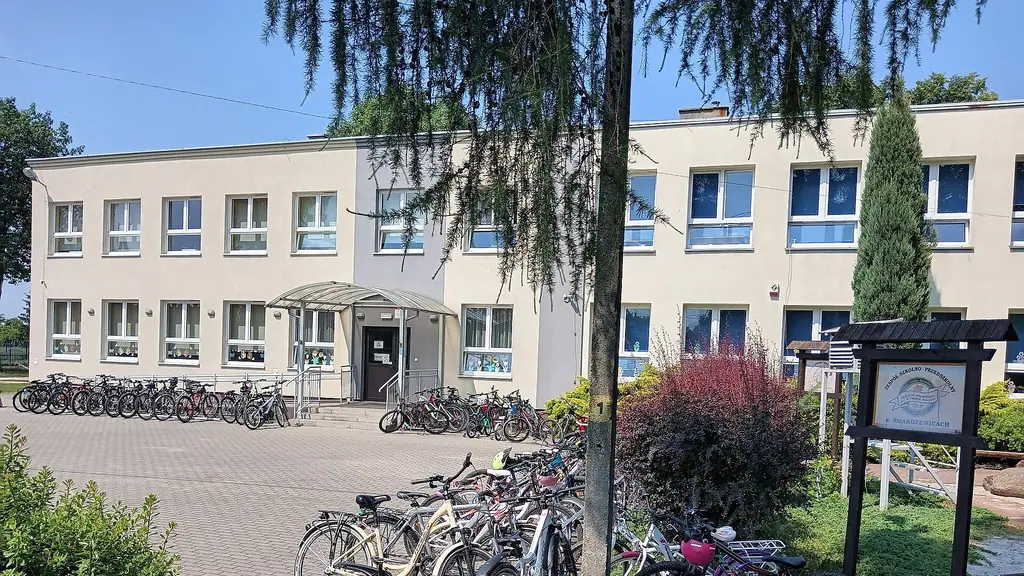
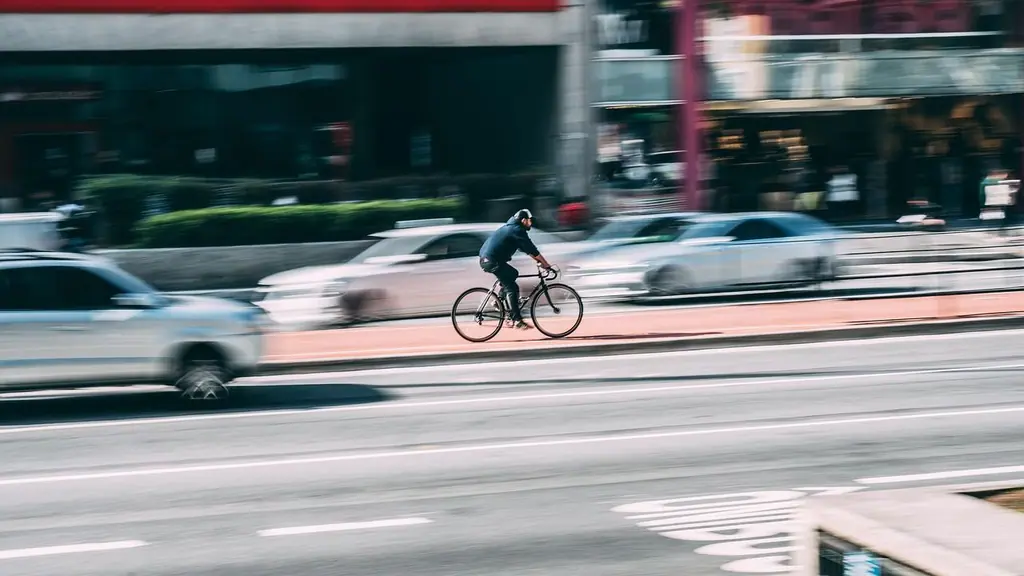
In practice, that means protected lanes, safe junctions, lower traffic speeds, secure parking and networks that actually connect homes, schools, shops and public transport stations.
Practical ways to increase the benefit
For individuals and families:
- Replace car trips first. The climate benefit is largest when the bike substitutes for a drive, especially short errands and regular commutes.
- Keep one bike going for longer. Maintenance, repair and secure storage reduce the need for new bikes. See bicycle repair and the circular economy.
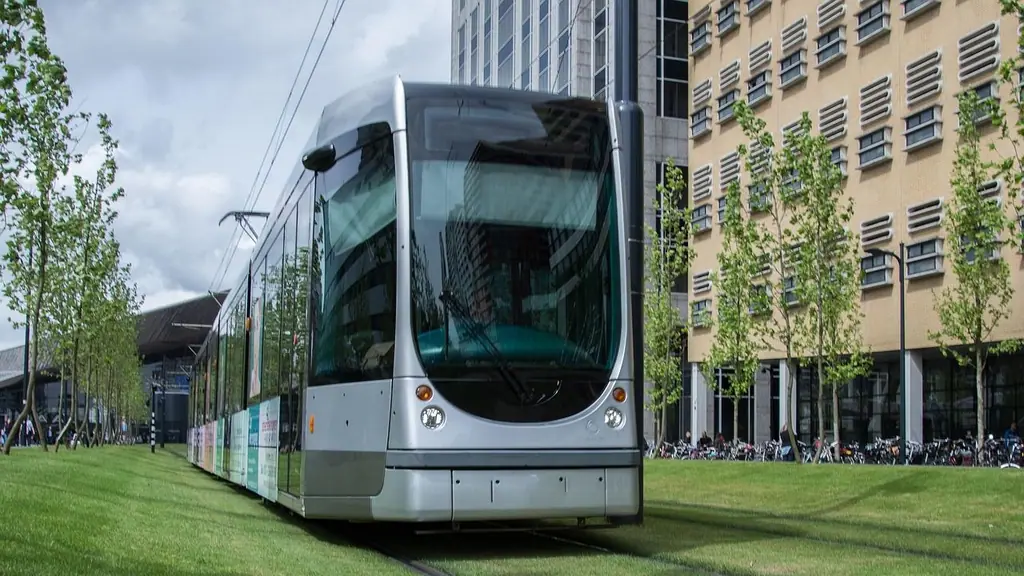
- Combine modes. A bike ride to a metro or bus stop can replace a whole car journey.
For cities and schools:
- Build continuous, protected routes rather than isolated stretches.
- Provide secure bike parking at stations, schools and workplaces.
- Use tools such as the WHO's HEAT to assess the health value of cycling projects.
Families looking for wider ideas can read our guide to sustainable transportation for families.
Key takeaways
- Transport produced 8.7 Gt CO2-eq of direct emissions in 2019, with road vehicles responsible for 70%, according to the IPCC.
- Lifecycle estimates put regularly used private bicycles and e-bikes among the lowest-emitting urban modes per kilometre, with most of their footprint coming from manufacturing.
- The climate benefit depends on substitution: a European study estimated that swapping one car trip a day for a bike trip saves about 0.5 tonnes of CO2 a year.
- Cleaner air, physical activity and freed-up street space add to the environmental case.
- Safe, connected infrastructure is the main condition for these benefits to scale.
Frequently asked questions
Is an e-bike still good for the environment?
Yes, when it replaces car trips. Lifecycle estimates summarised by Brand and colleagues put a privately owned e-bike at roughly 24 g CO2-eq per passenger-kilometre, excluding infrastructure, compared with about 7 g for a conventional bike. Most of the difference comes from producing the battery and motor, and from charging electricity.
Does cycling really reduce emissions, or do people just travel more?
A seven-city European panel study found that increases in cycling or walking consistently lowered people's mobility-related emissions, suggesting the extra active travel replaced motorised trips rather than adding to them.
What is the single most useful thing a city can do?
The IPCC points to infrastructure: compact land use and protected pedestrian and bicycle pathways make it practical and safe for more people to choose active travel.
Sources
- Chapter 10: Transport. Climate Change 2022: Mitigation of Climate Change (Working Group III, Sixth Assessment Report) IPCC, 2022
- Summary for Policymakers. Climate Change 2022: Mitigation of Climate Change IPCC, 2022
- The climate change mitigation impacts of active travel: Evidence from a longitudinal panel study in seven European cities Global Environmental Change (Elsevier), 2021
- Cycling, climate change and air pollution (Advances in Transport Policy and Planning, Vol. 10, author accepted manuscript) University of Oxford Research Archive, 2022
- Physical activity (fact sheet) World Health Organization, 2026
- Ambient (outdoor) air pollution (fact sheet) World Health Organization, 2024
- HEAT for walking and cycling World Health Organization, 2024
- Road traffic injuries (fact sheet) World Health Organization, 2026
How this article was made: researched and drafted with the help of AI tools, then checked against the sources listed above. Read our editorial policy. Spotted an error? Tell us.