In many of the world's fastest-growing cities, the main obstacle to walking and cycling is not distance or hills but heat. When summer afternoons regularly pass 40 °C, a 15-minute walk to a bus stop or a bike ride to school can become uncomfortable or even dangerous. Climate change is making this challenge more common, including in places that were once temperate.
Giving up on low-carbon travel in hot weather would push more trips into air-conditioned cars, adding to the greenhouse gas emissions that are making heatwaves more frequent and intense. This guide looks at how cities and individuals can keep sustainable transport viable in the heat, drawing on guidance from the World Health Organization (WHO) and the Intergovernmental Panel on Climate Change (IPCC).
Why heat matters for travel
The WHO describes heat as an important environmental and occupational health hazard and a leading cause of weather-related deaths. Heat stress can worsen cardiovascular disease, diabetes, asthma and mental health conditions, and heatstroke is a medical emergency. The WHO cites studies estimating about 489,000 heat-related deaths a year between 2000 and 2019, and notes that heat-related mortality among people over 65 rose by around 85% between 2000–2004 and 2017–2021.
Exercise adds to the body's heat load. People walking or cycling in hot weather produce more internal heat at the same time as they absorb heat from the sun, the air and hot surfaces. The WHO notes that outdoor workers and athletes are particularly exposed to exertional heat stress, a category that can include delivery riders and people with long active commutes.
The WHO also stresses that the health impacts of heat are predictable and largely preventable. That gives planners and travellers a lot of room to act.
What the WHO advises individuals to do
The WHO's public advice on heat translates directly into travel habits:
- Avoid strenuous activity during the hottest time of day. Shift walking and cycling trips to early morning or evening where possible.
- Stay in the shade. The WHO notes that perceived temperatures in the sun can be 10 to 15 °C higher than in shade.
- Drink water regularly. Its guidance suggests about one cup an hour and at least 2 to 3 litres a day during hot periods.
- Wear light, loose-fitting clothing, and wet the skin with a damp cloth or spray to help cooling.
- Follow official heat warnings and check on vulnerable people.
For travellers, that adds up to a few practical rules: plan routes that maximise shade, carry water, slow down, and choose public transport or a shorter route when conditions are extreme. Anyone feeling dizzy, confused or nauseous should stop, cool down and seek help.
E-bikes: less effort, more reach
Electric-assist bicycles reduce the physical effort needed for a given speed and distance. In hot conditions, that can make the difference between arriving at work exhausted and arriving able to function, while still providing some physical activity.
The WHO recognised the growing role of e-bikes when it updated its Health Economic Assessment Tool (HEAT) in 2024: the tool, which estimates the health and economic effects of walking and cycling, was made globally applicable and gained an e-biking function.
E-bikes bring their own heat consideration: their lithium-ion batteries are sensitive to high temperatures. UK fire safety guidance from the Fire Kills campaign advises against charging or storing batteries in direct sunlight or in hot locations above 45 °C, and against charging unattended. In hot cities, that means not leaving batteries in parked cars or on sunny balconies. Our guide to extending the useful life of a bicycle covers battery care in more detail.
Designing networks for heat
Individual habits can only go so far. The bigger gains come from designing streets and transport systems that keep people cool.
Shade first
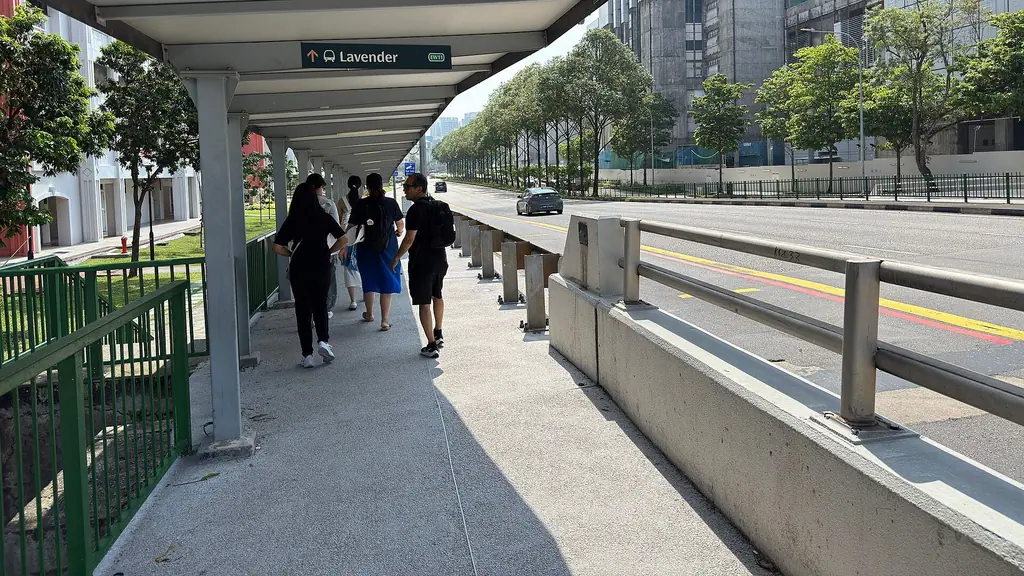
Continuous shade turns a hostile walk into a tolerable one. Shade can come from trees, arcades, canopies, building overhangs and covered walkways.
The IPCC's chapter on urban systems highlights urban green and blue infrastructure, including street trees, urban forests, green roofs and waterways, as offering cooling effects that reduce energy demand and help counter the urban heat island. It also notes a stark gap: urban tree cover averages 26.5% globally but only about 12% in desert regions. In dry climates, tree planting must be matched with water-efficient irrigation and drought-tolerant species, which is why built shade structures also play a role. Our explainer on heatwaves and urban heat islands goes deeper into how cities trap heat.
Short, direct, connected routes
Every minute of exposure counts. Networks that minimise detours, waiting at signals and long crossings of wide roads reduce heat exposure. The IPCC's transport chapter notes that appropriate infrastructure, including protected pedestrian and bike pathways, can support much greater local active travel, and that cities can cut transport fuel use by around 25% through more compact land use and less car-dependent infrastructure. Compact neighbourhoods also shorten trips, which matters more in heat than almost anywhere else.
Cooled stops and rest points
Public transport works best in hot cities when waiting and connecting are comfortable. Dubai offers examples. In May 2026, the Roads and Transport Authority said its network of air-conditioned bus shelters comprised 895 shelters at 621 locations, inspected before each summer. In February 2025 the authority reported completing 40 air-conditioned rest areas for delivery riders, each seating up to ten riders and designed to minimise sun exposure.
The Government of Dubai Media Office describes the city's summers as extremely hot and humid, with average highs around 41.8 °C, which shows why such facilities are part of basic mobility infrastructure there rather than a luxury. See sustainable urban mobility in Dubai for the wider picture.
Materials, green space and density
The WHO notes that cities are often not designed to minimise the build-up and generation of urban heat, pointing to the loss of green space and to building materials, such as metal roofs, that amplify exposure. The IPCC lists permeable surfaces and green roofs alongside street trees as green infrastructure with cooling co-benefits. It also flags a trade-off: in some contexts, high-density areas without adequate green and open space can intensify the urban heat island. Compact neighbourhoods that shorten trips therefore need to be designed with shade and planting from the start.
Integrating modes
In hot climates the most realistic low-carbon trip is often a combination: a short walk or bike ride in shade to a cooled station, then a train or bus. Secure bicycle parking at stations, bike carriage on trains, and first- and last-mile micromobility help make that chain work.
Timing, policy and culture
Cities can also adjust when activity happens:
- Schedules. School start times, outdoor work hours and deliveries can be shifted towards cooler parts of the day.
- Seasonal planning. Events that encourage cycling or walking can be held in cooler months.
- Heat warnings. The WHO works with meteorological services on heat-health warning systems, and its guidance encourages heat action plans that include schools and other public facilities.
Employers can help by providing showers, lockers and flexible start times, which make active commuting more practical in hot weather.
Key takeaways
- The WHO estimates around 489,000 heat-related deaths a year over 2000–2019 and says heat's health impacts are largely preventable.
- Avoid strenuous travel at the hottest times, seek shade, drink water regularly and follow heat warnings.
- E-bikes reduce effort in the heat, but their batteries should be kept out of direct sun and away from temperatures above 45 °C.
- Shade, short connected routes, cooled stops and cool surfaces are the core design tools for hot-climate mobility.
- Combining short active trips with cooled public transport is often the most realistic low-carbon option in extreme heat.
Frequently asked questions
Is it safe to cycle in very hot weather?
It can be, with precautions. Ride early or late in the day, choose shaded routes, slow down, carry water and stop if you feel unwell. On days of extreme heat or official warnings, public transport or postponing the trip may be the safer choice.
How much water should I drink when travelling in the heat?
WHO public guidance for hot weather suggests drinking water regularly, about one cup an hour and at least 2 to 3 litres a day. People with medical conditions should follow their doctor's advice.
Why not just drive in an air-conditioned car?
Car trips add to the greenhouse gas emissions that the WHO links to more frequent and intense heatwaves, and car-dependent cities tend to spread out, lengthening every trip. Well-designed shade, compact neighbourhoods and cooled public transport offer a way out of that cycle.
Sources
- Heat and health (fact sheet) World Health Organization, 2026
- Chapter 8: Urban systems and other settlements. Climate Change 2022: Mitigation of Climate Change IPCC, 2022
- Chapter 10: Transport. Climate Change 2022: Mitigation of Climate Change IPCC, 2022
- Health economic assessment tool (HEAT) for walking and for cycling. Methods and user guide: 2024 update WHO Regional Office for Europe, 2024
- RTA conducts field campaign to verify Bus shelter readiness ahead of Summer 2026 Government of Dubai Media Office, 2026
- RTA Completes Construction of 40 Air-Conditioned Rest Areas for Delivery Riders Government of Dubai Media Office, 2025
- E-bikes and e-scooters Fire Kills campaign, UK Government, n.d.
- Geographic Location & Climate Government of Dubai Media Office, n.d.
How this article was made: researched and drafted with the help of AI tools, then checked against the sources listed above. Read our editorial policy. Spotted an error? Tell us.