Conservation agriculture (CA) is a farming system built on a simple idea: disturb the soil as little as possible, keep it covered, and grow a variety of crops. No-till systems were tested on every continent from the 1960s and began to scale up in the 1980s and 1990s, mainly on larger mechanised farms in the Americas, Australia and a few other countries. CA has since been promoted worldwide, including to smallholder farmers in Africa and Asia.
The approach has clear soil benefits and strong advocates. It also has well-documented limits, particularly for yields on small farms in the short term and for claims about storing carbon. This article explains the principles, where CA has spread, and what the research shows.
FAO's three principles
The Food and Agriculture Organization of the United Nations (FAO) defines conservation agriculture as a farming system that promotes minimum soil disturbance, permanent soil cover and diversification of plant species. FAO states the three principles as follows:
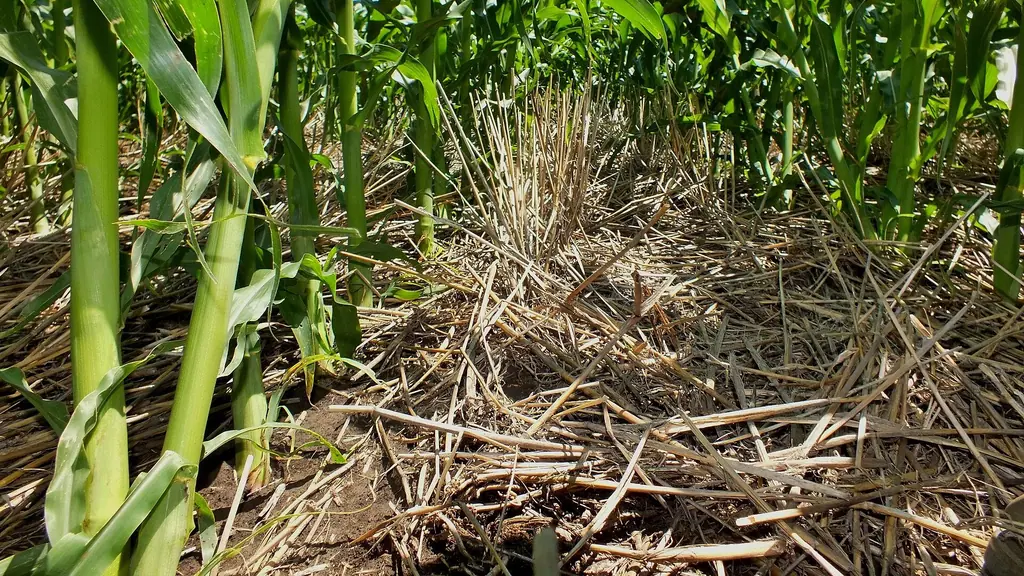
- Minimum mechanical soil disturbance. In practice this means no tillage, with seed and fertiliser placed directly into the soil.
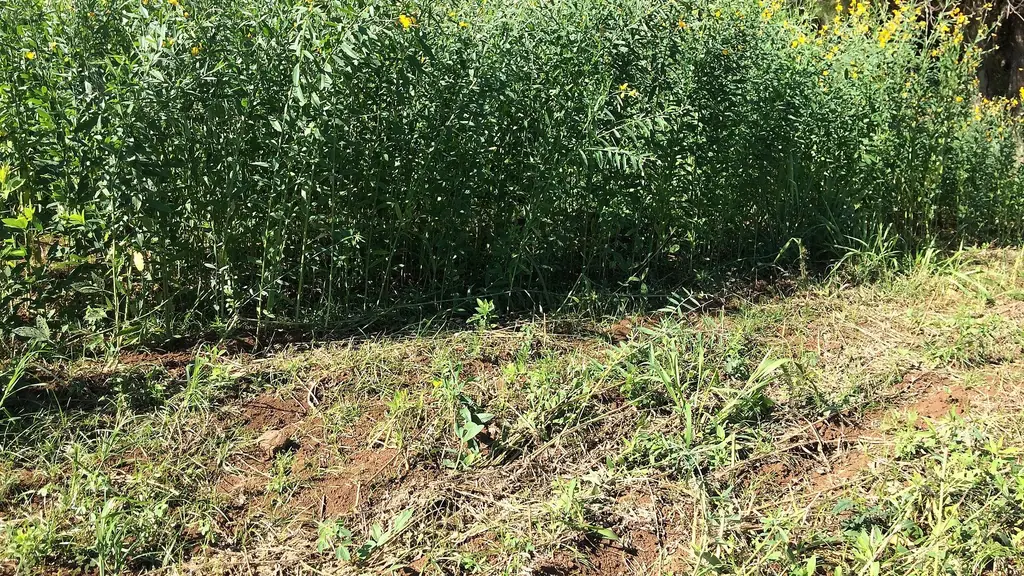
- Permanent soil organic cover. At least 30% of the soil surface should be covered by crop residues and/or cover crops.
- Species diversification. Varied crop sequences and associations involving at least three different crops.
FAO argues that together these enhance biodiversity and natural biological processes above and below ground, improving water and nutrient use efficiency and sustaining crop production. The principles are meant to work as a package. As the research below shows, applying only one of them, usually no-till, gives quite different results.
Where conservation agriculture has spread
According to a 2022 review by Kassam, Friedrich and Derpsch, the global area under CA reached about 205.4 million hectares in 2018/19, roughly 14.7% of global cropland. That is up from about 106.5 million hectares in 2008/09, an expansion of around 10 million hectares a year.
The distribution is uneven:
| Region | CA area, 2018/19 (million ha) |
|---|---|
| South America | 83.0 |
| North America | 65.9 |
| Australia and New Zealand | 23.3 |
| Asia | 17.5 |
| Russia and Ukraine | 6.9 |
| Europe | 5.6 |
| Africa | 3.1 |
The authors report that CA covers close to 70% of cropland in South America and close to 75% in Australia and New Zealand. Europe (including Russia and Ukraine), Asia and Africa together held about 16% of the global CA area in 2018/19, up from under 5% a decade earlier.
These figures were compiled by long-standing CA researchers from official statistics, national no-till associations, ministries, non-governmental organisations and experts. Because reporting methods differ between countries, the totals are best treated as approximate.
What CA does for soil
The soil-protection case is the strongest. The IPCC Special Report on Climate Change and Land lists reduced or zero tillage, crop residue retention and cover crops among management options that reduce vulnerability to soil erosion and nutrient loss, with very high confidence.
The mechanisms are straightforward:
- Residues and cover crops shield the soil surface from rain and wind.
- Undisturbed soil retains more of its structure and biological activity, which FAO links to better water and nutrient use efficiency.
- Organic matter concentrates near the surface under no-till, which generally benefits soil properties there.
- Diverse rotations can help with pest control and nutrient cycling, as they do in other diversified systems.
For broader context on erosion control, see soil conservation practices that work.
What happens to yields
The global picture
The most cited global analysis is a meta-analysis by Pittelkow and colleagues (2015) covering 5,463 paired yield observations from 610 studies across 48 crops and 63 countries. They compared no-till with conventional tillage and found:
- On average, no-till alone reduces yields, though the response varies and no-till can match or exceed conventional yields under some conditions.
- When no-till is combined with residue retention and crop rotation, its negative effects are minimised.
- With all three principles, no-till significantly increases rainfed yields in dry climates, suggesting a role in adapting to drier conditions.
The authors add a caution: in resource-poor smallholder systems, it is often hard to retain residues and diversify rotations, which raises the risk of yield losses. They conclude that no-till's potential contribution to sustainable intensification is more limited than often assumed.
Smallholder farms in sub-Saharan Africa
A meta-analysis focused on sub-Saharan Africa by Corbeels and colleagues (2020), using 933 observations from 16 countries, found that average yields under CA were only slightly higher than under conventional tillage: about 3.7% across six major crops and 4.0% for maize. When all CA principles were applied together, maize yields rose by about 8.4%. The largest benefits occurred under low rainfall and with herbicide use. The authors conclude that CA may bring soil conservation benefits but is not a technology that will overcome low productivity and food insecurity for African smallholders in the short term.
These findings echo an earlier critique by Giller and colleagues (2009), who argued that strong advocacy had stifled critical debate. They noted that CA's spread in the Americas relied heavily on herbicides and fertilisers, and identified recurring problems for smallholders:
- Competing uses for crop residues, especially as livestock feed, leaving too little mulch.
- More weeding labour when herbicides are not used, which can shift work onto women.
- Limited access to external inputs, such as herbicides, fertiliser and suitable planters.
The carbon question
CA is often promoted as a climate mitigation measure because it is thought to increase soil carbon. The evidence is more cautious.
Powlson and colleagues (2014) reviewed experimental evidence and found that the additional organic carbon under no-till is relatively small. Much of the apparent increase reflects a redistribution of carbon towards the surface rather than a net gain through the soil profile. In many regions, farmers also plough occasionally for agronomic reasons, which can reverse short-term gains. The authors conclude that no-till benefits soil quality and adaptation, but that its role in mitigation is widely overstated.
The IPCC land report similarly notes that modelled carbon sequestration rates after adopting CA in drylands depend on local conditions (medium confidence). For more on this debate, see our article on soil carbon and the climate.
When CA is most likely to work
Taken together, the evidence suggests CA tends to perform best when:
- All three principles are applied, not just reduced tillage.
- Rainfall is low or erratic, so that conserved soil moisture translates into yield.
- Residues can be kept on the field, which may require alternative fodder sources or community grazing agreements.
- Weeds can be controlled, whether by herbicides, cover crops, mulch or extra labour.
- Inputs and equipment are accessible, including seeders that can place seed through a residue layer.
- Farmers can afford a transition period, since benefits for soil may take several seasons to show.
It is least likely to deliver short-term gains where residues are scarce and needed for livestock, where weeding labour is limited, and where inputs and equipment are hard to obtain. These constraints are social and economic as much as agronomic.
How CA relates to other approaches
CA overlaps with several other frameworks. Its practices sit within FAO's broader vision of sustainable agricultural practices, and reduced tillage, cover crops and rotations are also central to what is now marketed as regenerative agriculture. The same evidence on yields and carbon applies whichever label is used.
Key takeaways
- FAO defines conservation agriculture by three principles: minimum soil disturbance, permanent soil cover of at least 30%, and diversification with at least three crops.
- CA was reported on about 205 million hectares in 2018/19, roughly 15% of global cropland, mostly in the Americas and Australia.
- The IPCC finds, with very high confidence, that reduced tillage, residues and cover crops reduce erosion and nutrient loss.
- No-till alone tends to lower yields; combined with residues and rotation it can raise rainfed yields in dry climates, but gains for African smallholders have been small on average.
- No-till's contribution to climate mitigation through soil carbon is widely considered overstated.
Frequently asked questions
Is no-till the same as conservation agriculture?
No. No-till is one of the three principles. FAO's definition also requires permanent soil cover and crop diversification, and research shows results differ markedly when no-till is used on its own.
Does conservation agriculture require herbicides?
Not necessarily, but weed control becomes harder without tillage. Large-scale CA in the Americas has relied heavily on herbicides. Without them, weeding labour usually increases unless cover crops or mulch suppress weeds effectively.
Is conservation agriculture good for the climate?
It can help farms adapt by conserving soil moisture and reducing erosion. Its contribution to reducing atmospheric carbon dioxide is more limited than often claimed, because much of the measured soil carbon change reflects redistribution within the soil profile.
Sources
- Conservation Agriculture FAO, 2026
- Successful Experiences and Lessons from Conservation Agriculture Worldwide Agronomy (MDPI), 2022
- Productivity limits and potentials of the principles of conservation agriculture Nature, 2015
- Limits of conservation agriculture to overcome low crop yields in sub-Saharan Africa Nature Food, 2020
- Conservation agriculture and smallholder farming in Africa: The heretics' view Field Crops Research (record via Wageningen University & Research), 2009
- Limited potential of no-till agriculture for climate change mitigation Nature Climate Change, 2014
- Climate Change and Land: Summary for Policymakers IPCC, 2019
How this article was made: researched and drafted with the help of AI tools, then checked against the sources listed above. Read our editorial policy. Spotted an error? Tell us.