Soil is one of the largest stores of carbon on the planet. According to the 4 per 1000 Initiative, the world's soils contain two to three times more carbon than the atmosphere. Small changes in that store, up or down, therefore matter for the climate.
That simple observation has made soil carbon one of the most discussed, and most debated, climate solutions. Supporters see a way to draw down carbon dioxide while improving farmland. Sceptics point to slow gains, measurement problems and the risk that stored carbon escapes again. Both sides have a point. This article sets out what the evidence says.
What soil carbon is
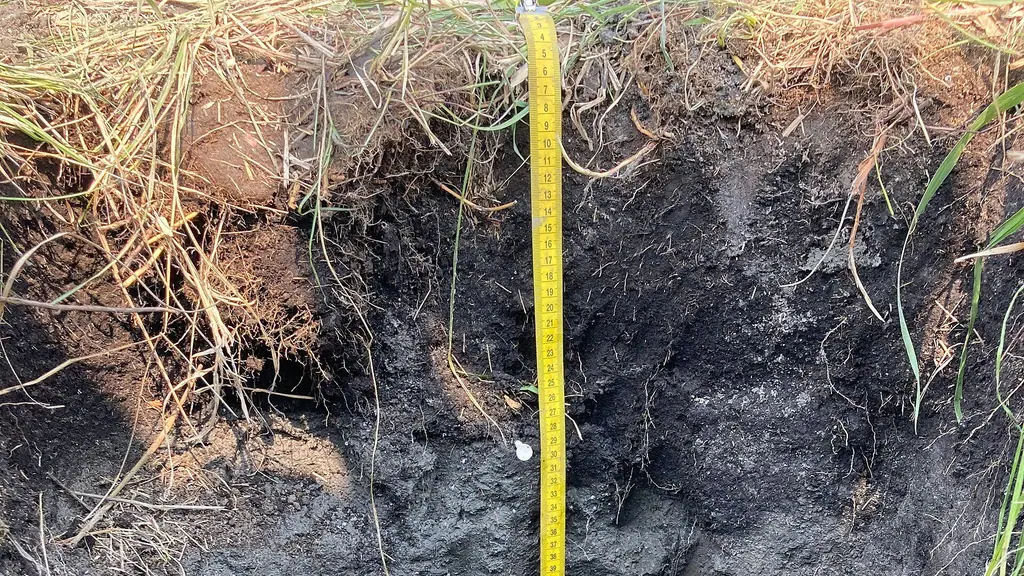
Soil organic carbon is the carbon held in soil organic matter, which is derived from plants and soil organisms. Plants take carbon dioxide from the air through photosynthesis, and some of that carbon ends up in the soil. Carbon is lost from soils when organic matter breaks down, when soil is eroded, and when waterlogged peat soils are drained.
Soil carbon matters for farming as well as for climate, because soil organic matter is closely linked to soil quality and functioning. That is why some researchers argue that soil carbon should be valued first for soil health, with climate benefits as a bonus. For practical methods, see our guide to soil conservation practices that work.
Soil carbon is being lost
Historically, land use has depleted soil carbon. The IPBES assessment of land degradation estimated that soil organic carbon has fallen by about 8 per cent globally over 200 years, and projected a further loss of 36 billion tonnes of soil carbon by 2050 (IPBES, 2018).
Erosion is part of the problem. The IPCC's Special Report on Climate Change and Land estimated that erosion from agricultural fields is currently 10 to 20 times faster than soil formation under no-till farming, and more than 100 times faster under conventional tillage (medium confidence).
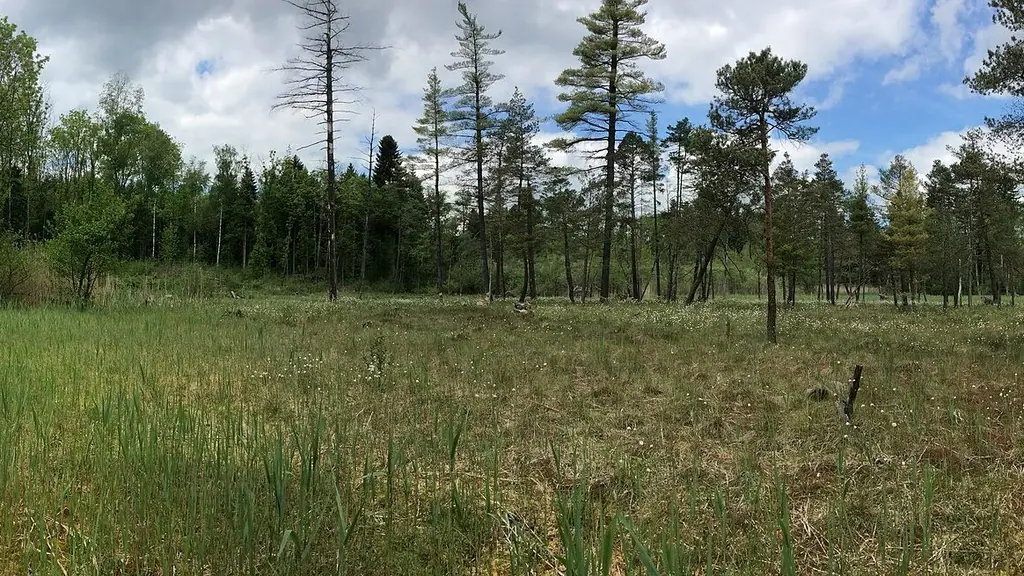
Peat soils are a special case. UNEP's Global Peatlands Assessment found that peatlands cover only about 3–4 per cent of the world's land surface but store nearly a third of its soil carbon. Drained and degraded peatlands contribute around 4 per cent of annual human-induced greenhouse gas emissions. Protecting and rewetting them is covered in our article on wetlands and peatlands.
The 4 per 1000 Initiative
The 4 per 1000 Initiative was launched by France on 1 December 2015 at the UN climate conference (COP21) in Paris. Its name refers to an idea rather than a legal target: if the carbon stored in the top 30–40 centimetres of soil increased by 0.4 per cent (four parts per thousand) each year, the annual rise in atmospheric carbon dioxide would be considerably reduced (4 per 1000 Initiative).
The initiative brings together governments, local authorities, companies, professional organisations, NGOs and research institutions. It describes the 4 per 1000 figure as a direction to follow rather than a binding target for each country.
Is 4 per 1000 achievable?
Long-term field data offer a reality check. Researchers at Rothamsted Research in the United Kingdom analysed 16 long-term experiments, some running for more than 150 years, covering 114 treatment comparisons (Poulton et al., 2018). They found that:
- In 65 per cent of cases, soil carbon increased at rates at or above the equivalent of the 4 per 1000 goal.
- The largest increases came from heavy annual applications of farmyard manure, far more than most farms have available.
- In some treatments, increases above the equivalent target rate continued for 40–60 years.
The authors nonetheless concluded that there are severe limitations to achieving the goal over large areas of practical farmland. Their reasons: farmers lack enough manure and other resources; some carbon-friendly practices are already widely used; many practices are uneconomic without subsidies or regulation; and some would conflict with food production. They suggested promoting soil carbon for its benefits to soil quality, where even small increases can matter.
Other scientists have urged similar caution. In a 2019 commentary, Schlesinger and Amundson argued that even the most promising soil-related techniques, including biochar and enhanced rock weathering, were unlikely to offset more than about 5 per cent of annual CO₂ emissions from fossil fuels (Schlesinger and Amundson, 2019).
What the IPCC says about potential
The IPCC treats soil carbon as a useful but bounded option. Its Special Report on Climate Change and Land lists soil organic carbon management among the few land responses that deliver benefits for adaptation, mitigation, land degradation and food security at once, and notes that it does not require converting land to new uses.
On specific practices, the report estimates that cover crops could sequester about 0.44 ± 0.11 billion tonnes of CO₂ a year if applied to 25 per cent of global cropland (high confidence). It also finds that agroforestry, perennial pasture phases and perennial grains can substantially reduce erosion and nutrient leaching while building soil carbon.
The IPCC's 2022 mitigation report estimated that improved crop and livestock management, together with carbon sequestration in agriculture (including soil carbon management in croplands and grasslands, agroforestry and biochar), could contribute 1.8–4.1 billion tonnes of CO₂-equivalent a year between 2020 and 2050 at costs below USD 100 per tonne. For comparison, the IPCC estimated total emissions from agriculture, forestry and other land use at about 12 billion tonnes of CO₂-equivalent a year in 2007–2016.
The measurement problem
If soil carbon is to be paid for, through carbon markets or public schemes, it has to be measured reliably. That turns out to be difficult.
A 2020 review by Smith and colleagues set out the challenge (Smith et al., 2020). Soil carbon content cannot be easily measured, the authors noted, and the lack of credible systems for measurement, reporting and verification (MRV) is a key barrier to scaling up soil carbon programmes. Without such systems, investments could be considered risky.
The arithmetic of the 4 per 1000 idea shows part of the difficulty. A gain of 0.4 per cent a year is a very small change relative to the carbon already in the soil, so detecting it requires careful, repeated sampling over time.
The Smith review describes the main tools available: repeat soil surveys, long-term experiments and paired sites that compare land under different management, and computer models that simulate change, all of which can be combined in an MRV framework. It also discusses newer developments that show promise for quantifying soil carbon, and proposes a global framework for MRV.
The permanence problem
Even when soil carbon increases, two further limits apply. The IPCC sets them out clearly (high confidence):
- Saturation. Carbon sequestration in soils and vegetation does not continue indefinitely. As soils approach a new equilibrium, the annual removal of CO₂ declines towards zero, although the stock can be maintained.
- Reversibility. Carbon accumulated in soils is at risk of being lost through flood, drought, fire, pests or a return to poor management.
The IPCC also warns that the potential for increasing soil organic carbon declines as climate change intensifies, because soils have less capacity to act as carbon sinks at higher temperatures. Peatlands are the main exception to saturation: the IPCC notes they can continue to sequester carbon for centuries.
In practice, this means soil carbon gains must be maintained by continuing good management. A return to poor management can release carbon that took years to build up.
What this means for farmers and policymakers
None of these limits makes soil carbon unimportant. They suggest a sensible order of priorities:
- Stop the losses first. Reducing erosion, avoiding the drainage of peat soils and protecting existing ecosystems from conversion keeps carbon in the ground.
- Build carbon for soil health. Practices assessed by the IPCC and in long-term experiments, such as cover crops, agroforestry, grass or pasture phases in arable rotations and adding organic matter, can build soil carbon while improving soil quality. Our guides to conservation agriculture and regenerative agriculture look at the evidence for specific practices.
- Be cautious with credits. Claims of permanent carbon removal from farm soils should be backed by robust measurement and plans to maintain practices over the long term.
- Do not substitute. Soil carbon cannot replace deep cuts in fossil fuel emissions.
Key takeaways
- Soils hold two to three times more carbon than the atmosphere, so small changes in soil carbon matter for climate.
- The 4 per 1000 Initiative, launched at COP21 in 2015, promotes increasing soil carbon by 0.4 per cent a year as an aspiration, not a binding target.
- Long-term experiments show the rate is achievable in some cases but hard to reach across large areas of real farmland.
- Measuring soil carbon change reliably is a major barrier to paying for it.
- Gains level off over time and can be reversed, so soil carbon complements, but cannot replace, emission cuts.
Frequently asked questions
Which practices build soil carbon?
The IPCC highlights cover crops, agroforestry, perennial pasture phases and perennial grains. The Rothamsted experiments found the largest gains from applying farmyard manure, introducing grass leys into arable rotations and converting arable land to woodland. Results depend on soil, climate and how long the practice is maintained.
Why do peat soils matter so much?
Peatlands cover only 3–4 per cent of the land surface but hold nearly a third of the world's soil carbon, according to UNEP. Once drained, they keep releasing greenhouse gases for decades, which is why protecting and rewetting them is a priority.
Can soil carbon credits be trusted?
It depends on the scheme. Useful questions to ask are how carbon change is measured and verified, whether the change would have happened anyway, and what happens if the practices stop.
Sources
- Discover the 4 per 1000 Initiative 4 per 1000 Initiative, n.d.
- Climate Change and Land: Summary for Policymakers IPCC, 2019
- Climate Change 2022: Mitigation of Climate Change. Summary for Policymakers IPCC, 2022
- Major limitations to achieving '4 per 1000' increases in soil organic carbon stock in temperate regions: evidence from long-term experiments at Rothamsted Research, United Kingdom (Poulton et al., Global Change Biology 24) Wiley, 2018
- Managing for soil carbon sequestration: Let's get realistic (Schlesinger and Amundson, Global Change Biology 25) Wiley, 2019
- How to measure, report and verify soil carbon change to realize the potential of soil carbon sequestration for atmospheric greenhouse gas removal (Smith et al., Global Change Biology 26) Wiley, 2020
- Media release: Worsening worldwide land degradation now 'critical', undermining well-being of 3.2 billion people IPBES, 2018
- Global assessment reveals huge potential of peatlands as a climate solution UNEP, 2022
How this article was made: researched and drafted with the help of AI tools, then checked against the sources listed above. Read our editorial policy. Spotted an error? Tell us.