Few farming terms have risen as quickly as "regenerative agriculture." It is promoted by farmers' groups, environmental organisations and many of the world's largest food companies, often with promises of healthier soils, richer biodiversity, more resilient farms and a substantial contribution to tackling climate change.
Some of those promises rest on solid evidence. Others are contested or, in their strongest forms, not supported by current research. This article sets out what regenerative agriculture usually means, which benefits are well established, and where scientists disagree.
A term without a fixed definition
There is no legal or regulatory definition of regenerative agriculture, and no single definition has emerged in common use. A review by Newton and colleagues (2020) examined 229 journal articles and 25 practitioner websites and found many different definitions. They fell into two broad groups:
- Process-based definitions, which describe what farmers do, such as using cover crops, integrating livestock, or reducing or eliminating tillage.
- Outcome-based definitions, which describe what farming should achieve, such as improving soil health, sequestering carbon or increasing biodiversity.
Many definitions combine both. The authors warn that this variety creates problems: researchers cannot easily test claims, consumers may be confused or misled by labels, and policies or carbon payment schemes may reward different things under the same name. They suggest that anyone using the term should define it clearly for their purpose.
An agronomic review by Giller and colleagues (2021) adds that the term has been embraced by actors usually seen as opposites in agricultural debates, from civil society groups to multinational food companies. They argue it brings together two contrasting visions, agroecology and sustainable intensification, under one banner, which may confuse more than clarify.
Common practices
Although definitions vary, the practices most often grouped under regenerative agriculture include:
| Practice | Main aim |
|---|---|
| Reduced or no tillage | Protect soil structure, reduce erosion |
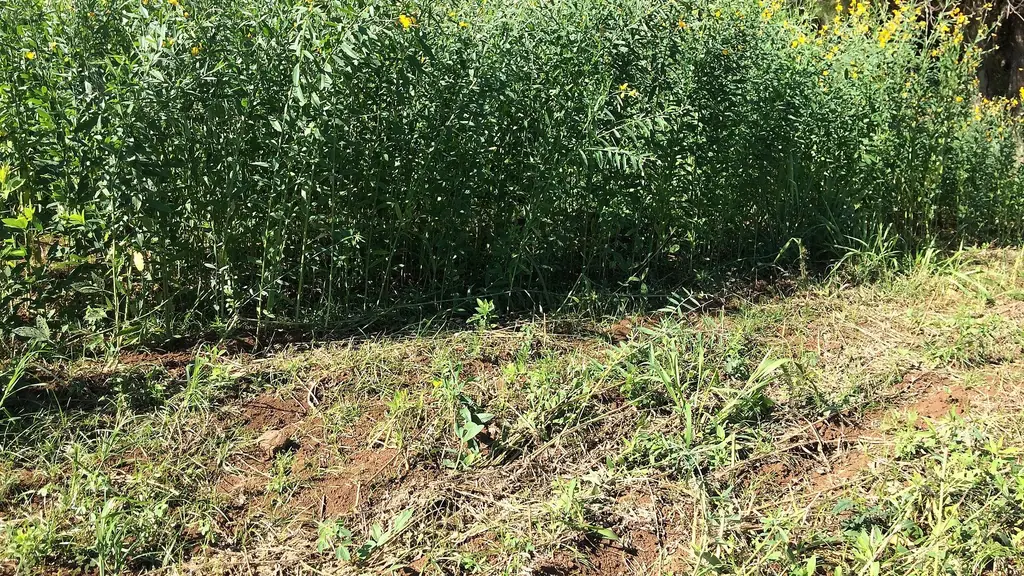
| Cover crops | Keep soil covered, capture nutrients, add organic matter |
| Diverse crop rotations | Break pest cycles, improve soil biology |
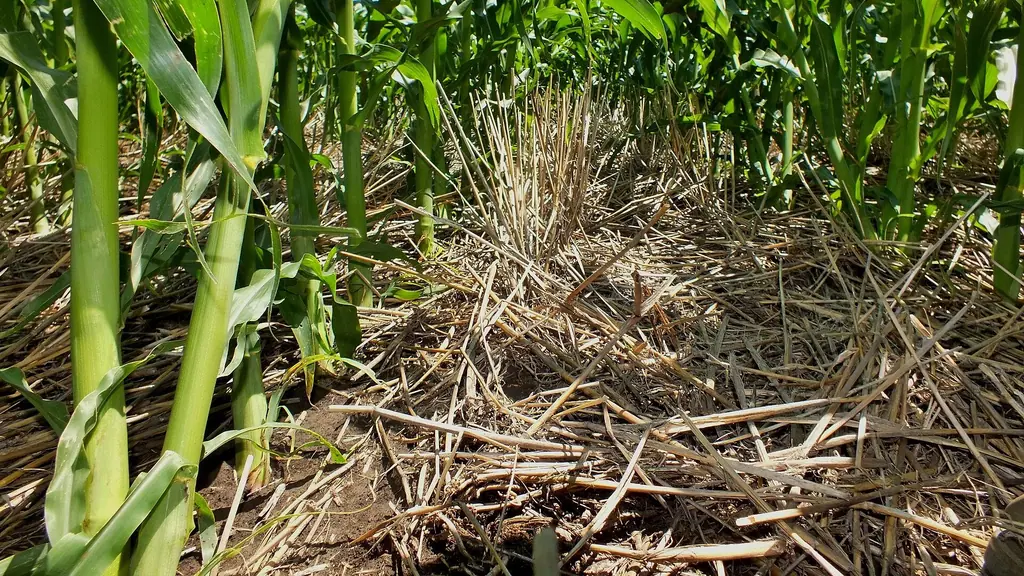
| Retaining crop residues | Protect the surface, feed soil organisms |
| Integrating livestock and rotational grazing | Recycle nutrients, manage pasture |
| Reducing synthetic fertiliser and pesticide use | Lower pollution and input costs |
| Agroforestry and hedgerows | Diversify farms, store carbon, support wildlife |
Giller and colleagues point out that many of these, such as residue retention, cover cropping and reduced tillage, are already part of standard good agricultural practice. Others, such as permaculture and holistic grazing, they describe as "contested and at best niche."
What the evidence supports
Soil health and erosion control
There is broad agreement that most regenerative practices are good for soil. The World Resources Institute (WRI) summarises the consensus: no-till reduces erosion and helps water infiltrate (though it can increase herbicide use), cover crops do the same and can reduce water pollution, diverse rotations can lower pesticide use, and good grazing practices can increase vegetation and protect water sources.
The IPCC Special Report on Climate Change and Land finds with very high confidence that cover crops, green manures, residue retention, reduced or zero tillage and maintaining ground cover through improved grazing management reduce vulnerability to soil erosion and nutrient loss.
It is also uncontroversial that adding organic carbon to depleted cropland soils improves their physical, chemical and biological properties, as Powlson and Galdos (2023) emphasise.
Diversification
A large synthesis by Tamburini and colleagues (2020), drawing on 98 meta-analyses and more than 5,000 studies, found that diversification practices such as crop diversification, non-crop habitats, organic amendments and reduced tillage generally enhanced biodiversity, pollination, pest control, nutrient cycling, soil fertility and water regulation without compromising yields. Outcomes varied, and trade-offs occurred, but win-win results were most common.
For more on these practices, see our guides to sustainable agricultural practices and conservation agriculture.
Where the claims are contested
Soil carbon and climate change
The most ambitious claims for regenerative agriculture concern climate: that farming can pull large amounts of carbon dioxide from the atmosphere into soils.
There is real potential. A study by Bossio and colleagues (2020) estimated that soil carbon accounts for about 25% of the potential of natural, land-based climate solutions, with 40% of that from protecting existing soil carbon and 60% from rebuilding depleted stocks. For agriculture and grasslands specifically, soil carbon made up 47% of the mitigation potential.
But several lines of research suggest the practical contribution is far smaller than headline claims:
- Saturation. Soils do not gain carbon indefinitely; they approach a new equilibrium. A 2023 analysis by Moinet and colleagues, summarised by Powlson and Galdos, found that ignoring saturation overestimates potential carbon sequestration by 53–81%. With more realistic assumptions, sequestration in agricultural soils might offset roughly 4% to less than 1% of global emissions by 2100.
- Measurement and permanence. WRI notes active debate over whether no-till actually increases soil carbon when measured through the full soil profile, and that in the United States most no-till farmers still plough every few years, reversing much of any short-term gain.
- Carbon accounting. Adding manure or residues raises carbon on one field, but those materials are limited. Moving them from elsewhere may not increase carbon in the world's soils overall, and replacing residues used as animal feed could drive land clearing.
- Nitrogen. WRI notes that stable soil carbon requires roughly one tonne of nitrogen for every 12 tonnes of carbon, and adding nitrogen risks water pollution and nitrous oxide emissions.
WRI's overall judgement is that regenerative practices can improve soil health but are unlikely to deliver large-scale emissions reductions, and that the biggest gains in agriculture lie elsewhere, for example in reducing emissions from cattle, manure, fertiliser and rice. Our article on soil carbon and the climate explores this further.
Does more soil carbon raise yields?
A second popular claim is that building soil carbon will reliably raise crop yields, creating a win-win for climate and food security. Moinet and colleagues collated data from 21 meta-analyses. Where extra nutrients released from manure or soil organic matter were accounted for, they found no examples of an overall positive effect of soil carbon itself on yield, so the general win-win was not substantiated.
Powlson and Galdos highlight important exceptions: yield benefits were more likely on sandy soils and for crops with short growing seasons, which may matter in parts of the tropics. The conclusion is not that soil carbon is irrelevant, but that benefits are situation-specific.
Holistic and adaptive grazing
Some advocates claim that intensive rotational grazing, such as Holistic Planned Grazing, can greatly increase rangeland productivity and even reverse climate change.
A meta-analysis by Hawkins (2017), covering literature from 1972 to 2016, found no difference between Holistic Planned Grazing and season-long continuous grazing in plant basal cover, plant biomass or animal weight gain. Results varied significantly between studies, and positive outcomes tended to occur where rainfall was higher, suggesting only some rangelands may benefit.
On climate, a 2017 report from the Food Climate Research Network at the University of Oxford, Grazed and Confused, concluded that well-managed grazing can sequester carbon only under specific conditions, and that this sequestration is small, time-limited, reversible and substantially outweighed by the emissions the animals produce. For more on grazing lands, see restoring rangelands and pastoral lands.
Yields and context
WRI notes that studies of many regenerative practices have shown mixed effects on yields. If yields fall, the same food must be produced elsewhere, which can lead to land clearing and emissions that offset any gains on the farm.
Giller and colleagues warn that regenerative practices are often promoted with little regard to context. Practices such as no tillage, no pesticides or no external nutrient inputs are unlikely to deliver the claimed benefits everywhere.
How to read regenerative claims
When assessing a regenerative label, project or carbon credit, a few questions help separate well-supported claims from marketing:
- What is being claimed? Soil health, biodiversity, water quality, yields or climate mitigation each have different levels of evidence.
- Which practices, and in what context? Results depend on soil, climate and the farming system before the change.
- How is soil carbon measured? Look for measurements through the soil profile, repeated over time, rather than models or surface samples alone.
- Is the carbon additional and permanent? Ask whether inputs were moved from elsewhere and what happens if management changes.
- What happens to production? If output falls, consider where the difference will be grown.
Key takeaways
- Regenerative agriculture has no agreed legal or scientific definition; a 2020 review found definitions based on practices, outcomes or both.
- The evidence that practices such as cover crops, residue retention, reduced tillage and diversification improve soil health and reduce erosion is strong.
- Claims that regenerative farming can store enough soil carbon to substantially offset global emissions are not supported by current evidence.
- Meta-analyses have found no overall advantage of Holistic Planned Grazing over continuous grazing for plant cover, biomass or animal gain.
- Benefits are context-specific, so claims should state clearly which practices, outcomes and places they refer to.
Frequently asked questions
Is regenerative agriculture the same as organic farming?
No. Organic farming is a certified system with defined rules on synthetic inputs. Regenerative agriculture has no single standard; some versions exclude synthetic inputs, while others allow them and focus on soil practices such as cover crops and reduced tillage.
Is regenerative agriculture good for the climate?
It can bring modest climate benefits, for example by reducing erosion and, in some places, increasing soil carbon. But research by WRI and others suggests its potential to offset emissions is limited by saturation, measurement uncertainty, reversibility and nitrogen requirements. Its strongest case rests on soil health and resilience.
Should farmers adopt regenerative practices?
Many of the practices are well established as good agricultural practice and can improve soils over time. Whether a given practice makes sense depends on local soils, climate, markets and farm finances, so local advice and trials are important.
Sources
- What Is Regenerative Agriculture? A Review of Scholar and Practitioner Definitions Based on Processes and Outcomes Frontiers in Sustainable Food Systems, 2020
- Regenerative Agriculture: An agronomic perspective Outlook on Agriculture (via PubMed Central), 2021
- Regenerative Agriculture: Good for Soil Health, but Limited Potential to Mitigate Climate Change World Resources Institute, 2020
- Challenging claimed benefits of soil carbon sequestration for mitigating climate change and increasing crop yields: Heresy or sober realism? Global Change Biology (via PubMed Central), 2023
- The role of soil carbon in natural climate solutions Nature Sustainability, 2020
- A global assessment of Holistic Planned Grazing compared with season-long, continuous grazing: meta-analysis findings African Journal of Range and Forage Science, 2017
- Grazed and Confused Food Climate Research Network, University of Oxford (TABLE), 2017
- Agricultural diversification promotes multiple ecosystem services without compromising yield Science Advances (via PubMed Central), 2020
- Climate Change and Land: Summary for Policymakers IPCC, 2019
How this article was made: researched and drafted with the help of AI tools, then checked against the sources listed above. Read our editorial policy. Spotted an error? Tell us.