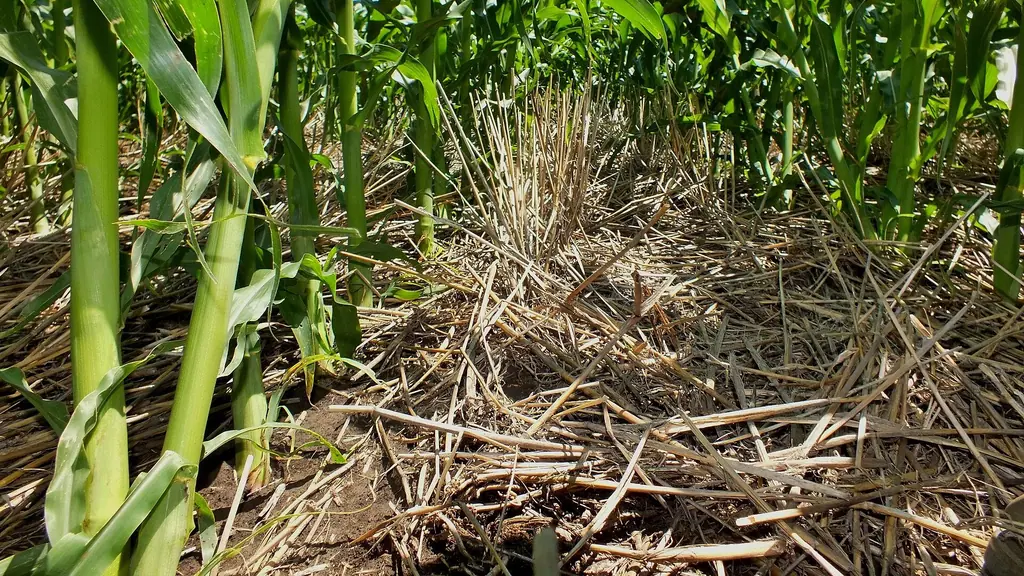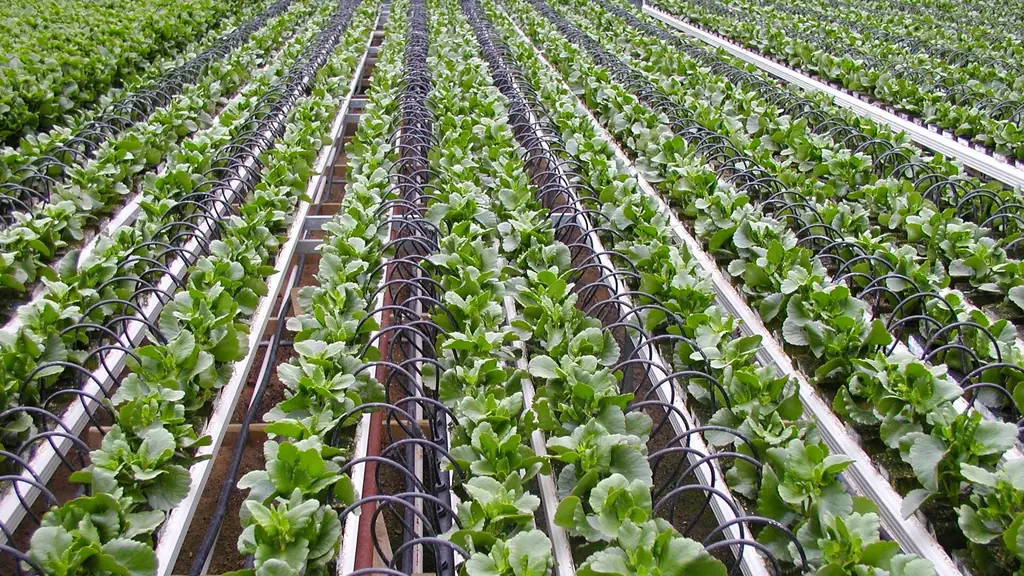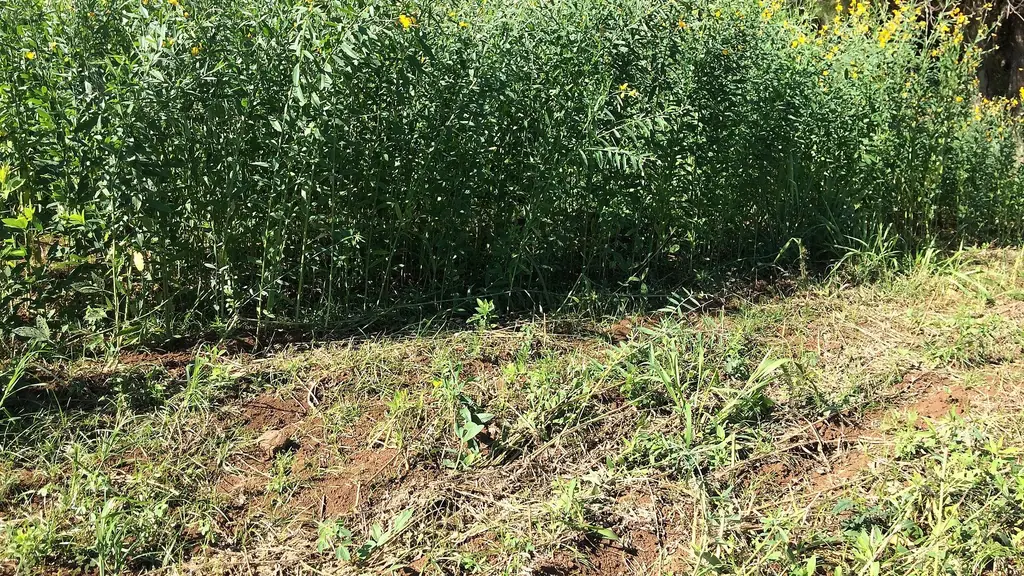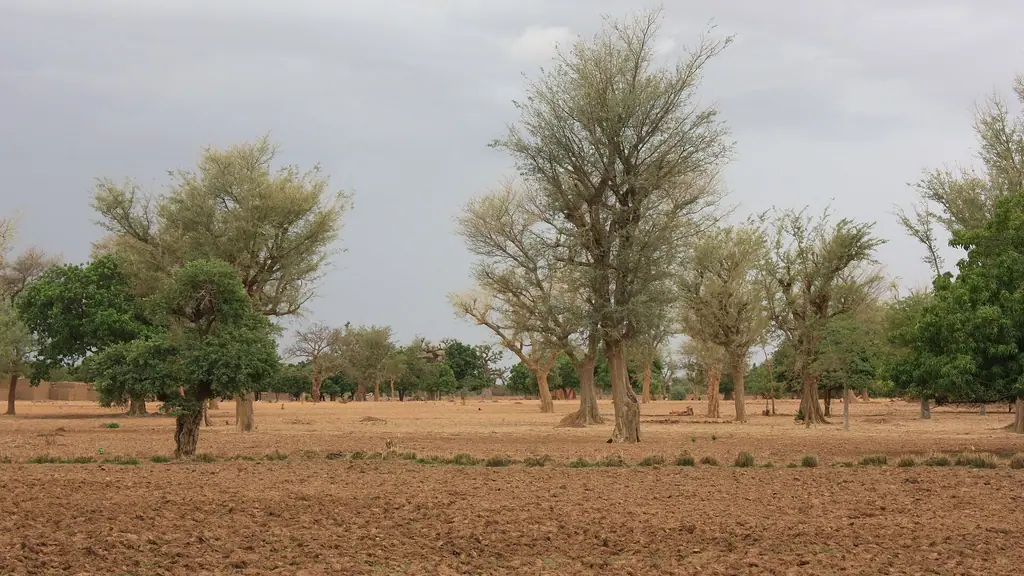
Agroforestry is an old idea with a modern evidence base: grow trees and shrubs on the same land as crops or livestock, and let each part of the system support the others. One of its simplest forms, farmer-managed natural regeneration (FMNR), involves almost no planting at all. Farmers protect and prune the trees that resprout by themselves from stumps and roots already in their fields.
The best-known example comes from southern Niger, where smallholders brought trees back to millions of hectares of farmland from the mid-1980s onward. That story is often told as a technical breakthrough. The research suggests it was just as much a story about who owned the trees and who was allowed to manage them.
What agroforestry means
The Food and Agriculture Organization of the United Nations (FAO) describes agroforestry as a collective term for land-use systems in which woody perennials, such as trees, shrubs, palms and bamboos, are deliberately combined with crops and/or animals, arranged in space or in sequence over time. The defining feature is interaction: the trees, crops and animals affect each other ecologically and economically.
FAO groups agroforestry into three broad types:
| Type | Components | Common examples |
|---|---|---|
| Agrisilvicultural | Trees and crops | Alley cropping, home gardens |
| Silvopastoral | Trees and grazing animals | Trees on pasture and rangeland |
| Agrosilvopastoral | Trees, crops and animals | Home gardens that include livestock |
FAO estimates that about 78% of the global area under agroforestry lies in the tropics and 22% in temperate regions, with the practice especially common in Southeast Asia and Central and South America. Because agroforestry covers so many designs, FAO stresses that it must be tailored to local conditions, markets and farmers' needs rather than copied from one place to another.
What farmer-managed natural regeneration is
FMNR starts from a simple observation. In many cleared drylands, the land is not really treeless. Stumps and root systems of cut trees and shrubs remain alive below the surface and keep sending up shoots, which farmers traditionally cut back each season before sowing.
Under FMNR, farmers instead choose a few of the strongest stems on each stump, protect them from grazing and cutting, and prune away the rest. According to Toudou, Tougiani and Reij (2020), the main costs are labour for protection, thinning and pruning. Benefits arrive quickly: within the first year or two, the thinned stems supply twigs for firewood and leaves for fodder or mulch.
This makes FMNR very different from tree-planting campaigns. In Niger, Sendzimir, Reij and Magnuszewski (2011) report that internationally funded planting projects in the 1970s and early 1980s failed to reforest any area, with seedling survival around 20%. Toudou and colleagues note that planting trees can cost in the order of US$500–1,000 per hectare, whereas protecting natural regeneration mainly costs farmers' time.
How regreening spread in southern Niger
From drought to experiment
By the mid-1980s, the densely populated farmland of Maradi and Zinder regions had lost almost all its natural vegetation. Toudou and colleagues describe fields exposed to wind and sun, crops that sometimes had to be resown after being buried by blowing sand, and women walking long distances for firewood.
Accounts of how FMNR began differ. One widely cited version credits the Australian agronomist Tony Rinaudo, who in 1983, after failed attempts to plant trees in Maradi, recognised what became known as an "underground forest" of living stumps. Sendzimir and colleagues credit the non-governmental organisation Serving in Mission with experimenting with and formalising the practices, and report that only a dozen farmers tried the approach at first. During and after the drought of 1984–85, development projects offered food aid or food-for-work to farmers who protected regenerating stems. Many cut them again when normal harvests returned, but enough continued for neighbours to see the effect on crops. A second account, from a village in Aguié district, describes migrant farmers who returned too late to clear their fields and then noticed better yields where the shrubs had been left.
The scale
Researchers estimate that smallholders in Maradi, Zinder and parts of Tahoua protected and managed natural regeneration on roughly 5 million hectares of farmland. Sendzimir and colleagues describe this as reforestation of more than 5 million hectares over about two decades, and the U.S. Geological Survey gives the same order of magnitude, citing Reij and others (2009). The key species include Faidherbia albida, Piliostigma reticulatum, Combretum glutinosum and Guiera senegalensis, which farmers value for soil fertility, fodder or firewood.
Two features of the pattern stand out. First, regreening was concentrated in areas with high population density, which Toudou and colleagues summarise as more people, more trees. Second, satellite and aerial images show far more on-farm trees on the Niger side of the border than in neighbouring northern Nigeria, despite similar soils and higher rainfall to the south. That contrast points to management, not rainfall, as the main driver.
Why tree rights mattered
Under the colonial system, and in Niger's 1974 Forest Code, trees were treated as state property. Sendzimir and colleagues describe how forestry agents could fine farmers for cutting or even pruning trees, so farmers often removed young trees to avoid trouble. Trees were a liability rather than an asset.
That began to change in the mid-1980s. An economic crisis and a weakened central state reduced enforcement in the field, and a national debate on desertification in 1984 encouraged the view that farmers had rights to the trees on their land. Toudou and colleagues note that farmers still needed permits to harvest or prune for many years. The 2004 Forestry Code recognised community rights to their own trees, and a decree signed on 30 July 2020 confirmed farmers' rights to manage on-farm trees, including thinning and pruning, without fear of fines.
Local institutions mattered too. An IFAD-supported project in Aguié department helped villages set up committees to agree and enforce rules on tree management. The lesson is consistent with wider evidence: insecure rights discourage long-term investment, a theme explored in our article on land tenure, smallholders and food security.
What the benefits look like
The USGS summarises the benefits of on-farm trees in the Sahel as including:
- maintaining or increasing soil organic matter and fertility;
- fuelwood, poles and fencing, easing the burden of firewood collection;
- nutritious fodder for livestock;
- reduced wind speed and wind erosion, and cooler soil surfaces under shade;
- a store of value that households can draw on in bad years;
- habitat for biodiversity and carbon storage in trees and soils.
The USGS, citing Reij and others (2009), reports that the regreened area produces more than 500,000 additional tonnes of cereals per year. Toudou and colleagues add an indicator of resilience: in 2011, a serious drought year, farmers in Kantche district, an area of high tree density, produced a grain surplus while the country as a whole faced a large shortfall. Villages in Maradi have also organised firewood markets based on sustainably managed parklands.
These local findings are consistent with global assessments. The IPCC's Sixth Assessment Report on impacts and adaptation lists agroforestry among effective adaptation options for food systems (high confidence). The IPCC Special Report on Climate Change and Land finds that agroforestry can substantially reduce erosion and nutrient leaching while building soil carbon, and names it among solutions that help combat desertification. For the wider dryland context, see causes and consequences of desertification.
Limits and open questions
It would be a mistake to treat FMNR as a universal fix.
- It needs living rootstock. FMNR works where stumps and roots survive. Where they have been completely removed, planting or direct seeding may be needed.
- Numbers are estimates. Area figures come from remote sensing and field surveys. Toudou and colleagues call for more systematic measurement of extent, cost-effectiveness, yields, incomes and carbon.
- No single cause. Sendzimir and colleagues found that no single actor, policy or practice explains the regreening. Changes in governance came first, followed by changes in livelihoods and then in the landscape.
- Future risks. The same authors caution that resilience to climate change and very rapid population growth remains an open question.
- Trade-offs exist. The IPCC notes that nature-based farming approaches face barriers such as establishment costs, access to inputs and markets, and the need for new knowledge, and that results vary by context and species mix.
Lessons for practice
Experience from Niger and elsewhere in the Sahel suggests several practical lessons:
- Secure rights to trees and land. Farmers invest when they can benefit from the trees they protect.
- Let farmers learn from farmers. Adoption spread fastest when people saw results in neighbours' fields; study visits and local radio can speed this up.
- Build village rules. Bylaws on protection, grazing and harvesting help prevent free-riding.
- Align forestry and agriculture policy. Toudou and colleagues note that agricultural policies often ignore on-farm trees and forestry policies focus on planting.
- Measure what changes. Better data on yields, incomes and tree cover make the case to policymakers.
FMNR also links to broader approaches covered in our pieces on drought resilience and the sustainable agriculture topic hub.
Key takeaways
- Agroforestry deliberately combines trees or shrubs with crops and/or livestock; FMNR is a low-cost form that regrows trees from living stumps and roots.
- In southern Niger, smallholders are estimated to have regreened roughly 5 million hectares of farmland since the mid-1980s, largely without planting.
- Changes in tree ownership and local governance were as important as the technique itself.
- Reported benefits include better soil fertility, fodder, firewood, wind protection and greater resilience in drought years.
- Area and yield figures are estimates, and FMNR depends on surviving rootstock and supportive institutions.
Frequently asked questions
Is FMNR the same as tree planting?
No. FMNR protects and manages trees that regrow naturally from existing stumps, roots or seeds. Tree planting introduces new seedlings, which is usually more expensive and, in the Sahel, has often had low survival rates.
Does FMNR reduce crop yields because of shade?
Farmers manage tree density by thinning and pruning. In the Niger studies, farmers reported soil fertility as a main reason for keeping trees, and species such as Faidherbia albida are valued because they combine well with crops. Results depend on species, density and management.
Can FMNR work outside the Sahel?
The principle can apply wherever living rootstock survives on degraded farm or grazing land, but local species, rights and institutions determine whether it succeeds. The USGS notes that regreening approaches can also be applied in the Sudanian and Guinean zones of West Africa.
Sources
- Agroforestry: Overview FAO, 2026
- Rebuilding resilience in the Sahel: regreening in the Maradi and Zinder regions of Niger Ecology and Society, 2011
- Large-scale regreening in Niger: lessons for policy and practice (ETFRN News 60) ETFRN / Tropenbos International (hosted by UNCCD library), 2020
- Landscape Restoration and Re-greening U.S. Geological Survey, EROS Center, 2023
- Climate Change 2022: Impacts, Adaptation and Vulnerability. Summary for Policymakers IPCC, 2022
- Climate Change and Land: Summary for Policymakers IPCC, 2019
How this article was made: researched and drafted with the help of AI tools, then checked against the sources listed above. Read our editorial policy. Spotted an error? Tell us.