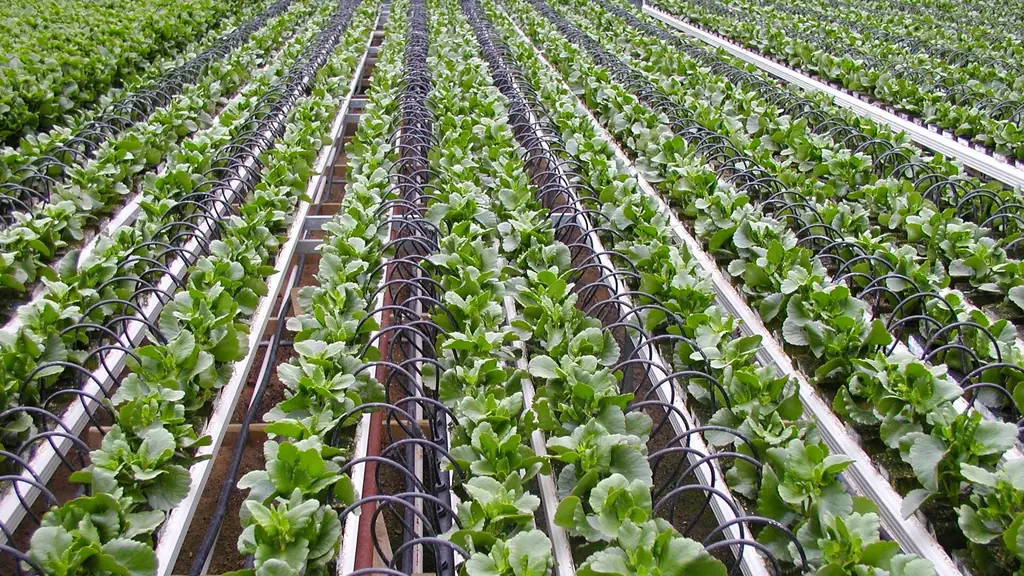
In drylands, water rather than land usually sets the limit on what farmers can grow. Irrigation can turn a precarious rainfed harvest into a reliable one, which is why governments and development agencies invest heavily in modernising it, often by replacing open channels and flood irrigation with pipes, sprinklers and drip lines.
These technologies can be transformative for individual farms. But a large body of evidence shows that making irrigation more efficient on the field does not automatically leave more water in rivers and aquifers. This article explains why, and which practices genuinely help dryland farming do more with less.
How much water agriculture uses
According to FAO's AQUASTAT database, agriculture, including irrigation, livestock and aquaculture, accounts for about 69% of global water withdrawals, with industry at 19% and municipal use at 12%. The share varies widely: AQUASTAT reports agricultural withdrawals above 80% in Africa and Asia and as high as 91% in South Asia, compared with just over 20% in Europe. The IPCC Special Report on Climate Change and Land similarly puts agriculture at roughly 70% of global freshwater use.
In water-scarce regions, this makes irrigation the obvious place to look for savings. For background on the pressures facing dry regions, see our article on water scarcity in drylands.
Withdrawal versus consumption
To understand irrigation efficiency, it helps to separate two things that are often confused:
- Withdrawal is the water taken from a river, canal or aquifer.
- Consumption is the water that leaves the local system, mainly through evaporation from soil and transpiration by plants (together called evapotranspiration). Water that drains to places where it cannot be recovered, called non-recoverable flows, is also effectively lost to other users.
Much of the water withdrawn for irrigation but not consumed by crops is not lost. It seeps back into aquifers or drains back to rivers, where farmers or towns downstream may use it again. These are called return flows.
A 2021 FAO report, Guidance on realizing real water savings with crop water productivity interventions, draws a sharp distinction on this basis:
| Term | What it measures | Does it free water for other users? |
|---|---|---|
| Apparent water savings | Reductions in water withdrawn or applied | Not necessarily |
| Real water savings | Reductions in water consumed plus non-recoverable return flows | Yes, if allocations are adjusted |
The report notes that the widespread belief that irrigation wastes huge volumes rests partly on field efficiencies often cited at 20–50%. Because classical efficiency measures ignore the reuse of return flows, applying them to whole basins can lead to faulty policy.
The irrigation efficiency paradox
When a farmer switches from flood to drip irrigation, less water is applied to each hectare. But several things can then happen:
- Water that previously returned to the aquifer as seepage is now taken up by crops, so consumption per unit pumped rises.
- Each unit of water becomes more productive, so it becomes worth pumping more, including from deeper wells.
- Just as a higher-yielding variety does not lead farmers to shrink their fields, more productive water does not automatically lead them to irrigate less land.
FAO's guidance describes this as a rebound effect, sometimes called Jevons' paradox, and stresses that it is intensified when drip irrigation is introduced. It cites a body of studies showing that irrigation modernisation has, in many cases, increased water consumption rather than producing the savings assumed.
The FAO authors also reviewed 240 publications on crop water productivity interventions. Studies of drip irrigation consistently reported less water applied and, in almost all cases, higher yields. Yet more of those studies reported an increase in evapotranspiration than a decrease. Higher yields per drop are valuable in themselves, but they are not the same as freeing up water.
Why allocation is the missing piece
FAO's key point is that higher water productivity saves water only if the water allocation is reduced when the new technology is introduced. In many developing countries, effective and enforceable allocation systems do not yet exist. Without caps on how much each user can withdraw or consume, efficiency gains tend to be reinvested in more irrigation.
The IPCC Sixth Assessment Report on adaptation adds a broader caution: irrigation is effective in reducing drought risk and has livelihood benefits, but needs appropriate management to avoid accelerated groundwater depletion and soil salinisation (medium confidence). The land report likewise lists irrigation-driven salinisation and over-extraction of groundwater as examples of potential maladaptation.
Practices that raise output per drop
None of this means that better irrigation is pointless. It means that practices should be judged by what they do to crop output, consumption and the wider basin, not just by water applied at the field.
Supplemental irrigation
In many dryland cereal systems, rain provides most of the water a crop needs, but dry spells at critical moments cut yields sharply. Supplemental irrigation applies limited amounts of water only when rainfall fails at critical growth stages. The International Center for Agricultural Research in the Dry Areas (ICARDA), which promotes the approach in West Asia and North Africa, notes that wheat yields in parts of the region reach only about a third of their potential. It reports that where it introduced supplemental irrigation, rainfed crop yields increased substantially, by up to 470% in the best cases, using small amounts of water. That upper figure reflects the most favourable situations rather than typical results.
The underlying research, summarised in an ICARDA book by Oweis and Hachum (2012), argues that management guidelines in water-scarce areas should aim to maximise output per unit of water rather than per unit of land.
Deficit irrigation
Regulated deficit irrigation deliberately supplies less water than a crop could use, accepting some yield loss in exchange for lower consumption. FAO's review found that it was among the interventions that reduced both irrigation and evapotranspiration, making it one of the few that delivered real savings. However, yields fell in almost all the studies reporting them, so it suits situations where water, not land, is the binding constraint.
Agronomic practices
The same FAO review found that some of the best interventions for raising water productivity were agronomic rather than hydraulic:
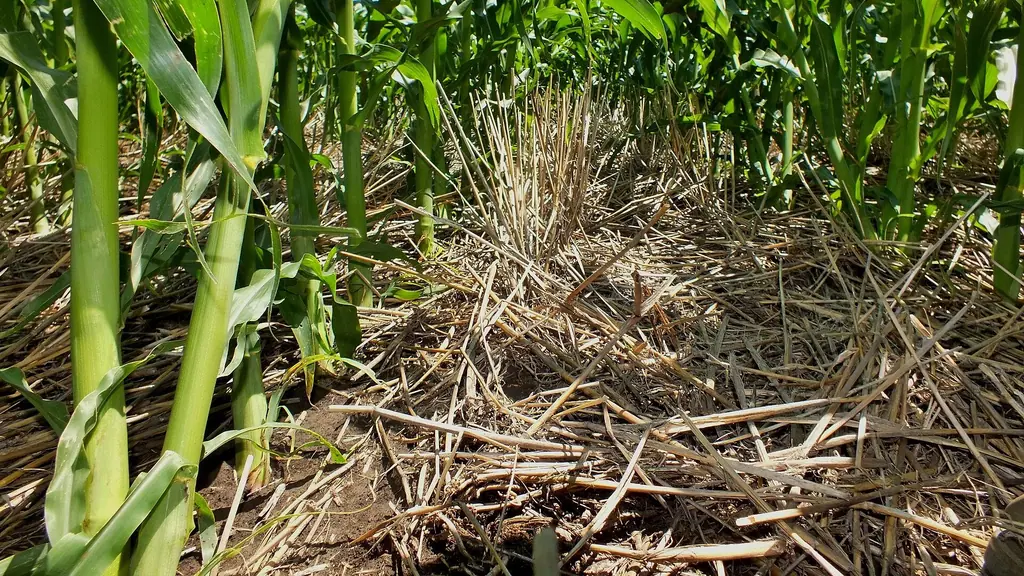
- Mulching and zero tillage reduced evapotranspiration and increased yields, because covering bare soil cuts evaporation.
- Fertiliser use was also associated with higher water productivity.
- Crop rotation was among the top interventions for reducing evapotranspiration.
The IPCC land report also lists water harvesting and micro-irrigation among site-specific solutions that help adapt to and mitigate climate change while combating desertification (high confidence). Our article on sustainable agricultural practices covers soil cover and rotations in more detail.
Tools for planning
FAO's AquaCrop model simulates how herbaceous crops respond to water and management. Agronomists and planners use tools of this kind to compare irrigation schedules, deficit strategies and planting dates before investing in the field.
What this means for policy and investment
The evidence points to several practical principles for dryland irrigation:
- Account for water at basin scale. Measure consumption and return flows, not just withdrawals, before claiming savings.
- Set and enforce allocations. Efficiency subsidies should be tied to reduced entitlements if the goal is to return water to rivers, aquifers or other users.
- Watch groundwater closely. Cheaper pumping and more productive water can accelerate depletion.
- Combine hydraulic and agronomic measures. Mulching, rotations and well-timed supplemental irrigation can raise yields without large increases in consumption.
- Be clear about the goal. Higher farm income and food output per drop are legitimate aims, but they are different from saving water for the environment.
For the wider picture of coping with dry years, see building drought resilience and our desertification and drought topic hub.
Key takeaways
- Agriculture accounts for about 69–70% of global freshwater withdrawals, and far more in parts of Africa and Asia.
- Water applied but not consumed by crops often returns to rivers and aquifers, so field-level savings may not be basin-level savings.
- Drip systems usually cut water applied and raise yields, but total consumption can rise unless allocations are capped.
- Real savings require reduced consumption and enforced allocations; deficit irrigation, mulching and good agronomy can help.
- Supplemental irrigation at critical growth stages can raise dryland yields substantially with small amounts of water.
Frequently asked questions
Does drip irrigation save water?
It usually reduces the water applied to a field and often increases yields. Whether it saves water across a basin depends on whether consumption falls and whether allocations are reduced. Without enforceable allocations, efficiency gains tend to be reinvested in more irrigation.
What is the difference between water efficiency and water productivity?
Irrigation efficiency compares water consumed by the crop with water applied or withdrawn. Water productivity measures crop output per unit of water consumed. Higher productivity is valuable but does not by itself mean more water is available for other uses.
Is supplemental irrigation the same as full irrigation?
No. Supplemental irrigation adds small amounts of water to an essentially rainfed crop at critical stages. Full irrigation aims to meet all or most of the crop's water needs throughout the season.
Sources
- AQUASTAT: Water use (methodology overview) FAO, 2026
- Guidance on realizing real water savings with crop water productivity interventions (FAO Water Reports 46) FAO and FutureWater, 2021
- Climate Change and Land: Summary for Policymakers IPCC, 2019
- Climate Change 2022: Impacts, Adaptation and Vulnerability. Summary for Policymakers IPCC, 2022
- Climate-resilient supplementary irrigation ICARDA, n.d.
- Supplemental Irrigation: A Highly Efficient Water-Use Practice (2nd edition) ICARDA, 2012
- AquaCrop: The FAO crop water productivity model FAO, 2026
How this article was made: researched and drafted with the help of AI tools, then checked against the sources listed above. Read our editorial policy. Spotted an error? Tell us.