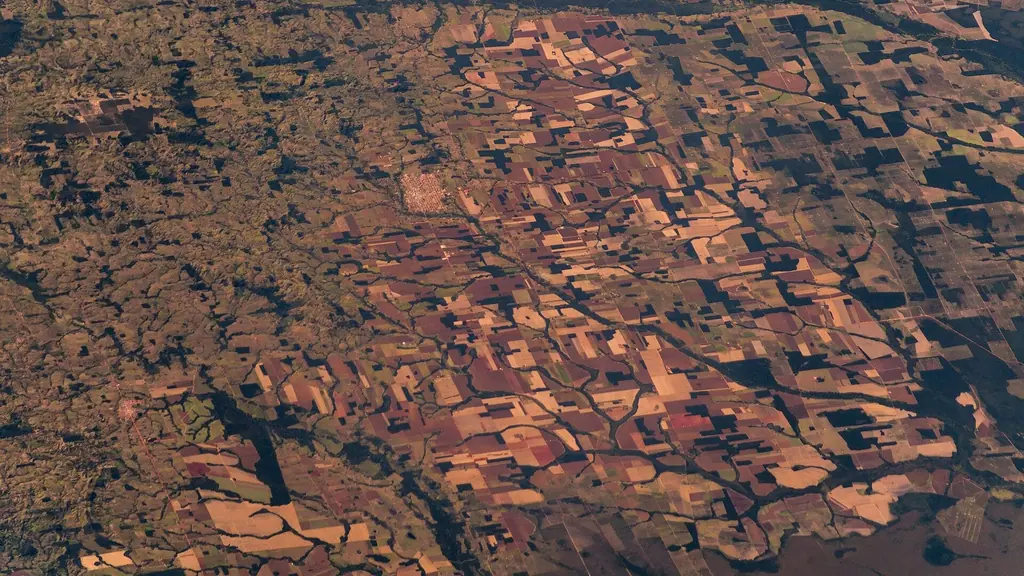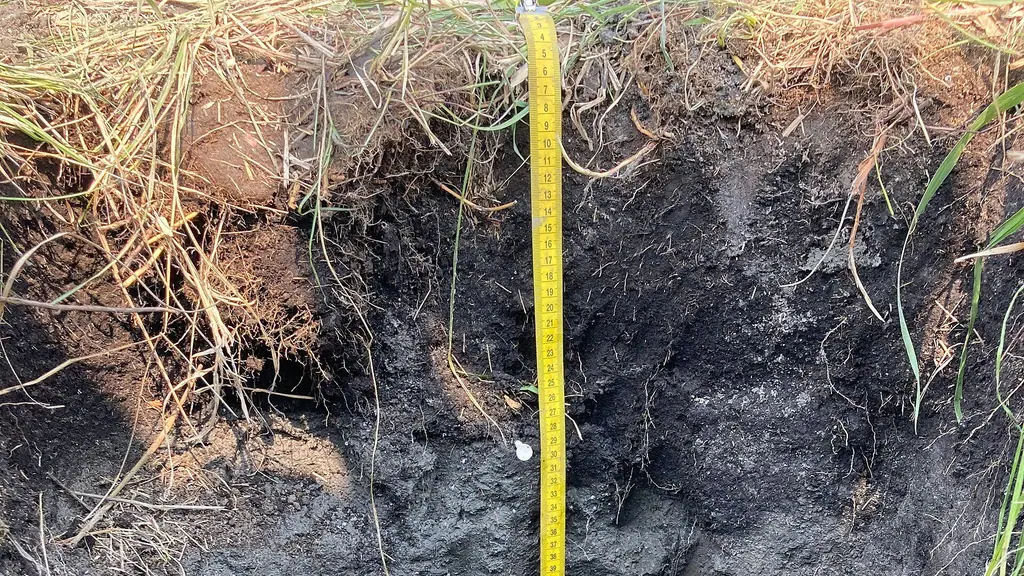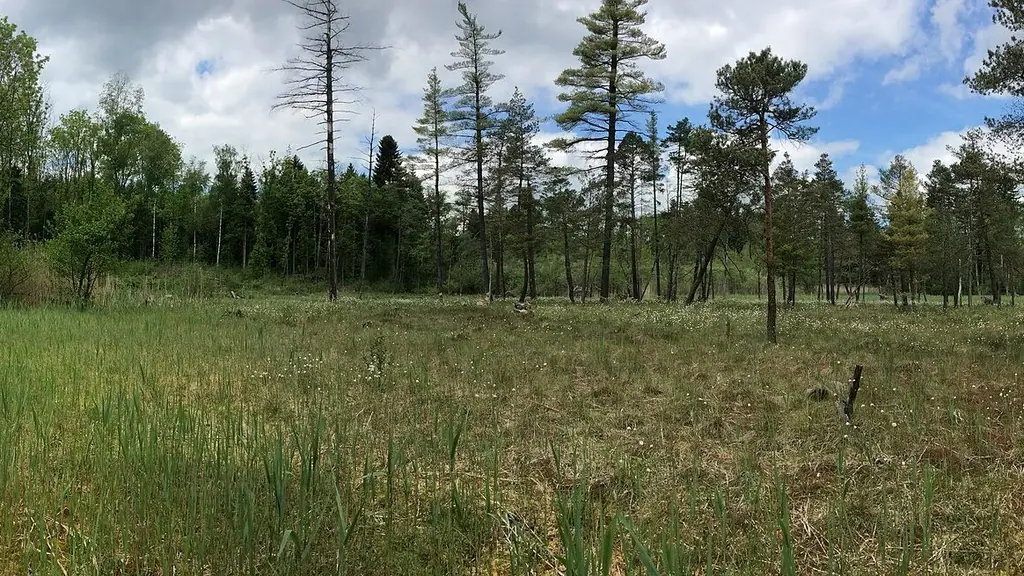
Wetlands are places where water shapes the land: peat bogs and fens, marshes and swamps, river floodplains, lakes, mangroves and salt marshes. Wetlands have long been drained for farming and other human uses. Today they are recognised as some of the most valuable ecosystems on Earth, for climate, water and wildlife.
They are also disappearing. This article looks at how much wetland has been lost, why peatlands matter so much for the climate, and what the evidence says about protecting and restoring them.
How much wetland is left?
The Global Wetland Outlook 2025, produced by the Scientific and Technical Review Panel of the Convention on Wetlands, is the most recent global assessment. It estimates that:
- About 411 million hectares of wetlands, roughly 22 per cent of the global total, have been lost since 1970.
- Losses continue at about 0.52 per cent a year.
- Around 25 per cent of the remaining wetlands are in poor ecological condition, and that share is increasing in all regions.
- The remaining 1.4 billion hectares deliver ecosystem services worth up to USD 39 trillion a year, more than any other type of ecosystem.
The Outlook identifies agricultural expansion, pollution, infrastructure development, disruption of water flows and climate change as interacting pressures.
Why loss estimates differ
Figures for historical wetland loss vary widely, and it helps to know why. The IPBES assessment of land degradation reported in 2018 that wetlands had lost 87 per cent of their area globally, with 54 per cent lost since 1900 (IPBES, 2018).
A 2023 study in Nature took a different approach. Combining national drainage records with land-use maps and modelled wetland extents, it estimated that about 3.4 million square kilometres of inland wetlands have been lost since 1700, mainly to cropland. That is a net loss of about 21 per cent (confidence interval 16–23 per cent). The authors note that this is lower than earlier estimates, which were extrapolated from data that over-represented high-loss regions. Losses have been concentrated in Europe, the United States and China, and accelerated in the mid-twentieth century (Fluet-Chouinard et al., 2023).
The differences reflect different baselines, time periods, wetland types and methods. All the estimates agree that losses have been large and are continuing.
Peatlands: small area, huge carbon store
UNEP's assessment defines a peatland as an ecosystem with a peat soil of any thickness. Although they occupy a small share of the land, peatlands are disproportionately important for the climate.
According to UNEP's Global Peatlands Assessment, published in November 2022 with contributions from 220 experts in more than 50 countries:
- Peatlands cover about 3–4 per cent of the world's land surface but store nearly a third of its soil carbon, about twice as much carbon as all the world's forest biomass combined.
- Around 50 million hectares of peatlands have been drained historically, about 12 per cent of current peatlands or 0.4 per cent of the world's land surface.
- That drained area contributes about 4 per cent of global human-induced greenhouse gas emissions each year.
- A further 500,000 hectares of peatlands are destroyed by human activities every year.
UNEP also estimated that if emissions from drained and degraded peatlands continue at the current rate, they would consume 12 per cent of the remaining emissions budget for keeping warming below 2°C, and 41 per cent of the budget for 1.5°C.
The Global Wetland Outlook makes the same point in simpler terms: peatlands store more carbon than any other terrestrial ecosystem, yet many are degraded and now emit greenhouse gases instead of storing them.
Why drained peatlands keep emitting
Draining a peatland turns a carbon store into a carbon source. As UNEP's executive director put it at the launch of the assessment, damaged or drained peatlands will continue to release emissions "for decades". That long tail is why preventing drainage in the first place matters so much.
The IPCC's Special Report on Climate Change and Land highlights a related advantage. Most land-based carbon sinks, such as forests or farm soils, slow down as they approach saturation. Peatlands, by contrast, can continue to sequester carbon for centuries (high confidence). The report also lists conserving peatlands and wetlands among the land responses with immediate benefits, while restoration takes longer to deliver. It warns that delays in tackling land degradation could make peatland rewetting more difficult in future (medium confidence).
For more on the soil side of this story, see our article on soil carbon and the climate.
Wetlands beyond carbon
Carbon is only part of the value of wetlands. The Global Wetland Outlook notes that wetlands regulate floods, purify water and support food security for billions of people. Inland wetlands such as rivers, lakes and marshes help prevent flooding and sustain water supplies during droughts, while coastal wetlands such as mangroves, seagrasses and salt marshes sequester carbon rapidly and buffer coastlines against rising seas and storm surges.
The IPCC's summary for policymakers on adaptation supports this, finding with high confidence that natural river systems, wetlands and upstream forests reduce flood risk in most circumstances by storing water and slowing its flow, and that coastal wetlands protect against erosion and flooding where there is sufficient space and habitat. Coastal wetlands are covered in more detail in our article on mangrove and coastal restoration.
What can be done
Protect what remains
Because drained peat keeps emitting for decades, and because restoring wetlands is slow and costly, protection comes first. The IPCC's 2022 mitigation report estimates that conserving, managing and restoring forests and other ecosystems, explicitly including coastal wetlands and peatlands, offers 4.2–7.4 billion tonnes of CO₂-equivalent a year of economic mitigation potential between 2020 and 2050, the largest share of the land sector's potential.
Rewet drained peatlands
Rewetting drained peatlands is a central recommendation of the Global Peatlands Assessment. UNEP estimated that restoring degraded peatlands would contribute 10 per cent of the emission reductions and removals that nature-based solutions across all ecosystems could provide by 2030. In tropical peatland countries alone, it estimated that conserving and restoring peatlands could reduce emissions by 800 million tonnes a year, around 2 per cent of global emissions.
The Global Peatlands Assessment also recommends practical steps for farmers and the public, including rewetting drained farmland, using peat substitutes in horticulture and gardening, and replacing peat burned for heating with clean energy.
Map and account for peatlands
UNEP encourages countries to map peat soils down to a depth of 10 centimetres so that their climate role is properly accounted for, and urges peatland-rich countries to include peatlands in their national climate pledges (Nationally Determined Contributions).
Use international frameworks
The Convention on Wetlands, also known as the Ramsar Convention, is the only international treaty focused on wetlands. According to the Global Wetland Outlook, its 172 Contracting Parties have committed to maintaining the ecological character of more than 2,530 Wetlands of International Importance, covering around 2.58 million square kilometres, approximately 14–17 per cent of the world's wetlands. National policies, land-use planning and finance, including carbon markets, can build on this framework.
Fund protection, not just repair
UNEP notes that peatland restoration costs will keep rising as long as healthy peatlands are drained, and will always exceed the cost of protecting them. The Global Wetland Outlook similarly warns that conservation funding remains far below what is required. Our guide to payments for ecosystem services explains one way to reward landholders for keeping wetlands intact.
Key takeaways
- About 22 per cent of the world's wetlands, roughly 411 million hectares, have been lost since 1970, according to the Global Wetland Outlook 2025, and losses continue.
- Peatlands cover only 3–4 per cent of land but hold nearly a third of the world's soil carbon.
- Drained and degraded peatlands contribute about 4 per cent of global human-induced greenhouse gas emissions each year.
- Unlike most land carbon sinks, intact peatlands can keep sequestering carbon for centuries.
- Protecting remaining wetlands is cheaper and faster than restoring them; rewetting drained peatlands is a priority where drainage has already happened.
Frequently asked questions
Are peatlands the same as wetlands?
Peatlands are one type of wetland, defined by UNEP as ecosystems with a peat soil of any thickness. The wider wetland family also includes rivers, lakes, marshes and coastal wetlands such as mangroves, seagrasses and salt marshes.
Why do historical wetland loss figures vary so much?
Studies use different baselines (for example 1700, 1900 or 1970), different definitions of wetland and different methods. A 2023 reconstruction estimated a 21 per cent net loss of inland wetlands since 1700, while the Global Wetland Outlook 2025 estimates a 22 per cent loss of all wetlands since 1970.
Can a drained peatland be fully restored?
Rewetting is the main restoration tool, but the IPCC notes that restoring high-carbon ecosystems takes longer to deliver results than conserving them, and UNEP finds restoration will always cost more than protection. That is why preventing drainage is the most effective option.
Sources
- Global Wetland Outlook 2025 Convention on Wetlands, 2025
- Global Wetland Outlook 2025: the outlook Convention on Wetlands, 2025
- Global assessment reveals huge potential of peatlands as a climate solution UNEP, 2022
- Extensive global wetland loss over the past three centuries (Fluet-Chouinard et al., Nature 614) Nature, 2023
- Climate Change and Land: Summary for Policymakers IPCC, 2019
- Climate Change 2022: Mitigation of Climate Change. Summary for Policymakers IPCC, 2022
- Climate Change 2022: Impacts, Adaptation and Vulnerability. Summary for Policymakers IPCC, 2022
- Media release: Worsening worldwide land degradation now 'critical', undermining well-being of 3.2 billion people IPBES, 2018
How this article was made: researched and drafted with the help of AI tools, then checked against the sources listed above. Read our editorial policy. Spotted an error? Tell us.