Most discussions of climate change focus on energy: power stations, cars, factories. But the land beneath our feet plays a double role. It releases greenhouse gases when forests are cleared, soils are ploughed and wetlands are drained. At the same time, plants and soils absorb a large share of the carbon dioxide that humans emit. And a warming climate is changing the land itself, making droughts, heatwaves and degradation worse.
In 2019, the Intergovernmental Panel on Climate Change (IPCC) published its Special Report on Climate Change and Land (often shortened to SRCCL). It remains the IPCC's dedicated assessment of how land and climate interact. This article summarises its main findings and adds context from more recent assessments.
How much land do people use?
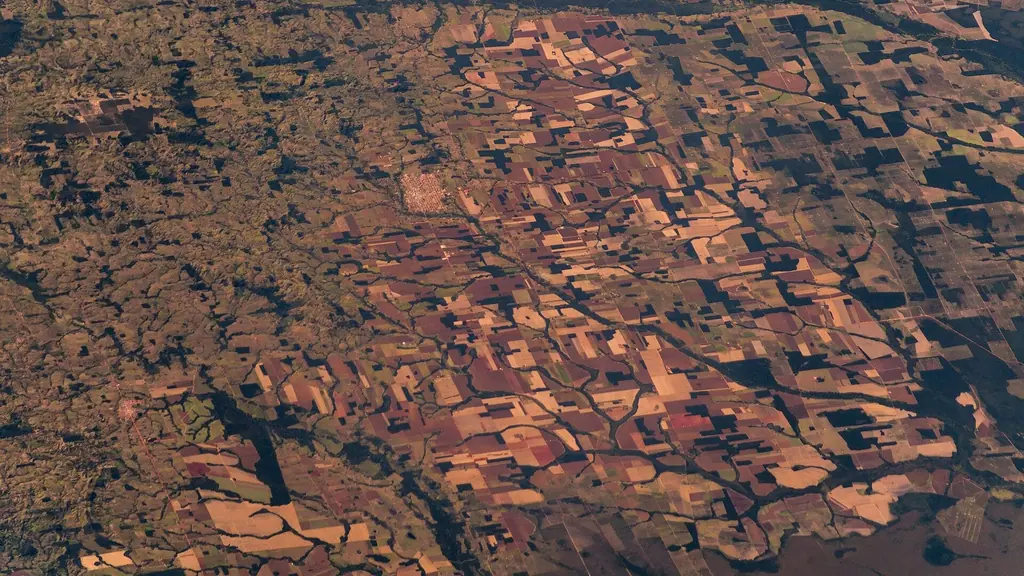
The IPCC found that human use directly affects more than 70 per cent of the global ice-free land surface (likely range 69–76 per cent, high confidence). People use between a quarter and a third of the land's potential net primary production, which is the plant growth that land can support, for food, feed, fibre, timber and energy.
Since 1961, according to the report, population growth and rising consumption have driven unprecedented rates of land and freshwater use. Agriculture accounts for about 70 per cent of global freshwater use. The per capita supply of vegetable oils and meat has more than doubled, and food calories per person have risen by about a third. Yet 25–30 per cent of all food produced is lost or wasted, an estimated 821 million people were undernourished at the time of the report, and about two billion adults were overweight or obese.
Land is warming faster than the planet as a whole
One of the report's most striking findings is that land is heating up much faster than the global average. Between 1850–1900 and 2006–2015, mean land surface air temperature rose by 1.53°C (very likely range 1.38–1.68°C), while global mean surface temperature, which includes the oceans, rose by 0.87°C (IPCC SRCCL).
The consequences are already visible. The IPCC reports, with high confidence, that warming has increased the frequency, intensity and duration of heat-related events, including heatwaves, in most land regions. Droughts have become more frequent and intense in some regions, including the Mediterranean, west Asia, many parts of South America, much of Africa and north-eastern Asia (medium confidence). Global warming has also shifted climate zones, with arid zones expanding.
More recent work supports this picture. A 2024 report from the UN Convention to Combat Desertification found that 77.6 per cent of Earth's land was drier in 1990–2020 than in the preceding 30 years, and that drylands now cover 40.6 per cent of land outside Antarctica (UNCCD, 2024). Our article on water scarcity in drylands explores what this means for people.
Land as a source of emissions
The land sector, which the IPCC calls Agriculture, Forestry and Other Land Use (AFOLU), is a major source of greenhouse gases. During 2007–2016, AFOLU activities accounted for:
| Gas | AFOLU share of human emissions (2007–2016) |
|---|---|
| Carbon dioxide (CO₂) | about 13% |
| Methane (CH₄) | 44% |
| Nitrous oxide (N₂O) | 81% |
| All greenhouse gases combined | 23% (12.0 ± 2.9 GtCO₂-eq per year) |
Source: IPCC SRCCL, statement A.3 (medium confidence).
Most of the CO₂ comes from deforestation, partly offset by afforestation and reforestation. If emissions from the wider food system before and after production are included, such as energy, transport and industry beyond the farm gate, the IPCC estimated that food accounts for 21–37 per cent of total net human greenhouse gas emissions.
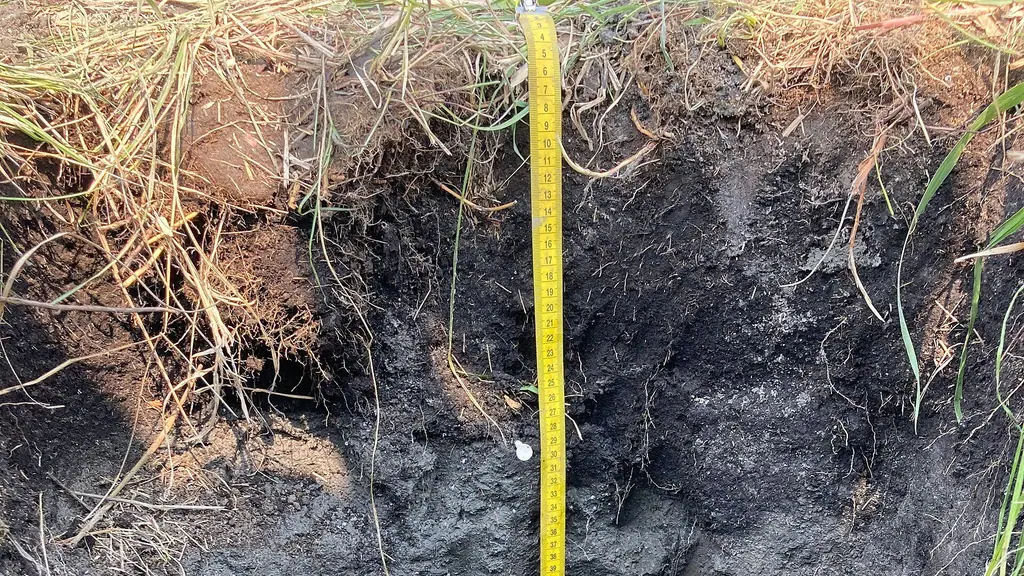
Land degradation adds to the problem. The IPBES assessment of land degradation estimated that degradation released between 3.6 and 4.4 billion tonnes of CO₂ a year in 2000–2009 (IPBES, 2018). Drained and degraded peatlands alone contribute around 4 per cent of annual human-induced greenhouse gas emissions, according to UNEP's Global Peatlands Assessment.
Land as a carbon sink
Land also absorbs carbon. The IPCC found that the natural response of vegetation and soils to rising CO₂ concentrations, nitrogen deposition and climate change removed about 11.2 billion tonnes of CO₂ a year in 2007–2016, equivalent to 29 per cent of total CO₂ emissions (medium confidence). Satellite records show vegetation "greening" across parts of Asia, Europe, South America, central North America and south-east Australia, driven by longer growing seasons, CO₂ fertilisation, nitrogen deposition and land management.
The catch is that this sink is not guaranteed. The IPCC states, with high confidence, that the persistence of the sink is uncertain because of climate change. Future increases in emissions from vegetation and soils as the climate warms are projected to counteract gains from CO₂ fertilisation, and thawing permafrost is expected to increase the loss of soil carbon.
Degradation and desertification
According to the SRCCL, about a quarter of Earth's ice-free land is subject to human-induced degradation (medium confidence). Soil erosion from conventionally tilled fields is estimated to be more than 100 times faster than soil formation, and 10 to 20 times faster even under no-till farming. In 2015, about 500 million people (range 380–620 million) lived in areas that experienced desertification between the 1980s and 2000s, with the largest numbers in South and East Asia, around the Sahara including North Africa, and in the Middle East including the Arabian Peninsula (low confidence).
The IPCC also found, with high confidence, that dust storms have become more frequent and intense over recent decades in many dryland areas because of land-use change and climate factors, with growing health impacts in regions including the Arabian Peninsula, the broader Middle East and Central Asia. For more on causes, see our explainer on the causes and consequences of desertification.
Land changes local and regional climate
Land is not just a passive victim of climate change. Changes in land cover alter temperature and rainfall directly through exchanges of energy and water. The IPCC found that increased forest cover in tropical regions produces local cooling through evaporation, while in snowy boreal regions more trees can have a winter warming effect because darker canopies reflect less sunlight.
Cities are an extreme example. Urbanisation and global warming together intensify heat in and around cities, particularly at night and during heatwaves (high confidence). Our article on urban heat islands explains this effect.
What the IPCC says works
The SRCCL assessed dozens of land-based responses. A small group, it found, help with adaptation, mitigation, land degradation and food security at the same time. These include sustainable food production, improved and sustainable forest management, soil organic carbon management, ecosystem conservation and land restoration, reduced deforestation and degradation, and reduced food loss and waste (high confidence).
The IPCC's 2022 mitigation report put numbers on the potential. It estimated the economic mitigation potential of land-sector options at 8–14 billion tonnes of CO₂-equivalent a year between 2020 and 2050, at costs below USD 100 per tonne (high confidence). The largest share, 4.2–7.4 billion tonnes, comes from conserving, managing and restoring forests and other ecosystems such as coastal wetlands, peatlands, savannas and grasslands, with reduced tropical deforestation offering the most. Better crop and livestock management and carbon sequestration in agriculture could contribute 1.8–4.1 billion tonnes, and demand-side measures such as healthier diets and less food waste about 2.1 billion tonnes.
Important caveats
The IPCC is clear about limits:
- Land cannot replace emission cuts elsewhere. Land-sector mitigation cannot compensate for delayed emission reductions in other sectors.
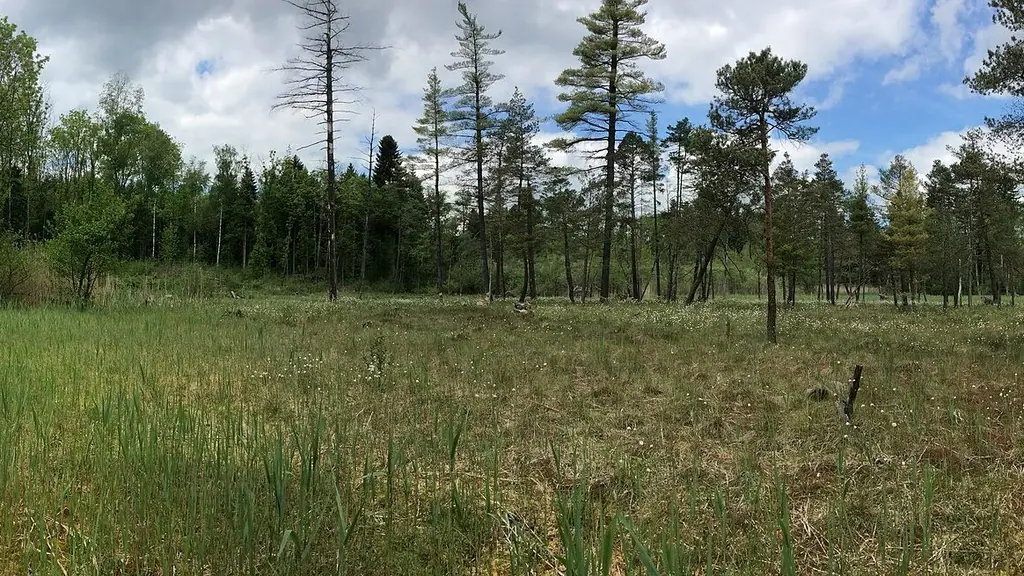
- Carbon in land can be lost. Carbon stored in soils and vegetation does not keep accumulating forever, and it can be released by fire, drought, pests or poor management. Peatlands are an exception in that they can keep sequestering carbon for centuries.
- Scale brings trade-offs. Bioenergy crops or tree planting at the scale of several million square kilometres could increase risks to food security, land degradation and desertification (medium confidence).
- Timing matters. Protecting peatlands, wetlands, rangelands, mangroves and forests has immediate benefits; restoration and afforestation take decades to deliver.
Key takeaways
- Human use directly affects more than 70 per cent of Earth's ice-free land, according to the IPCC.
- Land surface air temperature rose by 1.53°C between 1850–1900 and 2006–2015, compared with 0.87°C for the global average.
- Agriculture, forestry and other land use produced about 23 per cent of net human greenhouse gas emissions in 2007–2016, while land ecosystems absorbed about 29 per cent of CO₂ emissions.
- About a quarter of ice-free land is degraded, and climate change is making degradation worse.
- Conserving and restoring ecosystems, better farming and less food waste offer large mitigation potential, but cannot substitute for cutting fossil fuel emissions.
Frequently asked questions
Is land a net source or a net sink of carbon?
Both processes happen at once. The IPCC estimated that during 2007–2016 human land use caused net CO₂ emissions of about 5.2 billion tonnes a year, while the natural response of land absorbed about 11.2 billion tonnes, giving a net removal of about 6.0 billion tonnes a year. The future of that sink is uncertain as the climate warms.
Is the 2019 report still current?
The SRCCL remains the IPCC's dedicated assessment of land and climate. Later IPCC reports, including the 2022 report on mitigation cited above, have updated estimates of the land sector's mitigation potential, so it is worth checking the most recent assessment for any specific figure.
Sources
- Climate Change and Land: Summary for Policymakers IPCC, 2019
- Climate Change 2022: Mitigation of Climate Change. Summary for Policymakers IPCC, 2022
- Media release: Worsening worldwide land degradation now 'critical', undermining well-being of 3.2 billion people IPBES, 2018
- Three-quarters of Earth's land became permanently drier in last three decades UNCCD, 2024
- Global assessment reveals huge potential of peatlands as a climate solution UNEP, 2022
How this article was made: researched and drafted with the help of AI tools, then checked against the sources listed above. Read our editorial policy. Spotted an error? Tell us.