Gum arabic is one of the few dryland tree products traded worldwide. It is a hardened sap collected by hand from acacia trees across a belt of savanna south of the Sahara. It ends up in soft drinks, sweets, medicines and cosmetics. For the farmers and herders who tap it, gum is cash income in a region where rain-fed crops often fail. The trees that produce it also protect soils and supply fodder. That combination makes gum arabic a frequent example of how markets and land restoration can support each other.
What the original page covered
The 2010 version of this page described a partnership between the former Global Mechanism and the Network for Natural Gums and Resins in Africa (NGARA). It said acacia trees help reduce soil erosion and enrich the soil while providing income to communities in arid parts of sub-Saharan Africa. It noted that NGARA had grown out of an FAO project called Operation Acacia. It also described Global Mechanism work in four pilot countries (Ethiopia, Uganda, Mali and Burkina Faso) to map gum arabic projects, identify trade constraints and find ways to channel investment into sustainable land management through the sector.
What gum arabic is
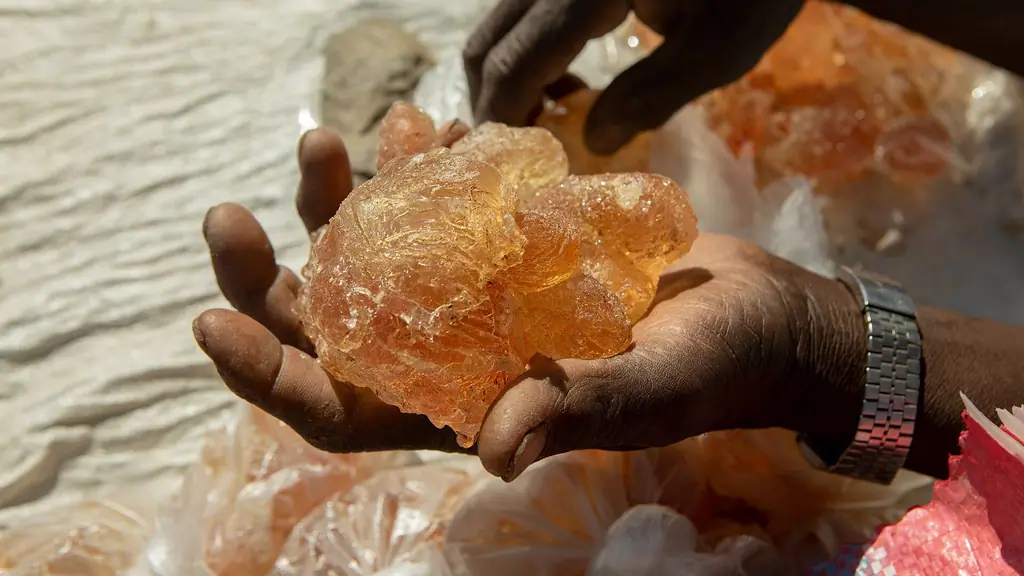
The international food additive specification prepared by the FAO/WHO Joint Expert Committee on Food Additives defines gum arabic (food additive number INS 414) as a dried exudate from the stems and branches of Acacia senegal or Acacia seyal. Botanists now often call the first species Senegalia senegal, but the trade still uses the older name.
The two sources produce different grades. According to UNCTAD, Acacia senegal yields "hard" gum, which is lighter in colour and fetches a higher price. Acacia seyal yields a more brittle "friable" gum. The food industry is the largest user, with further demand from pharmaceuticals, cosmetics, paper, paints and adhesives.
The gum belt
The "gum belt" is a band of arid wooded savanna stretching across sub-Saharan Africa. UNCTAD describes it as running from Mauritania and Senegal in the west to Sudan, Eritrea, Somalia, Kenya and Tanzania in the east.
UNCTAD's 2018 analysis found that in 2014–2016, Sudan accounted for 66% of crude gum arabic exports, Chad for 13% and Nigeria for 8.5%. Trade is highly concentrated at the buying end too. France and India import about three-quarters of all crude gum arabic, and France exports about two-thirds of processed gum. Most of the value added through processing is therefore captured outside the producing countries.
Sudan and the conflict
Sudan's gum belt spans Kordofan, Darfur, Blue Nile, White Nile, Sennar and Gedaref. A July 2026 UN News report said the trade supports roughly five million people. Before the war began in April 2023, Sudan supplied an estimated 70–80% of global crude exports. The same report describes looting, extortion and smuggling of gum by armed groups, which has disrupted the livelihoods of producers.
Trees, soils and livelihoods
In Sudan, Acacia senegal (known locally as hashab) was traditionally grown in rotation with crops. A paper published by FAO on gum producers in North Kordofan explains how the system worked. Land alternated between periods under acacia, when the trees were tapped for gum, and periods of cropping. The trees improved soil fertility and protected against erosion, and also provided fuel, fodder, poles and shade. The paper reports that the droughts of the 1970s and 1980s killed many trees and that later marketing problems led some farmers to cut acacias for charcoal. Shorter fallows then reduced soil fertility and crop yields.
Research on the soil benefits is more nuanced than is often claimed. A 2018 study of Acacia senegal plantations in Sudan found that soil organic carbon and nutrients increased with plantation age, and concluded that keeping trees in the landscape supports soil fertility in the Sahel. However, it found little evidence that nitrogen fixation by the trees was a major source of soil nitrogen at those sites.
Gum arabic in land restoration
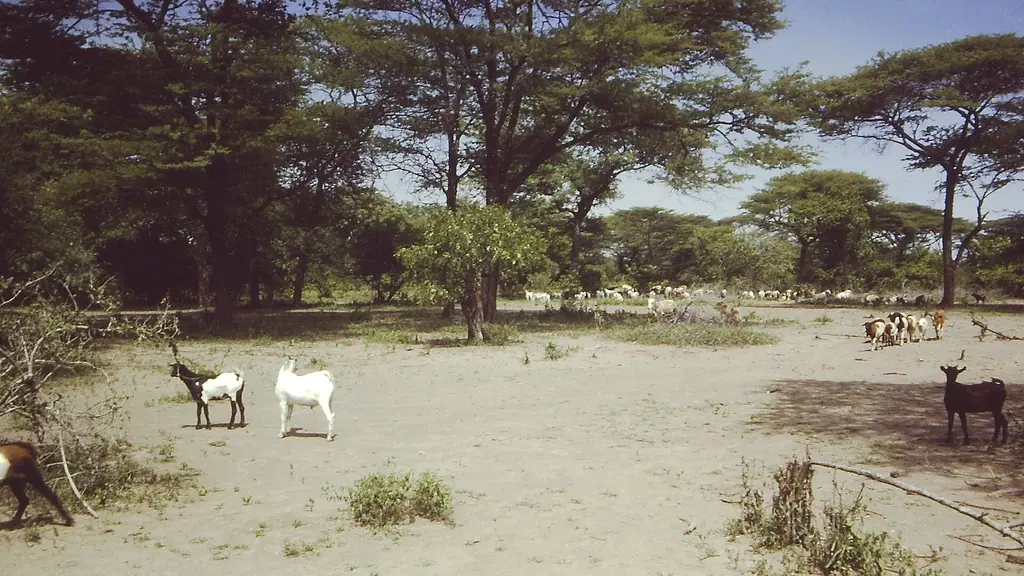
Because Acacia senegal tolerates drought and produces a saleable product, it is widely used in dryland restoration. Under FAO's EU-funded Action Against Desertification programme, which supports the Great Green Wall, communities in Mauritania have planted it alongside other native species to stabilise dunes. Residents sell the gum and use the plots for fodder in the lean season.
The economic logic is the one the original page described. When producers earn a fair return from gum, they have a reason to protect and replant trees rather than clear them. UNCTAD argues that moving into higher-value processing could raise incomes, secure rural livelihoods and support efforts to combat desertification. For more on tree-based farming systems, see agroforestry and farmer-managed natural regeneration. For the wider drivers of dryland degradation, see causes and consequences of desertification.
Key takeaways
- Gum arabic is the dried exudate of Acacia senegal and Acacia seyal, traded as food additive INS 414.
- The gum belt crosses Africa from Mauritania and Senegal to the Horn of Africa and East Africa.
- In 2014–2016 Sudan, Chad and Nigeria together supplied nearly nine-tenths of crude exports, while processing value was captured mostly in Europe.
- Acacia-based systems can support soil fertility, fodder and income, although nitrogen-fixation benefits vary by site.
- Sudan's war since 2023 has severely disrupted a trade that supports millions of people.
Sources
- Gum arabic: growing demand means new opportunities for African producers UNCTAD, 2018
- Gum arabic (JECFA specification, INS 414) FAO/WHO Joint Expert Committee on Food Additives, 1998
- The role of forestry extension in developing rural communities in Western Sudan: gum arabic producers' associations in Northern Kordofan FAO, n.d.
- Linkages between soil carbon, soil fertility and nitrogen fixation in Acacia senegal plantations of varying age in Sudan PeerJ (Abaker et al.), 2018
- Giving back to the desert in Mauritania FAO, 2024
- Looted gold and gum arabic are bankrolling Sudan's war, UN warns UN News, 2026
How this article was made: researched and drafted with the help of AI tools, then checked against the sources listed above. Read our editorial policy. Spotted an error? Tell us.