Most of the world's food is grown by families, on farms they own or work themselves. Yet for decades family farmers were often treated as a problem to be modernised away rather than as the backbone of food systems. Since 2014, the UN system has tried to change that, through an International Year, a ten-year Decade, and a push for farming that produces more while using fewer inputs and less land.
A paradigm shift at FAO's Committee on Agriculture
In late September 2014, at the 24th session of FAO's Committee on Agriculture (COAG) in Rome, Director-General José Graziano da Silva called for a "paradigm shift" in agriculture. As reported by UN News, he argued that the main challenge was to reduce the use of inputs, especially water and chemicals, so that agriculture, forestry and fisheries could follow a more sustainable and productive long-term path. He listed agro-ecology, climate-smart agriculture, biotechnology and genetically modified organisms among the options, urged an approach based on science and evidence, and noted projections that food production would need to rise by about 60 percent by 2050 to feed some nine billion people. Family farming, water governance and soil management were all on the session's agenda.
The International Year of Family Farming, 2014
The UN General Assembly declared 2014 the International Year of Family Farming in resolution 66/222, adopted on 22 December 2011 following a proposal from the FAO Conference. The resolution affirmed that family and smallholder farming are an important basis for sustainable food production and invited FAO to facilitate the Year with governments and other partners.
FAO marked the Year with its flagship report, The State of Food and Agriculture 2014: Innovation in Family Farming. It produced the first comprehensive estimate of the number of family farms worldwide: at least 500 million, or about nine out of ten farms. Family farms occupy a large share of the world's agricultural land and produce about 80 percent of the world's food. The report argued that family farmers need support to innovate in ways that promote sustainable intensification and better rural livelihoods.
The UN Decade of Family Farming, 2019–2028
Building on the Year, the General Assembly adopted resolution 72/239 on 20 December 2017, proclaiming 2019–2028 the United Nations Decade of Family Farming. The resolution recognises the role of family farming, pastoralism and smallholder farming, and asks the Secretary-General to report on implementation on the basis of biennial reports compiled jointly by FAO and the International Fund for Agricultural Development (IFAD).
FAO and IFAD act as the joint secretariat. Their Global Action Plan, published in 2019, describes family farming as the predominant form of food and agricultural production in both developed and developing countries, producing over 80 percent of the world's food in value terms. It is organised around seven pillars:
- Develop an enabling policy environment to strengthen family farming.
- Support youth and ensure the generational sustainability of family farming.
- Promote gender equity in family farming and the leadership role of rural women.
- Strengthen family farmers' organisations and capacities.
- Improve socio-economic inclusion, resilience and well-being of family farmers and rural communities.
- Promote sustainability of family farming for climate-resilient food systems.
- Strengthen the multidimensionality of family farming to promote social innovations that contribute to territorial development and food systems that safeguard biodiversity, the environment and culture.
Save and Grow: producing more with less
The intellectual basis for FAO's call to cut inputs was set out three years earlier in Save and Grow (2011), a policymaker's guide to sustainable intensification of smallholder crop production. It describes sustainable crop production intensification as producing more from the same area of land while conserving resources, reducing harm to the environment and enhancing natural capital and ecosystem services. In practice, the guide points to:
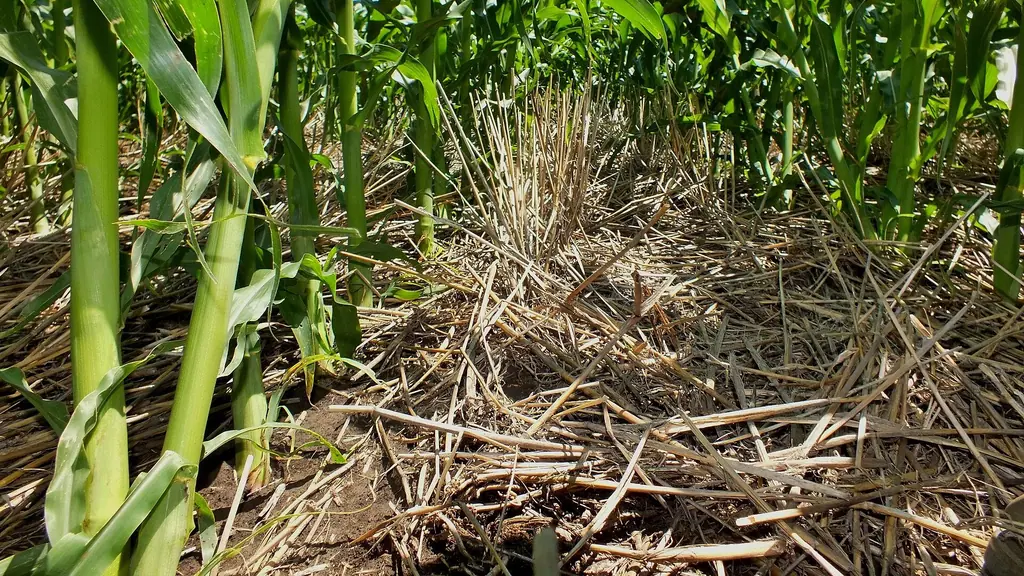
- conservation agriculture practices that restore soil health;
- good seed of high-yielding, locally adapted varieties;
- integrated pest management;
- plant nutrition based on healthy soils;
- efficient water management; and
- integration of crops, pastures, trees and livestock.
Save and Grow frames this as greening the Green Revolution through an ecosystem approach that makes use of soil organic matter, natural water regulation, pollination and biological pest control. For more on these techniques, see our explainers on conservation agriculture and sustainable agricultural practices.
Why it matters for land
Because family farmers manage so much of the world's farmland, their choices largely determine whether soils are built up or worn down. Secure tenure, access to finance and extension, and fair markets make it more likely that families invest in practices that protect land over the long term. Our page on land tenure and smallholders looks at these links in more detail.
Key takeaways
- Family farms number at least 500 million, run about nine in ten farms and produce about 80 percent of the world's food (FAO, 2014).
- The UN declared 2014 the International Year of Family Farming (resolution 66/222) and 2019–2028 the UN Decade of Family Farming (resolution 72/239).
- FAO and IFAD lead the Decade, guided by a seven-pillar Global Action Plan.
- In 2014 FAO's Director-General called for a shift away from input-intensive farming toward more sustainable models.
- FAO's Save and Grow approach aims to produce more from the same land while conserving soil, water and biodiversity.
Sources
- World needs 'paradigm shift' towards sustainable agriculture, UN agency urges UN News, 2014
- Resolution 66/222: International Year of Family Farming, 2014 United Nations General Assembly, 2011
- Resolution 72/239: United Nations Decade of Family Farming (2019–2028) United Nations General Assembly, 2017
- The State of Food and Agriculture 2014: Innovation in Family Farming (UNCCD Library record) FAO, 2014
- United Nations Decade of Family Farming 2019-2028: Global Action Plan FAO and IFAD, 2019
- Save and Grow: A policymaker's guide to the sustainable intensification of smallholder crop production FAO, 2011
How this article was made: researched and drafted with the help of AI tools, then checked against the sources listed above. Read our editorial policy. Spotted an error? Tell us.