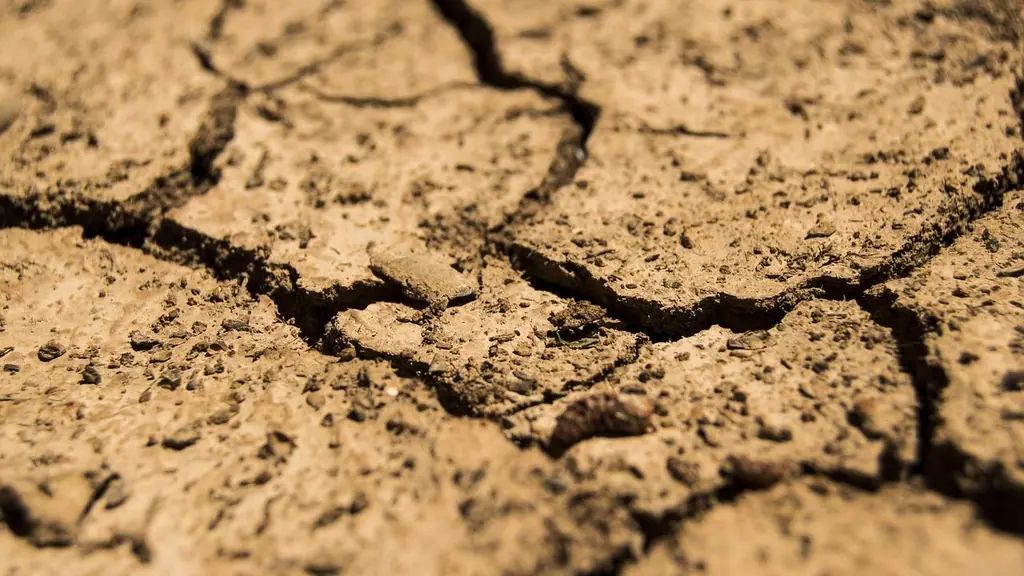
Ask a class what desertification means and many children will describe sand dunes rolling over villages. It is a vivid picture, but it is not quite right, and it leaves out the part children can actually understand and do something about: what happens to soil when it loses its protective cover.
This guide sets out the core ideas, the facts worth teaching (with sources), common misconceptions, and a sequence of activities for different ages. It is written for teachers, parents and youth leaders. No specialist equipment is needed.
What desertification actually is
The United Nations Convention to Combat Desertification (UNCCD) defines desertification as the degradation of land in arid, semi-arid and dry sub-humid areas. Its frequently asked questions page is explicit that this is not the natural expansion of existing deserts. It is land that used to be productive becoming less able to grow plants, hold water and support people and animals.
For children, a workable definition is: desertification is when land in dry places gets worn out, so it can no longer grow much or hold water well. Older pupils can add the two main groups of causes the UNCCD names: variations in climate, and human activities such as overgrazing, clearing vegetation and poor farming or water management.
Why dry places?
Drylands already receive little rain, and that rain often arrives in short, heavy bursts. When plant cover is lost, bare soil is exposed to both water and wind. According to a December 2024 UNCCD release, drylands covered 40.6 per cent of all land on Earth (excluding Antarctica) and were home to about 2.3 billion people in 2020. The same release reports that 77.6 per cent of Earth's land experienced drier conditions in the three decades up to 2020 than in the previous 30 years.
Facts worth teaching, by age
Children remember a small number of solid facts better than a long list. These are verified and age-appropriate.
| Age band | Key idea | Supporting fact |
|---|---|---|
| 5–7 | Soil is alive and precious | FAO notes there are more living organisms in a tablespoon of soil than there are people on Earth (FAO, 2017). |
| 5–7 | Plants protect soil | Roots hold soil together; leaves and mulch soften the impact of raindrops. |
| 8–11 | Soil forms very slowly | It can take up to 1,000 years to form one centimetre of topsoil, which can be lost in a single heavy rainfall if the soil is unprotected (UN News, 2019). |
| 8–11 | Most food depends on soil | FAO estimates that 95 per cent of our food is produced in soils. |
| 11–14 | Degradation is widespread | The UNCCD's second Global Land Outlook (2022) estimated that up to 40 per cent of the planet's land is degraded, directly affecting half of humanity (UNCCD, 2022). |
| 11–14 | Scale of the problem | The UNCCD says desertification affects about a third of the Earth's land surface, over 4 billion hectares. |
Present the larger numbers as estimates, which is how the sources present them. Older pupils can discuss why different reports give different figures: definitions, methods and the year of the data all vary.
Common misconceptions to address
"Deserts are spreading like a tide." Desertification happens in patches, wherever land is mismanaged or stressed by drought, sometimes far from any existing desert.
"Deserts are bad places." Natural deserts are healthy ecosystems with specialised plants and animals. The problem is degraded land, not deserts themselves.
"It is only caused by climate change." Climate matters, but the UNCCD stresses human land use. The 2022 Global Land Outlook press release notes that global food systems account for 80 per cent of deforestation and 70 per cent of freshwater use.
"It cannot be reversed." Degraded land can often be restored through practices such as replanting, protecting soil cover, managed grazing and water harvesting. This is the hopeful message children need.
Activities by age group
The sequence below builds from observation to explanation to action. Each activity can stand alone.
Ages 5–7: The raindrop splash
- Place a spoonful of dry, crumbly soil on a sheet of dark paper outdoors.
- Let children drip water onto it from a height of about 30 cm using a dropper or a wet sponge.
- Look at how far soil grains splash. Repeat with a few leaves laid over the soil.
- Ask: what did the leaves do? Where might the splashed soil end up in a real field?
Safety: Wash hands afterwards. Use soil from a known clean source, not from areas near roads or where animals toilet.
Ages 8–11: Desertification in a tray
This classic erosion model compares bare soil with soil protected by plants or mulch. (It is also available as a printable worksheet in this series.)
- Fill two or three shallow trays or cut-open plastic bottles with the same soil. Leave one bare, cover one with dry leaves or straw, and in the third plant fast-growing seeds such as cress two weeks in advance.
- Prop each tray at the same slope, with a cup at the low end to catch run-off.
- "Rain" the same volume of water on each tray from a watering can or a bottle with holes in the cap, at the same height.
- Compare the colour and amount of water in each cup. Muddy water means soil has been carried away.
Children typically see far cloudier run-off from bare soil. Discuss why: no leaves to break the impact of the drops, no roots to bind the soil. Link this to grazing animals eating vegetation down to the ground, or fields left bare after harvest.
Safety: Keep water away from electrical sockets. Mop spills promptly to avoid slips. An adult should cut any plastic bottles.
Ages 8–11: Wind and bare ground
Indoors, place a small mound of dry sand and a mound of damp soil mixed with grass clippings on a tray. Use a hand-held fan on its lowest setting (operated by an adult) to blow across each. Which mound loses more material? Connect this to sand and dust storms, which lift loose, dry soil from bare ground.
Safety: Children should stand behind the fan and wear eye protection or keep their faces well back. Do this activity with very small amounts of material.
Ages 11–14: Investigating causes and solutions
Older pupils can move from model to real-world case studies.
- Mapping: Using an online map, ask pupils to locate dryland regions on several continents and identify what land uses they see (grazing, cropland, cities).
- Cause-and-effect chains: In groups, pupils build chains such as "drought → less grass → animals overgraze remaining plants → bare soil → erosion → less grass next year". Then they identify where in the chain a change could break the cycle.
- Solutions research: Assign each group one approach, such as tree planting, conservation agriculture, rotational grazing or rainwater harvesting, and ask them to explain how it protects soil or water. Our articles on soil conservation and the causes and consequences of desertification are good starting points.
- Data literacy: Give pupils the figures in the table above and ask them to find the original source for one. This builds the habit of checking where numbers come from.
Connecting to Desertification and Drought Day
The UN observes Desertification and Drought Day on 17 June each year. The UNCCD lists rangelands and pastoralists as the 2026 theme and listed youth as part of the 2024 theme. Schools can use the date as a hook for a week of activities, an assembly or a display of tray-experiment results. Many schools are on holiday or near the end of term in June, so the day can equally be marked earlier in the year.
Fitting desertification into the curriculum
Desertification links naturally to several subjects:
- Science: soil, plant growth, the water cycle, weathering and erosion.
- Geography: climate zones, land use, food production and population.
- Mathematics: measuring run-off volumes, calculating percentages, reading graphs.
- Citizenship: fairness (who is most affected when land degrades, and who has the power to change land use?) and collective action.
UNESCO's Greening curriculum guidance (2024) sets out expected learning outcomes for each age group, from five-year-olds to adults, for climate and sustainability education. It can help schools see where land and soil topics fit across year groups rather than as a one-off lesson.
Keeping the tone hopeful
Desertification can sound overwhelming. A 2020 systematic review of 105 environmental education studies found that programmes achieving direct conservation results tended to focus on local issues and include hands-on action (Ardoin, Bowers and Gaillard, 2020). Simple steps work well with children: mulching a school flowerbed, planting groundcover on a bare patch of the playground, or measuring how quickly water soaks into compacted versus loosened soil. These show that protecting soil is something people do, not just something they worry about. For more on wider restoration efforts, see the desertification and drought topic hub.
Key takeaways
- Desertification is land degradation in dry areas, not deserts naturally expanding, according to the UNCCD.
- Bare, unprotected soil is the heart of the problem; plant cover and mulch are the heart of the solution.
- Topsoil can take up to 1,000 years to form one centimetre but can be lost in a single storm.
- A tray erosion experiment lets children see the difference between bare and covered soil for themselves.
- Pair facts with local action so children leave feeling capable, not anxious.
Frequently asked questions
At what age can children understand desertification?
Children as young as five can grasp that plants protect soil and that soil is alive. The idea of degradation over large areas, and the role of climate and land use, is usually better suited to ages nine and up.
Do we need to live in a dry country to teach this?
No. The erosion processes behind desertification, such as rain splash, run-off and wind erosion, happen everywhere. A schoolyard flowerbed is enough to demonstrate them.
How do I avoid causing eco-anxiety?
Keep the focus on causes children can see and actions they can take. Pair every problem with a solution and let children carry out at least one practical step.
Sources
- Frequently asked questions (FAQ) UNCCD, n.d.
- Chronic land degradation: UN offers stark warnings and practical remedies in Global Land Outlook 2 UNCCD, 2022
- Three-quarters of Earth's land became permanently drier in last three decades: UN UNCCD, 2024
- Desertification and Drought Day UNCCD, 2026
- Soil erosion must be stopped 'to save our future', says UN agriculture agency UN News, 2019
- Cherishing the ground we walk on FAO, 2017
- Greening curriculum guidance: teaching and learning for climate action UNESCO, 2024
- Environmental education outcomes for conservation: A systematic review Biological Conservation (Ardoin, Bowers and Gaillard), 2020
How this article was made: researched and drafted with the help of AI tools, then checked against the sources listed above. Read our editorial policy. Spotted an error? Tell us.