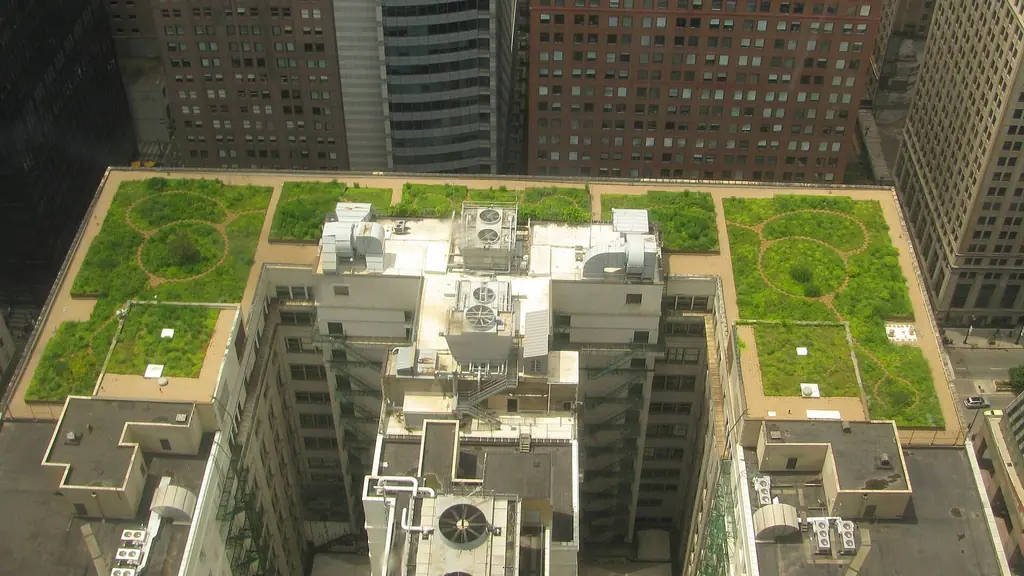
Cities face a growing list of environmental pressures: hotter summers, more intense downpours, polluted runoff, and residents who lack access to green space. Engineers have traditionally answered these problems with grey infrastructure such as bigger pipes, concrete channels and air conditioning. Nature-based solutions (NbS) take a different approach, using trees, soils, wetlands and vegetation to deliver some of the same services while also supporting biodiversity and wellbeing.
The term has become popular, which brings a risk: almost any planting scheme can be labelled a nature-based solution. This guide explains the two most important international definitions, the standard designed to test projects against them, and what the evidence from cities shows.
What counts as a nature-based solution?
The IUCN definition (2016)
The International Union for Conservation of Nature (IUCN) adopted the first widely used definition through a resolution at its World Conservation Congress in 2016. As summarized in a 2024 IUCN information paper, it defines NbS as actions to protect, sustainably manage and restore natural or modified ecosystems that address societal challenges effectively and adaptively, while providing benefits for both human well-being and biodiversity.
IUCN lists the main societal challenges as food security, water security, social and economic development, human health, climate change, disaster risk, and biodiversity loss and ecosystem integrity. One subtle but important point: to count as an NbS rather than a conservation project, an intervention that tackles biodiversity loss should also address at least one additional societal challenge.
IUCN treats NbS as an umbrella concept covering related approaches such as ecosystem-based adaptation, ecosystem-based disaster risk reduction, ecological restoration and green infrastructure.
The UNEA-5 definition (2022)
On 2 March 2022, the UN Environment Assembly adopted Resolution 5/5, Nature-based solutions for supporting sustainable development, the first multilaterally agreed definition. Its wording, reproduced in an annex to the IUCN paper, describes NbS as actions to protect, conserve, restore, sustainably use and manage natural or modified terrestrial, freshwater, coastal and marine ecosystems. These actions should address social, economic and environmental challenges effectively and adaptively, while providing human well-being, ecosystem services, resilience and biodiversity benefits.
The UNEA definition is broader in wording (it adds conservation and sustainable use and names ecosystem types explicitly), but the two share the same core logic: real ecosystems, real societal challenges, and benefits for both people and nature. The resolution also recognizes the need for safeguards, including for local communities and Indigenous peoples.
The European Commission's working definition
In EU research and policy, the European Commission uses a related definition: solutions inspired and supported by nature that are cost-effective, provide environmental, social and economic benefits at the same time, and help build resilience. The Commission adds that such solutions must benefit biodiversity, and it points practitioners to an Urban Nature Atlas of around 1,000 examples from 100 European cities.
The IUCN Global Standard
Definitions alone do not tell a city whether its project qualifies. IUCN therefore launched the Global Standard for Nature-based Solutions in July 2020, with eight criteria and 28 indicators, and a self-assessment tool. According to the IUCN information paper, the standard was endorsed by its members at the 2021 World Conservation Congress in Marseille. IUCN's Global Standard website currently describes it as having 8 criteria and 27 indicators, so check the latest version before using it.
The eight criteria are:
- Societal challenges
- Integrated systems perspective
- Enhanced biodiversity, ecosystem integrity and connectivity
- Financial feasibility and economic justification
- Inclusive governance and equity
- Balancing goals and impacts
- Adaptive management
- Enhancing sustainability and mainstreaming
According to the IUCN paper, all the criteria need to be met for an intervention to count as an NbS, so a project that cools a neighbourhood but reduces biodiversity, or that is designed without residents, would fall short.
How cities are using nature-based solutions
Cooling and health
Urban green space has well-documented links to health. A 2016 review by the WHO Regional Office for Europe found that parks, playgrounds and residential greenery can promote mental and physical health, reduce illness and premature death, encourage physical activity and social contact, and reduce exposure to air pollution, noise and extreme heat.
The European Environment Agency reports that green spaces help moderate temperatures during hot periods and provide shade and cooler refuges. For more on the problem these measures address, see our explainer on heatwaves and urban heat islands.
Green schoolyards: Paris OASIS
Paris's OASIS programme converts asphalt school grounds into cooler, greener spaces for pupils and neighbours. According to the EEA's case study, ten pilot schools were transformed between 2019 and 2021. Features include unsealed surfaces that let rainwater soak in, fountains, drought-resistant plants and shaded play areas. The grounds are designed to open to the public outside school hours, and the EEA notes that Paris opens such school grounds to residents during heatwaves.
Stormwater: Philadelphia's Green City, Clean Waters
Many older cities have combined sewers, which overflow into rivers during heavy rain. Philadelphia's Green City, Clean Waters programme, which officially began in 2011, is a 25-year plan to reduce stormwater entering those sewers, largely through green infrastructure, while also expanding conventional treatment capacity. It aims to meet state and federal requirements to reduce combined sewer pollution by at least 85%, with goals scheduled for completion by 2036. The city's water department reports green stormwater tools at nearly 800 sites and says these tools have kept more than 2.7 billion gallons of polluted water out of local rivers.
Who benefits? The equity question
Nature in cities is not evenly shared. The EEA's 2022 briefing found that, within European cities, lower-income communities typically have less and lower-quality green space, and that communities with many immigrants and ethnic minorities often have less access to high-quality green and blue space. Based on 2012 data, less than half of Europe's urban population lived within 300 metres of a park. Publicly accessible green space averaged only about 3% of city area, even though total green infrastructure averaged 42% of city area in 2018.
The same briefing highlights a paradox: greening can raise property prices and contribute to gentrification, displacing the very residents who would benefit most. People of lower socio-economic status tend to gain more from green space, particularly for stress reduction and mental health. This is why the Global Standard's criterion on inclusive governance and equity matters. Who designs a project, and who it is for, shapes its outcomes as much as the plants chosen.
Limits and good practice
Nature-based solutions are not a replacement for every piece of grey infrastructure. Trees take years to mature, vegetation needs water and maintenance, and green features have capacity limits during extreme events. In practice, many cities combine green and grey measures, as Philadelphia does.
To judge whether an urban project is a genuine NbS, ask:
- Which societal challenge does it address, and how will results be measured?
- Does it improve biodiversity, for example by using native species and connecting habitats, or is it ornamental planting?
- Is it financially sustainable, with a budget for long-term maintenance?
- Were residents involved, and who gains access to the new space?
- Are trade-offs acknowledged, such as water use in dry climates or displacement risks?
- Will it be monitored and adapted as conditions change?
These questions mirror the Global Standard's criteria. More city-focused guides are collected in our sustainable cities topic hub. Restoration principles that apply in rural landscapes apply in cities too; see our guide to principles of ecosystem restoration.
Key takeaways
- IUCN defined nature-based solutions in 2016 as actions to protect, sustainably manage and restore ecosystems that address societal challenges while benefiting people and biodiversity.
- UNEA Resolution 5/5, adopted on 2 March 2022, provides the first multilaterally agreed definition and calls for safeguards for local communities and Indigenous peoples.
- The IUCN Global Standard, launched in 2020, sets eight equally weighted criteria for judging whether a project qualifies.
- Cities use NbS to reduce heat, manage stormwater and improve health, but benefits are unevenly distributed and greening can contribute to gentrification without inclusive planning.
Frequently asked questions
Is every park a nature-based solution?
Not automatically. A park becomes an NbS when it is designed and managed to address a defined societal challenge, such as heat or flooding, while also delivering biodiversity benefits and meeting standards for governance, monitoring and long-term viability.
What is the difference between green infrastructure and nature-based solutions?
IUCN treats green infrastructure as one of several approaches under the broader NbS umbrella. Under the Global Standard, a green infrastructure project would also need to show biodiversity gains, inclusive governance, financial viability and adaptive management to qualify as an NbS.
Can nature-based solutions work in hot, dry cities?
They can, but design must reflect water scarcity: drought-tolerant native species, shade structures combined with planting, and careful irrigation. Measures that need heavy watering may create new problems where water is scarce.
Sources
- Proposing the IUCN Global Standard for NbS as the main operational framework to implement UNEA Resolution 5/5 on NbS for supporting Sustainable Development (Information Paper) IUCN, 2024
- 8 Criteria: IUCN Global Standard for Nature-based Solutions IUCN, 2026
- Structure of the IUCN Global Standard for Nature-based Solutions IUCN, 2026
- Nature-based solutions European Commission, Research and Innovation, 2026
- Urban green spaces and health WHO Regional Office for Europe, 2016
- Who benefits from nature in cities? Social inequalities in access to urban green and blue spaces across Europe European Environment Agency, 2022
- OASIS school grounds programme in Paris, France European Environment Agency, 2022
- Green City, Clean Waters Philadelphia Water Department, 2026
How this article was made: researched and drafted with the help of AI tools, then checked against the sources listed above. Read our editorial policy. Spotted an error? Tell us.