Most land degradation does not happen because of a single disaster. It happens because the way land is used, season after season, takes more out of soils, water and vegetation than natural processes can replace. Sustainable land management, usually shortened to SLM, is the set of practices and approaches designed to reverse that equation: to keep land producing food, fibre and other goods while protecting the resources that make production possible.
SLM is not a single technique or a branded method. It is a way of thinking about land that combines farming, forestry, grazing, water management and conservation, adapted to local conditions. This guide explains what it means, what it looks like on the ground, what the evidence says and why it is still not used as widely as it could be.
A working definition
The UN definition, as summarised by FAO, describes SLM as the use and management of land resources, including soil, water, animals and plants, to produce goods that meet changing human needs while ensuring the long-term productive potential of those resources and the maintenance of their environmental functions. The IPCC's 2019 Special Report on Climate Change and Land uses an almost identical definition, framing SLM as the stewardship of land resources over time.
Two ideas sit at the core of this definition. First, land must remain productive, because people depend on it for food and income. Second, productivity today must not undermine productivity tomorrow, which means looking after soil health, water cycles and biodiversity.
Four principles
FAO describes SLM as integrating soil and water conservation, natural resource management and integrated landscape management, and identifies four guiding principles:
- Policy and institutional support, including incentives for local adoption and income generation.
- Participatory approaches led by land users, so that farmers, herders and foresters are part of decision-making.
- Integrated resource use, managing land sustainably at both farm and ecosystem scales.
- Collaboration across levels, sectors and stakeholders, bringing together land users, experts and policymakers.
These principles matter because a technically sound practice can fail if it is imposed from outside, does not fit local livelihoods, or is undermined by policies that reward short-term exploitation.
What SLM looks like on the ground
SLM covers a wide menu of practices. Which ones are appropriate depends on climate, soils, slope, farming system and culture. The IPCC and FAO highlight several families of measures.
| Practice family | Examples | Main purpose |
|---|---|---|
| Soil cover and tillage | Reduced or no tillage, mulching, cover crops | Protect soil from erosion, build organic matter |
| Soil fertility | Integrated nutrient management, organic amendments, compost | Maintain nutrients without overuse of inputs |
| Crop diversity | Crop rotation and diversification, drought-tolerant varieties | Spread risk, break pest cycles, improve soil |
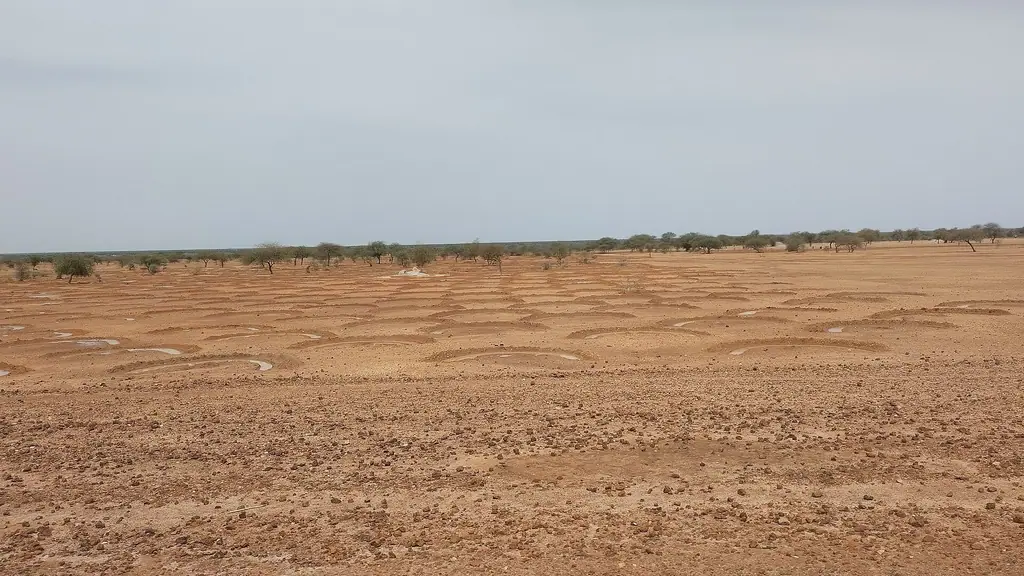
| Water management | Rainwater harvesting, drip and micro-irrigation, moisture conservation | Make the most of limited water |
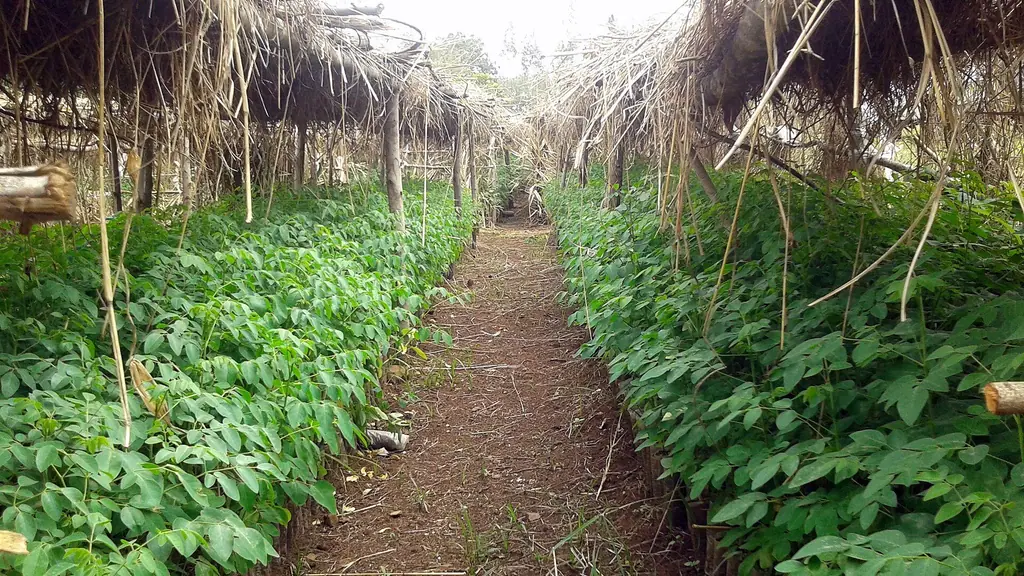
| Trees in landscapes | Agroforestry, windbreaks, riparian buffers | Reduce wind and water erosion, diversify income |
| Grazing lands | Sustainable grazing, rest periods, re-vegetation | Restore productivity of rangelands |
The IPCC's chapter on desertification lists integrated crop, soil and water measures, including crop diversification, drought-resilient plants, reduced tillage, improved irrigation such as drip systems, rainwater harvesting using local practices and maintaining vegetation and mulch cover, as effective ways to reduce soil degradation and increase resilience. In 2026, FAO's Status of the World's Soil Resources report similarly named reduced tillage, integrated nutrient management, crop diversification, cover crops, organic amendments and agroforestry as proven practices that can address soil threats while sustaining or improving productivity.
For detail on individual practices, see our guides to soil conservation and conservation agriculture.
What the evidence says
The scientific case for SLM is strong. The IPCC concluded with high confidence that SLM practices in drylands increase agricultural productivity and help farmers adapt to climate change, with co-benefits for mitigation. It also found with high confidence that rangeland management based on sustainable grazing and re-vegetation increases rangeland productivity and the flow of ecosystem services.
At a global scale, the UNCCD's Global Land Outlook 2 (2022) modelled a restoration scenario involving measures such as agroforestry, grazing management and assisted natural regeneration across about 5 billion hectares. Compared with business as usual, it projected crop yields 5–10% higher by 2050 in most developing countries, a 4% increase in soil water-holding capacity in rainfed croplands, and a net rise in carbon stocks. The report also argued that many traditional and modern regenerative practices could turn agriculture from the main cause of land degradation into a driver of restoration.
The adoption gap
The problem is not a lack of known solutions. It is that they are not spreading fast enough. FAO's 2026 global soil assessment, drawing on expertise from 75 countries, found that more than half of the regional and subregional assessments reviewed showed low or very low adoption of sustainable soil management. Some 58% reported a deteriorating trend since 2015, while only around 10% reported improvement. Erosion management was judged poor or very poor in 81% of assessments.
Why adoption stalls, and what helps
If SLM pays off, why do land users not adopt it everywhere? The research points to barriers that are mostly economic and institutional rather than technical.
Upfront costs and delayed benefits. Building terraces, planting trees or resting pasture costs money and labour now, while the benefits arrive over years. The IPCC notes that poverty limits the financial resources available to invest in SLM.
Insecure tenure. People are less likely to invest in land they may lose. The IPCC found that insecure land tenure affects the ability of people and communities to make changes that advance adaptation and mitigation, and that limited recognition of customary land rights can increase vulnerability. Our article on land tenure and smallholders looks at this in depth.
Misaligned incentives. Subsidies and market prices often reward practices that degrade land. The IPCC concluded with high confidence that reflecting the environmental costs of land-degrading practices can encourage more sustainable management.
Knowledge and support. The IPCC also found that awareness-raising, capacity building, agricultural extension and advisory services can effectively address land degradation.
The IPCC lists the policies most likely to enable SLM: better access to markets for inputs, outputs and finance; empowering women and Indigenous Peoples; strengthening local and community collective action; reforming subsidies; and promoting an enabling trading system.
Sharing what works
One reason SLM is hard to scale is that good practices are often local and poorly documented. WOCAT, the World Overview of Conservation Approaches and Technologies, is a global network that documents SLM technologies and approaches in a standard format and shares them through an open database. WOCAT describes itself as a knowledge partner of the UNCCD, and its database includes practices ranging from agroforestry on degraded land to rainwater harvesting and pastoral management. Databases like this let practitioners compare costs, benefits and conditions for success before investing.
SLM and the bigger goals
SLM is central to the international goal of land degradation neutrality, adopted as SDG target 15.3. The UNCCD describes neutrality as requiring three concurrent actions: avoiding new degradation by maintaining healthy land, reducing existing degradation through SLM, and restoring degraded land. In that hierarchy, SLM does most of the work in the first two steps. The IPCC makes a similar point: achieving neutrality involves a balance of measures that avoid and reduce degradation through SLM, combined with rehabilitation and restoration.
FAO links SLM to several Sustainable Development Goals, notably SDG 1 (no poverty), SDG 2 (zero hunger) and SDG 15.3, and also to biodiversity protection under Target 10 of the Kunming-Montreal Global Biodiversity Framework.
Key takeaways
- SLM means using land to meet human needs while protecting its long-term productive capacity and environmental functions.
- It is a toolbox, not a single technique: soil cover, reduced tillage, crop diversity, water harvesting, agroforestry and grazing management are all part of it.
- The IPCC finds with high confidence that SLM in drylands raises productivity and supports climate adaptation.
- Adoption is lagging: FAO's 2026 soil assessment found low or very low uptake in more than half of regional assessments.
- Secure tenure, fair incentives, finance and extension services are as important as the practices themselves.
Frequently asked questions
Is SLM the same as organic or regenerative farming?
Not exactly. SLM is broader. It covers croplands, rangelands, forests and mixed landscapes and does not prescribe a particular certification or set of inputs. Some organic and regenerative practices fall within SLM, but SLM is defined by outcomes, maintaining long-term productivity and environmental functions, rather than by a fixed rulebook.
Who decides which SLM practices to use?
Ideally, land users themselves, supported by technical advice. FAO's principles emphasise participatory approaches led by land users, because practices that do not fit local livelihoods and conditions are rarely sustained.
Does SLM reduce yields in the short term?
It depends on the practice and the context. Some measures, such as building terraces or resting pasture, require labour, land or money before their benefits appear. This is one reason incentives, secure tenure and access to finance are so important for adoption.
Sources
- Sustainable land management FAO, n.d.
- Summary for Policymakers. In: Climate Change and Land, IPCC Special Report IPCC / Cambridge University Press, 2019
- Chapter 3: Desertification. In: Climate Change and Land, IPCC Special Report IPCC / Cambridge University Press, 2019
- WOCAT – World Overview of Conservation Approaches and Technologies WOCAT, n.d.
- FAO at COP17: New report warns soil degradation worsening as adoption of proven solutions lags FAO, 2026
- Chronic land degradation: UN offers stark warnings and practical remedies in Global Land Outlook 2 UNCCD, 2022
- Land Degradation Neutrality UNCCD, n.d.
How this article was made: researched and drafted with the help of AI tools, then checked against the sources listed above. Read our editorial policy. Spotted an error? Tell us.