Over the past fifteen years, land restoration has moved from a niche conservation topic to a headline item at climate, biodiversity and desertification summits. Countries have signed up to a series of overlapping international initiatives, each with its own target, geography and secretariat. Together, according to the UNCCD, they add up to commitments to restore more than one billion hectares of degraded land by 2030.
This guide explains the main initiatives, how they relate to one another, and how to read the large numbers attached to them. Throughout, one distinction matters above all: a hectare pledged is not the same as a hectare restored.
Why restoration became a global priority
The scale of the problem is large. The UNCCD's Global Land Outlook 2 (2022) estimated that up to 40% of the planet's land is degraded, directly affecting half of humanity and putting at risk about US$44 trillion of economic output, roughly half of global GDP. The same report estimated that meeting existing pledges to restore about one billion hectares by 2030, including 250 million hectares of farmland, would require around US$1.6 trillion over the decade.
Restoration in this context does not only mean planting trees. It includes agroforestry, better grazing management, assisted natural regeneration, soil and water conservation, and protecting land so that it can recover on its own. For the principles behind good restoration, see our explainer on ecosystem restoration.
The Bonn Challenge
The Bonn Challenge is the oldest of the current global restoration goals. It was launched in 2011 by the Government of Germany and the International Union for Conservation of Nature (IUCN), with a goal of bringing 150 million hectares of degraded and deforested landscapes into restoration by 2020 and 350 million hectares by 2030. Pledges passed the 150-million-hectare mark in 2017. As of November 2026, the Bonn Challenge website reported 257 million hectares pledged.
The Bonn Challenge is built on an approach called forest landscape restoration (FLR), a term coined by IUCN and WWF in 2000. FLR aims to restore the ecological functionality of degraded landscapes while improving human well-being. It is explicitly not just about tree planting: a restored landscape might combine natural regeneration, agroforestry, protected areas, riverside plantings and productive farmland.
The Bonn Challenge also spawned regional platforms, including AFR100 in Africa, Initiative 20x20 in Latin America and the Caribbean, ECCA30 in Europe, the Caucasus and Central Asia, and the Agadir Commitment in the Mediterranean region.
AFR100
The African Forest Landscape Restoration Initiative (AFR100) is a country-led effort to bring 100 million hectares of land in Africa into restoration by 2030. It was launched at the UN climate conference COP21 in Paris in 2015 by the African Union Development Agency (AUDA-NEPAD), the World Resources Institute (WRI), Germany's Federal Ministry for Economic Cooperation and Development and the World Bank, with AUDA-NEPAD acting as secretariat.
As of late 2026, AFR100's website listed 34 African countries as participants, with about 129.5 million hectares committed, more than the original 100-million-hectare goal. AFR100 contributes to both the Bonn Challenge and the African Union's Agenda 2063. Its restoration approaches include agroforestry, assisted natural regeneration, mangrove restoration, reforestation, riparian restoration and silvopasture. Farmer-led methods are a big part of this; our article on agroforestry and farmer-managed natural regeneration explains how they work.
Initiative 20x20
Initiative 20x20 is the Latin American and Caribbean counterpart. It was launched formally at COP20 in Lima in 2014 and aims to begin protecting and restoring 50 million hectares of forests, farms, pasture and other landscapes by 2030. According to its website, 18 countries and three regional programmes have committed to improve more than 52 million hectares. WRI's Global Restoration Initiative hosts the secretariat.
Initiative 20x20 places weight on productive landscapes as well as forests: alongside reforestation and avoided deforestation, it promotes agroforestry, silvopasture and sustainable grassland management on agricultural land.
The UN Decade on Ecosystem Restoration (2021–2030)
The UN Decade on Ecosystem Restoration is broader than land. It covers all ecosystems, from farmland and forests to peatlands, freshwater, oceans and coasts. The UN General Assembly proclaimed the Decade following a proposal backed by more than 70 countries, and it runs from 2021 to 2030, matching the deadline for the Sustainable Development Goals. It is led by the UN Environment Programme (UNEP) and the Food and Agriculture Organization (FAO).
Rather than setting a single hectare target, the Decade works as a movement-building platform: it promotes restoration, recognises outstanding large-scale efforts as World Restoration Flagships and connects implementers with partners and knowledge. In 2026, around the Decade's midpoint, its website highlighted a new UN report describing 252 million hectares under restoration across 149 countries as the largest restoration effort on record.
The G20 Global Land Initiative
The G20's leaders launched what is now known as the G20 Global Land Initiative in November 2020 at the Riyadh virtual summit, under Saudi Arabia's G20 presidency. Its ambition is to prevent, halt and reverse land degradation and to reduce degraded land by 50% by 2040. The initiative's coordination office operates under the oversight of the UNCCD.
The initiative's website states that more than 2 billion hectares of land are degraded globally. Its work focuses on knowledge sharing, capacity building and training, restoration grants for civil society, and engagement with the private sector. In its annual reporting, the initiative noted that it compiled, with IUCN, a database of countries' restoration commitments under the three Rio conventions and the Bonn Challenge, putting total commitments at about 1.2 billion hectares.
The Great Green Wall
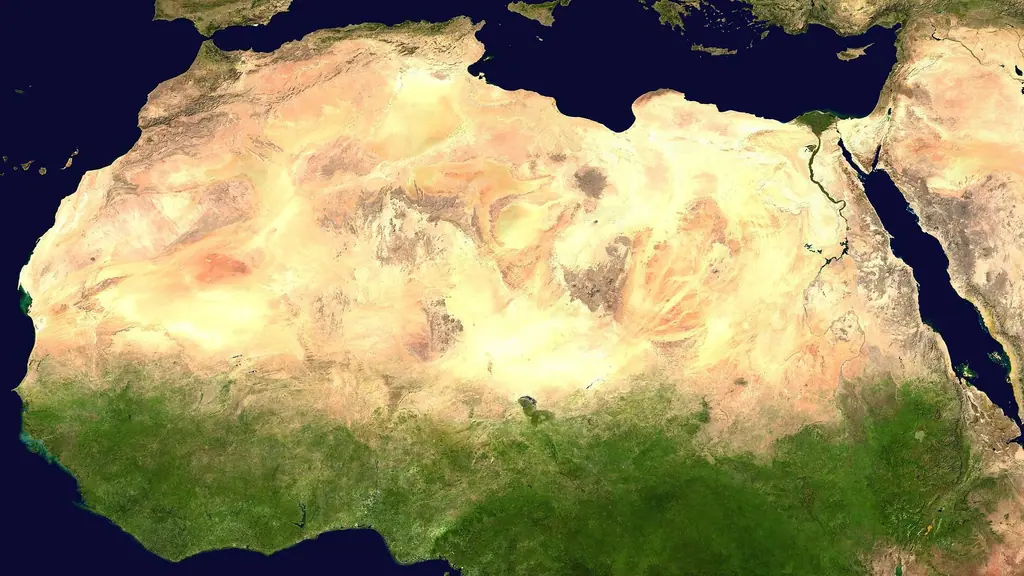
The Great Green Wall is an African-led initiative launched in 2007 by the African Union to restore degraded landscapes across the Sahel. The UNCCD describes it as being implemented across 22 African countries, under the leadership of the African Union Commission and the Pan-African Agency of the Great Green Wall. Its stated ambition for 2030 is to restore 100 million hectares of degraded land, sequester 250 million tonnes of carbon and create 10 million green jobs. More than US$14 billion has been raised and pledged in support, according to the UNCCD.
The Great Green Wall is often pictured as a continuous belt of trees about 8,000 km long, but the UNCCD frames its goals in terms of restored land, carbon storage and jobs rather than tree planting alone. For background on its history, see our resource page on the Great Green Wall for the Sahara and the Sahel.
How the initiatives fit together
| Initiative | Launched | Scope | Headline goal |
|---|---|---|---|
| Bonn Challenge | 2011 | Global | 350 million ha in restoration by 2030 |
| Initiative 20x20 | 2014 | Latin America and Caribbean | 50 million ha protected and restored by 2030 |
| AFR100 | 2015 | Africa | 100 million ha in restoration by 2030 |
| Great Green Wall | 2007 | Sahel | 100 million ha restored by 2030 |
| G20 Global Land Initiative | 2020 | Global | Reduce degraded land by 50% by 2040 |
| UN Decade on Ecosystem Restoration | 2021 | Global, all ecosystems | Prevent, halt and reverse degradation |
Many hectares are counted under more than one initiative: AFR100 and Initiative 20x20 commitments, for example, contribute to the Bonn Challenge. Countries also make restoration commitments under the three Rio conventions, which can overlap with these pledges. That is one reason global totals should be read with care.
Reading the numbers carefully
Three cautions help when interpreting restoration headlines:
- Pledges are not results. Committed hectares describe ambition. Whether land is actually recovering depends on implementation, funding and monitoring over many years.
- "Under restoration" is not "restored". Restoration is a process. Land counted as under restoration may be at an early stage, and recovery can fail if pressures return.
- Quality matters as much as area. Restoration that converts natural ecosystems, for example by planting trees where grasslands belong, can add hectares while harming biodiversity and livelihoods. AFR100's published best practices explicitly advise avoiding strategies that lead to the conversion of natural ecosystems.
Monitoring is improving. Countries report on land degradation through the UNCCD using the SDG 15.3.1 indicator, and platforms such as AFR100 have invested in restoration monitoring frameworks.
Where things stand in 2026
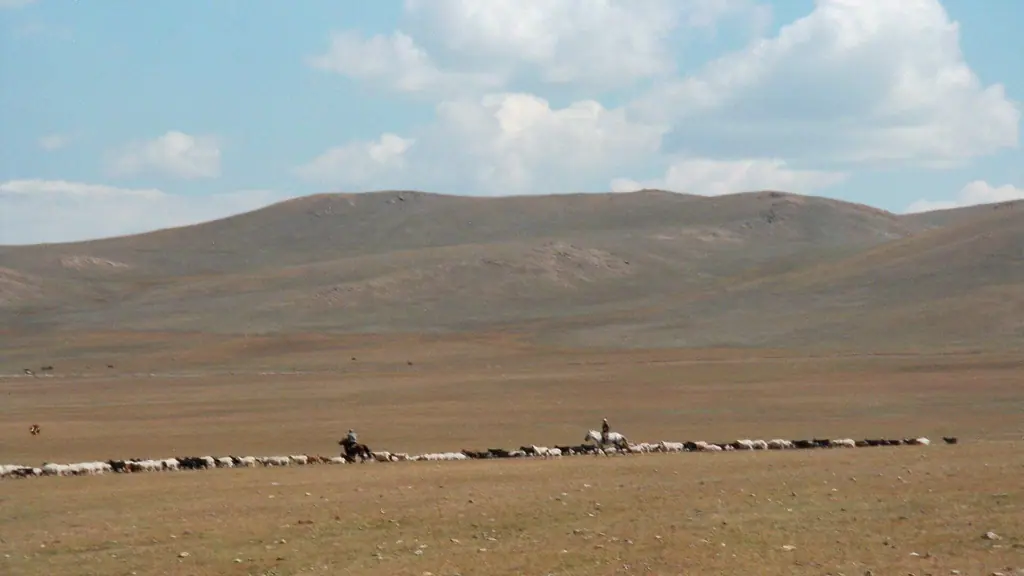
The UNCCD's COP17 conference in Ulaanbaatar, Mongolia, in August 2026 restated the backdrop: up to 40% of the world's land is degraded, while countries have committed to restoring more than one billion hectares by 2030. During the International Year of Rangelands and Pastoralists, COP17 launched a Rangelands Flagship Initiative bringing together US$1.2 billion across 45 projects, and participants announced a wider US$1.3 billion portfolio of finance for restoration and drought resilience across 23 countries. As the UNCCD's Executive Secretary noted at the close of the conference, the real test is what happens next: whether finance reaches viable projects and degraded land is actually restored.
Key takeaways
- The main global initiatives are the Bonn Challenge, its regional platforms AFR100 and Initiative 20x20, the UN Decade on Ecosystem Restoration, the G20 Global Land Initiative and the Great Green Wall.
- According to the UNCCD, countries have committed to restoring more than one billion hectares by 2030.
- Many commitments overlap, so headline totals cannot simply be added together.
- Pledged and "under restoration" hectares are not the same as land that has recovered; monitoring is essential.
- Good restoration is landscape-wide and people-centred, not just tree planting.
Frequently asked questions
Are these initiatives legally binding?
No. The hectare commitments under the Bonn Challenge, AFR100 and Initiative 20x20 are voluntary pledges. Their strength lies in political visibility, peer pressure and the partnerships they create.
Who pays for restoration?
A mix of national budgets, development banks, bilateral donors, philanthropy and private investors. The UNCCD's Global Land Outlook 2 estimated that meeting existing 2030 pledges would require about US$1.6 trillion this decade. Initiative 20x20, for instance, reports a coalition of impact investors and funds deploying US$2.5 billion in private investment in its region.
Can individuals take part?
Yes. The UN Decade on Ecosystem Restoration encourages schools, community groups and individuals to join local restoration efforts and share them through its platform.
Sources
- About The Challenge Bonn Challenge / IUCN, n.d.
- Restore 100 million hectares of land in Africa by 2030 AFR100, n.d.
- Restoring Latin America's Landscapes: About Initiative 20x20 Initiative 20x20 / World Resources Institute, n.d.
- About the UN Decade UN Decade on Ecosystem Restoration (UNEP and FAO), n.d.
- UN Decade on Restoration (home page) UN Decade on Ecosystem Restoration (UNEP and FAO), 2026
- G20 Global Land Initiative UNCCD, n.d.
- G20 Global Land Initiative (home page) G20 Global Land Initiative, 2026
- Great Green Wall Initiative UNCCD, n.d.
- Chronic land degradation: UN offers stark warnings and practical remedies in Global Land Outlook 2 UNCCD, 2022
- UNCCD COP17 advances new pathways for land restoration, drought resilience and implementation UNCCD, 2026
How this article was made: researched and drafted with the help of AI tools, then checked against the sources listed above. Read our editorial policy. Spotted an error? Tell us.