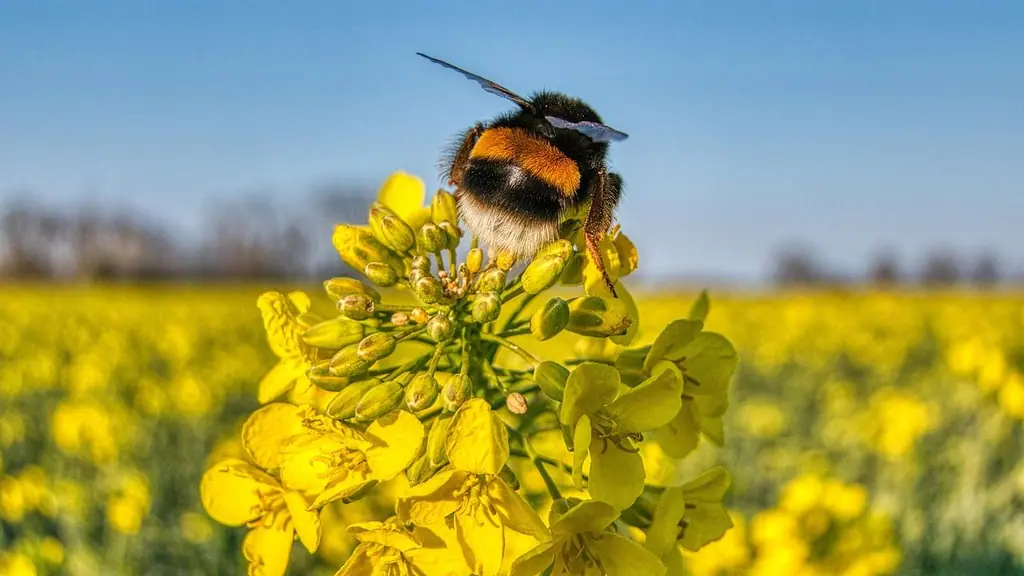
Many of the foods that make diets healthy and interesting, such as apples, mangoes, almonds, coffee and cocoa, depend at least partly on animals that carry pollen from flower to flower. Bees are the best known, but flies, butterflies, moths, wasps, beetles, birds and bats also play a part.
In February 2016, the Intergovernmental Science-Policy Platform on Biodiversity and Ecosystem Services (IPBES) approved its first thematic assessment: pollinators, pollination and food production. Produced by 77 experts drawing on about 3,000 scientific papers and indigenous and local knowledge from more than 60 locations, it remains the reference global assessment on the subject (IPBES press release). This article summarises its main findings and what they mean for food systems.
How much food depends on pollinators?
The answer depends on how you count, which is why different figures circulate. The IPBES summary for policymakers gives three complementary measures:
| Measure | Finding |
|---|---|
| Share of leading global food crop types that benefit from animal pollination | More than three-quarters |
| Share of global crop production volume from pollinator-dependent crops | 35% |
| Share of global crop production directly attributable to animal pollination | 5–8% |
| Annual market value of that production | USD 235–577 billion (2015 dollars) |
The numbers differ because crops depend on pollinators to different degrees. Of the 107 leading global crop types examined, IPBES found that production from 91 relies to some extent on animal pollination. Total loss of pollinators would cut production by more than 90 per cent for 12 per cent of leading crops, by 40–90 per cent for 28 per cent, and by smaller amounts for most others. Some crops would be unaffected.
Staple crops such as cereals and root crops, which provide most of the world's calories, do not depend on animal pollination. IPBES found that 60 per cent of global production volume comes from such crops. That is why pollinator loss is less a threat to calories than to dietary quality.
Nutrition, not just volume
The IPBES assessment highlights that pollinator-dependent crops include many fruits, vegetables, seeds, nuts and oil crops, which supply major proportions of the micronutrients, vitamins and minerals in human diets. Many are also important cash crops. The IPBES press release gives annual world crop values of USD 33.5 billion for apples, USD 14.8 billion for mangoes, USD 5.7 billion for cocoa beans and USD 3.5 billion for almonds.
Beyond farming
Pollination matters for wild nature too. According to the assessment, nearly 90 per cent of wild flowering plant species depend, at least in part, on animals to transfer pollen. These plants provide food and habitat for many other species.
Who are the pollinators?
The vast majority of pollinators are wild. IPBES counts more than 20,000 species of bees alone, alongside some flies, butterflies, moths, wasps, beetles, thrips, birds, bats and other vertebrates.
A few bee species are widely managed, including the western honey bee, the eastern honey bee, some bumble bees, some stingless bees and a few solitary bees. The western honey bee is the most widespread managed pollinator in the world. IPBES estimated about 81 million hives globally, producing around 1.6 million tonnes of honey a year (IPBES SPM).
Why wild pollinators matter
It is tempting to assume that honey bees can do the job if wild pollinators decline. The evidence says otherwise. A study of 41 crop systems worldwide found that fruit set increased with visits by wild insects in every system, but with honey bee visits in only 14 per cent of them. An increase in wild insect visits raised fruit set by twice as much as an equivalent increase in honey bee visits, and honey bees supplemented rather than replaced wild pollinators (Garibaldi et al., 2013).
IPBES reached the same conclusion: a diverse community of pollinators generally provides more effective and stable crop pollination than any single species, and the contribution of wild pollinators to crop production is undervalued.
Are pollinators declining?
The picture is incomplete, but worrying:
- Wild pollinators have declined in occurrence and diversity, and in abundance for some species, at local and regional scales in North West Europe and North America. Data are too limited in Latin America, Africa, Asia and Oceania for a general regional verdict, although local declines have been recorded.
- Vertebrate pollinators: IUCN Red List assessments indicate that 16.5 per cent of vertebrate pollinators are threatened with global extinction, rising to 30 per cent for island species.
- Bees and butterflies: there are no global Red List assessments specifically for insect pollinators, but where national assessments exist, more than 40 per cent of bee species may be threatened. In Europe, 9 per cent of bee and butterfly species are threatened, and populations are declining for 37 per cent of bees and 31 per cent of butterflies.
- Managed honey bees: the number of hives has increased globally over the past five decades, even though declines have occurred in some European countries and North America, and seasonal colony losses have been high in parts of the temperate Northern Hemisphere and South Africa.
Source: IPBES summary for policymakers.
At the same time, demand is growing. The volume of pollinator-dependent crop production has increased by 300 per cent over the past five decades. IPBES also found that these crops have shown lower growth and less stable yields than crops that do not depend on pollinators, though the reasons are not clear.
What is driving the decline?
IPBES identified several threats, often acting together:
- Land-use change and the loss of flower-rich habitat.
- Intensive agricultural management, which simplifies landscapes and reduces food and nesting sites.
- Pesticides. Insecticides have a broad range of lethal and sublethal effects on pollinators in controlled experiments. Research on neonicotinoids shows evidence of lethal and sublethal effects on bees, and a field study found impacts on wild pollinator survival and reproduction at real-world exposure levels. Evidence of effects on managed honey bee colonies is conflicting.
- Pathogens and pests, a particular threat to managed bees, including bumble bees and solitary bees when commercially managed.
- Invasive alien species.
- Climate change.
- Environmental pollution.
Many of these mirror the wider drivers of biodiversity loss described in our article on the five drivers of biodiversity loss.
What works to protect pollinators
The IPBES assessment set out a range of responses, from quick fixes to long-term transformation. Key recommendations include the following.
Make farming more pollinator-friendly
IPBES identified three complementary approaches:
- Ecological intensification: managing nature's ecological functions to improve production while minimising environmental damage.
- Strengthening diversified farming systems, such as forest gardens, home gardens, agroforestry and mixed crop and livestock systems, including practices such as crop rotation.
- Investing in ecological infrastructure: protecting, restoring and connecting patches of natural and semi-natural habitat across farmed landscapes.
These approaches overlap with many of the practices described in our guide to sustainable agricultural practices.
Reduce pesticide exposure
IPBES recommends reducing pesticide use, seeking alternative forms of pest control and adopting application practices that reduce exposure, including technologies that reduce drift. Integrated pest management, farmer education and organic farming are among the options it lists. Governments have since agreed in Target 7 of the Kunming-Montreal Global Biodiversity Framework to reduce the overall risk from pesticides and highly hazardous chemicals by at least half by 2030.
Improve managed bee health
IPBES recommends improving managed bee husbandry to control pathogens, and better regulating the trade and use of commercial pollinators.
Value traditional knowledge
IPBES found that practices based on indigenous and local knowledge, such as diverse farming systems, varied landscapes and gardens, and tending nest trees and flowering plants, can support pollinators, especially when combined with science.
Monitor pollinators
IPBES called long-term international and national monitoring of pollinators and pollination urgently needed, because data are lacking for most species and regions.
What schools, gardeners and cities can do
Many of the same principles apply at small scale. IPBES recommends maintaining or creating more diverse pollinator habitats in urban as well as agricultural landscapes. Planting a variety of flowering plants, leaving space for nesting, reducing pesticide use and connecting green spaces all follow from that advice. For activity ideas, see our article on outdoor learning and biodiversity.
Key takeaways
- More than three-quarters of leading food crop types benefit from animal pollination, and pollinator-dependent crops make up 35 per cent of global crop production volume.
- Animal pollination directly accounts for 5–8 per cent of global crop production, worth USD 235–577 billion a year in 2015 dollars.
- Wild pollinators, including more than 20,000 bee species, contribute more than often assumed and cannot simply be replaced by honey bees.
- Land-use change, intensive farming, pesticides, pathogens, invasive species and climate change all threaten pollinators.
- Diversified farms, habitat networks, reduced pesticide risk and better monitoring are among the most effective responses.
Frequently asked questions
Would we starve without bees?
Not in terms of calories, because staple cereals and root crops do not depend on animal pollination. But diets would become much poorer in fruits, vegetables, nuts and seeds, which supply many essential vitamins and minerals.
Are honey bees endangered?
The number of managed honey bee hives has increased globally over recent decades, according to IPBES, although colony losses have been high in some regions. Many wild bee species are of greater conservation concern.
Do pesticides harm bees?
Laboratory studies show insecticides can harm pollinators, and research on neonicotinoids has found lethal and sublethal effects on bees, including one field study of wild bees. Evidence on managed honey bee colonies is conflicting. IPBES recommends reducing exposure.
Sources
- Press release: Pollinators vital to our food supply under threat IPBES, 2016
- Summary for policymakers of the assessment report of IPBES on pollinators, pollination and food production (UNEP/CBD/SBSTTA/20/INF/70) Convention on Biological Diversity / IPBES, 2016
- Assessment report on pollinators, pollination and food production IPBES, 2016
- Pollinators vital to our food supply under threat FAO, 2016
- Wild pollinators enhance fruit set of crops regardless of honey bee abundance (Garibaldi et al., Science 339) AAAS, 2013
- Media release: Nature's dangerous decline 'unprecedented'; species extinction rates 'accelerating' IPBES, 2019
- Kunming-Montreal Global Biodiversity Framework, Target 7: Reduce pollution to levels that are not harmful to biodiversity Convention on Biological Diversity, 2022
How this article was made: researched and drafted with the help of AI tools, then checked against the sources listed above. Read our editorial policy. Spotted an error? Tell us.