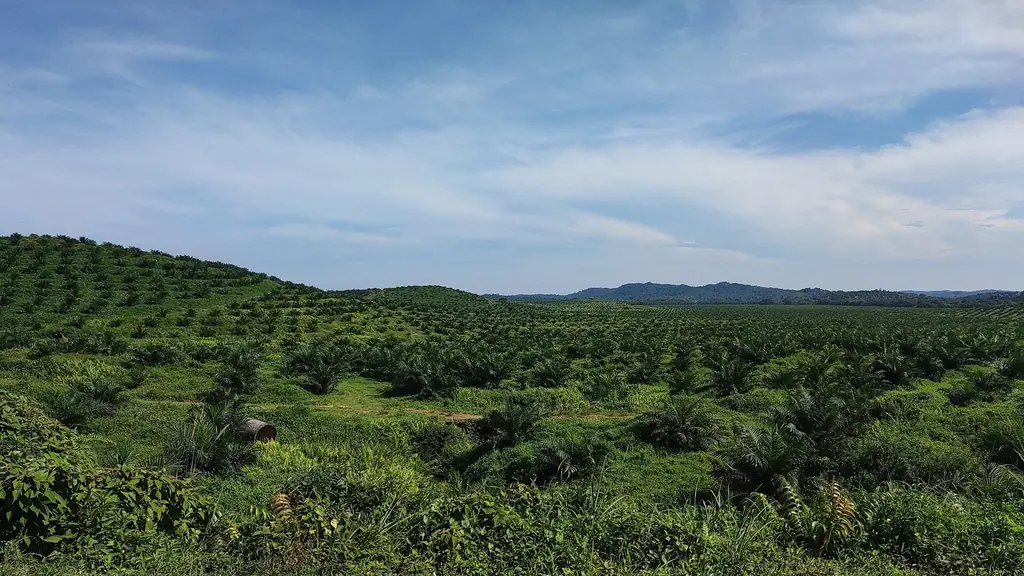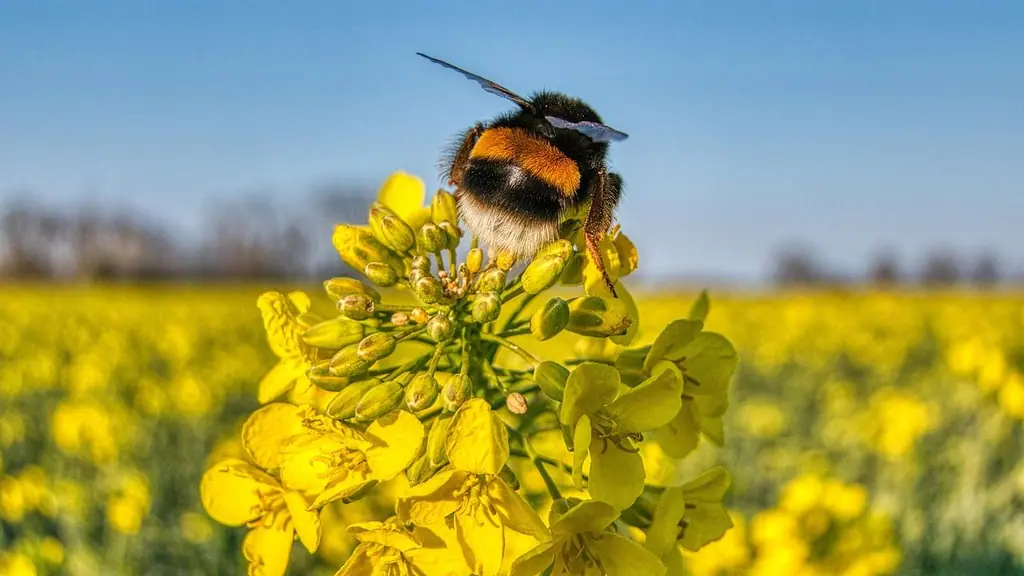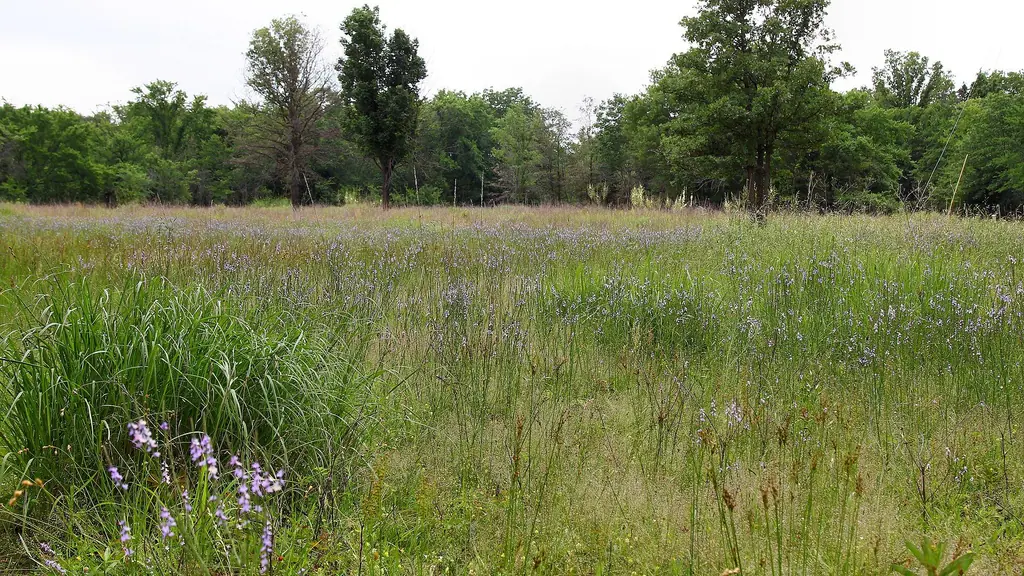
Ecosystem restoration has moved from a specialist field to a global policy goal. The United Nations General Assembly declared 2021–2030 the UN Decade on Ecosystem Restoration, led by UNEP and FAO, with the aim of halting the degradation of ecosystems and restoring them. In December 2022, governments went further: Target 2 of the Kunming-Montreal Global Biodiversity Framework asks that at least 30 per cent of degraded land, inland water, coastal and marine areas be under effective restoration by 2030.
Big targets raise an obvious question: what actually counts as restoration, and how do you know whether it is working? To answer that, a group convened by FAO, the IUCN Commission on Ecosystem Management (IUCN CEM) and the Society for Ecological Restoration (SER) published ten principles for ecosystem restoration in 2021. This article explains them, and what they mean in practice.
Why restoration matters now
Degradation is not a marginal problem. The 2018 IPBES assessment of land degradation and restoration found that degradation was undermining the well-being of at least 3.2 billion people, and that the loss of biodiversity and ecosystem services cost more than 10 per cent of annual global gross product. The same assessment found that, across the nine biomes it examined, the benefits of restoration exceeded the costs by an average of about ten to one (IPBES, 2018).
The IPCC's Special Report on Climate Change and Land adds a climate dimension. It lists ecosystem conservation and land restoration among the few response options that help with adaptation, mitigation, land degradation and food security at the same time. It also notes an important timing difference: protecting existing high-carbon ecosystems has immediate benefits, whereas restoring them takes decades to deliver measurable results.
For a broader view of large programmes under way, see our overview of global land restoration initiatives.
Where the ten principles come from
The principles were not written from scratch. According to the 2021 publication, they draw on earlier frameworks, including the Convention on Biological Diversity's Ecosystem Approach, IUCN's principles for nature-based solutions, principles for forest and landscape restoration, FAO's work on sustainable land management and agroecology, and SER's International Principles and Standards for the Practice of Ecological Restoration, whose second edition appeared in 2019.
Draft principles were discussed at the 3rd Global Forum on Ecological Restoration in 2021 and then opened to a public consultation, which drew 338 responses from 57 countries. The final set has one framing principle followed by nine best-practice principles, and the authors stress that they should be read together rather than as a menu.
The ten principles at a glance
| # | Short name | What it asks for |
|---|---|---|
| 1 | Global contribution | Restoration supports the Sustainable Development Goals and the goals of the three Rio Conventions on biodiversity, desertification and climate. |
| 2 | Broad engagement | Inclusive, participatory governance, social fairness and equity from the start, including free, prior and informed consent. |
| 3 | Many types of activities | A continuum of restorative activities, from reducing pressures to full ecological restoration. |
| 4 | Benefits to nature and people | The highest achievable level of recovery for biodiversity, ecosystem health and human well-being. |
| 5 | Addresses causes of degradation | Tackle the direct and indirect drivers, or gains will not last. |
| 6 | Knowledge integration | Combine Indigenous, traditional, local and scientific knowledge, and share lessons. |
| 7 | Measurable goals | Clear short-, medium- and long-term ecological, cultural and socio-economic objectives. |
| 8 | Local and land/seascape contexts | Fit the local setting while considering the wider landscape or seascape. |
| 9 | Monitoring and management | Monitoring, evaluation and adaptive management during and beyond the project. |
| 10 | Policy integration | Enabling policies, funding and institutions that allow long-term progress and scaling up. |
The table paraphrases the headings in the FAO, IUCN CEM and SER publication.
What the principles mean in practice
Restoration is a continuum, not a single technique
Principle 3 is one of the most useful for practitioners because it widens the definition. The document groups restorative activities into four broad categories: reducing negative impacts such as pollution and unsustainable resource use; remediation, which removes contaminants and other threats; rehabilitation of ecosystem functions in heavily modified places such as former mines or degraded farmland; and ecological restoration, which aims to put an ecosystem back on the trajectory it would have followed without degradation, while allowing for environmental change.
The common test is outcome, not method. To count as restoration, an activity must produce a net gain for biodiversity, ecosystem health and integrity, and human well-being. That means improved grazing management on a rangeland, cleaning up a polluted river and rewetting a drained peatland can all qualify, while a plantation of invasive non-native trees generally would not.
Restoration complements protection; it does not replace it
The principles state plainly that restoration is not a substitute for conservation, nor for rapid and deep decarbonisation of the economy. Principle 4 says restorative work should enhance, not replace, nature conservation, especially in areas of high ecological integrity. It also favours genetically appropriate native species and warns against species known or likely to become invasive.
This matters because restoring a degraded ecosystem is usually slower, costlier and less certain than keeping an intact one. The IPCC makes a similar point about carbon: sequestration in vegetation and soils slows as ecosystems mature, and stored carbon can be lost again through fire, drought, pests or poor management (IPCC SRCCL, 2019).
Fix the cause before treating the symptom
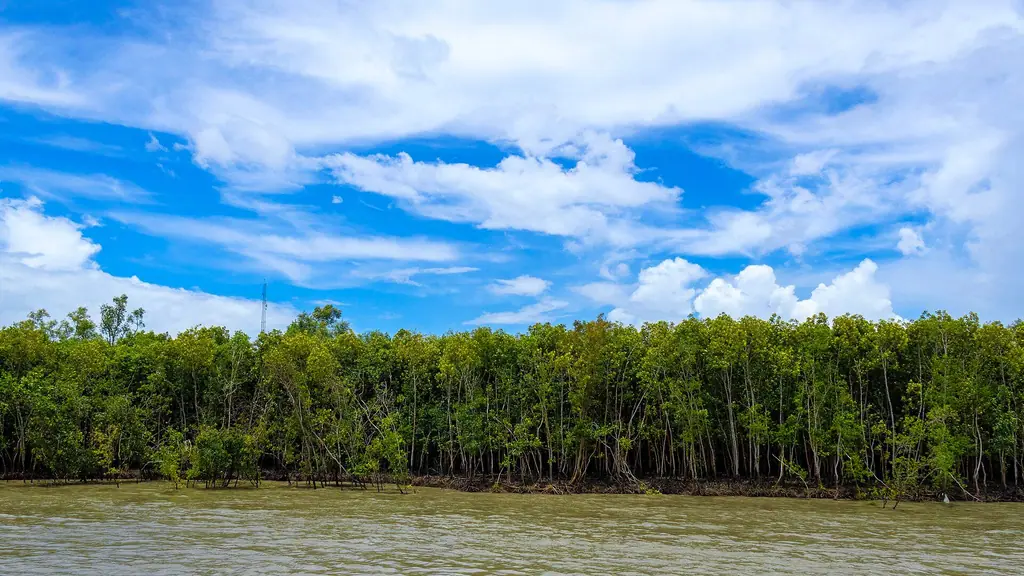
Principle 5 asks projects to identify why an ecosystem degraded and to address those causes, including perverse incentives and insecure land tenure. Replanting a hillside that is still overgrazed, or a mangrove fringe whose tidal flow is still blocked, is likely to fail. The land degradation neutrality framework takes a similar approach, putting avoidance and reduction of degradation ahead of reversal.
A study of mangrove planting in Sri Lanka after the 2004 Indian Ocean tsunami shows what happens otherwise. Of roughly 1,000–1,200 hectares planted across 23 project sites, only about 200–220 hectares were judged successful, and nine sites had no surviving plants. The authors linked failure to planting at the wrong elevation, unsuitable soils and a lack of aftercare (Kodikara et al., 2017). Our article on mangrove and coastal restoration looks at this in more detail.
People are part of the ecosystem
Principles 2 and 6 put social questions at the centre. The document calls for the meaningful participation of all stakeholders and right-holders, with particular attention to under-represented groups such as local communities, Indigenous peoples, women and youth. It refers to securing tenure, sharing benefits fairly, building trust through transparent governance and seeking free, prior and informed consent.
These are not only ethical points. Restoration often takes decades, and the people who live in or use a landscape decide whether the work survives after a project ends.
Set goals you can measure, then keep measuring
Principles 7 and 9 work as a pair. Goals should be realistic, time-bound where appropriate, and measurable against a baseline, specifying the direction and size of the change sought. Monitoring should start at the beginning of a project so that baselines can be recorded, and it should continue after funding ends to capture medium- and long-term effects. The document describes adaptive management as an iterative cycle of monitoring, evaluating, reflecting and adjusting.
Scale requires policy
Principle 10 recognises that individual projects cannot reach the scale envisaged by global targets on their own. It calls for mapping and aligning laws, regulations and plans across sectors, sustained funding for all phases, income mechanisms that do not undermine the restoration itself, and protection for people working in areas of conflict over resources.
From principles to standards
The principles describe what good restoration looks like. A companion document turns them into practical guidance. The Standards of practice to guide ecosystem restoration, published in 2024, contain more than 300 recommendations on applying the ten principles across the whole restoration process. FAO reports that they were co-produced by 33 authors from 25 organisations, with input from more than 400 restoration experts.
For practitioners, the standards are the place to look for detail on planning, implementation and monitoring. The SER standards remain a key reference for projects whose goal is full ecological recovery of native ecosystems.
A practical checklist
Before supporting or starting a restoration project, it is worth asking a few questions drawn from the principles:
- Cause: Has the reason for degradation been identified, and is it being addressed?
- Outcome: Is the aim a net gain for biodiversity and people, or only a count of trees planted?
- Species: Are native, locally appropriate species being used, or natural regeneration supported where it can work?
- People: Were local communities and right-holders involved from the start, and who benefits?
- Goals: Are there measurable targets against a recorded baseline?
- Time: Is there a plan and budget for monitoring and maintenance beyond the first few years?
- Context: Does the project fit the wider landscape, including water flows and connectivity?
Key takeaways
- The UN Decade on Ecosystem Restoration (2021–2030) is guided by ten principles published by FAO, IUCN CEM and SER in 2021.
- Restoration is defined by outcomes, a net gain for biodiversity, ecosystem health and human well-being, rather than by any single technique.
- Restoration complements, but does not replace, protecting intact ecosystems and cutting emissions.
- Addressing the causes of degradation, involving local people and monitoring over the long term are central to lasting results.
- The 2024 Standards of practice translate the principles into more than 300 practical recommendations.
Frequently asked questions
Is tree planting the same as ecosystem restoration?
No. Tree planting can be part of restoration where forests or woodlands naturally belong, but the principles judge restoration by its outcome for biodiversity, ecosystem health and people. Planting the wrong species, in the wrong place, or without addressing the cause of degradation can fail or even cause harm.
Who wrote the principles?
They were developed by FAO's Best Practices Task Force for the UN Decade, together with IUCN CEM and SER, and published in 2021 after a public consultation.
What does the 30 per cent restoration target mean?
Target 2 of the Kunming-Montreal Global Biodiversity Framework asks countries to ensure that by 2030 at least 30 per cent of degraded terrestrial, inland water, coastal and marine areas are under effective restoration.
Sources
- Principles for ecosystem restoration to guide the United Nations Decade 2021–2030 FAO, IUCN CEM and SER, 2021
- About the UN Decade UN Decade on Ecosystem Restoration (UNEP and FAO), n.d.
- Principles and standards of practice for ecosystem restoration FAO Forest and Landscape Restoration Mechanism, n.d.
- International principles and standards for the practice of ecological restoration. Second edition (Gann et al., Restoration Ecology 27(S1)) Society for Ecological Restoration / Wiley, 2019
- Kunming-Montreal Global Biodiversity Framework, Target 2: Restore 30% of all degraded ecosystems Convention on Biological Diversity, 2022
- Media release: Worsening worldwide land degradation now 'critical', undermining well-being of 3.2 billion people IPBES, 2018
- Climate Change and Land: Summary for Policymakers IPCC, 2019
- Have mangrove restoration projects worked? An in-depth study in Sri Lanka (Kodikara et al., Restoration Ecology 25(5)) Society for Ecological Restoration / Wiley, 2017
How this article was made: researched and drafted with the help of AI tools, then checked against the sources listed above. Read our editorial policy. Spotted an error? Tell us.