Climate change affects food security in two directions at once. A warmer, more erratic climate makes it harder to grow, store and afford food, especially for people who already struggle to eat well. At the same time, the way the world produces food is a major source of the greenhouse gases driving that change.
This article explains what food security means, what the latest United Nations figures show, how climate change is already affecting food systems, and which responses the scientific assessments consider effective.
What food security means
The widely used definition comes from the 1996 World Food Summit: food security exists when all people, at all times, have physical and economic access to sufficient, safe and nutritious food that meets their dietary needs and preferences for an active and healthy life. A 2006 FAO policy brief breaks this into four dimensions:
| Dimension | What it covers | Example of a climate effect |
|---|---|---|
| Availability | Enough food of suitable quality, from local production or imports | Drought or heat cuts harvests |
| Access | Households can obtain food through income, markets or entitlements | Price spikes after poor harvests |
| Utilization | Diet, clean water, sanitation and health that turn food into nutrition | Floods contaminate water; lower nutrient content in crops |
| Stability | Access is not lost through sudden shocks or seasonal cycles | More frequent extreme events |
Climate change touches all four, which is why it is better understood as a threat multiplier than as a simple yield problem.
Where the world stands
The most recent edition of the UN's annual report, The State of Food Security and Nutrition in the World 2026 (SOFI 2026), was released in July 2026 by FAO, IFAD, UNICEF, WFP and WHO. According to the FAO summary of the report:
- About 7.8% of the world's population, roughly 645 million people, faced hunger in 2025, down from 8.1% in 2024 and 8.6% in 2022.
- Africa now has the largest number of hungry people, about 309 million, compared with 292 million in Asia. The share of Africa's population facing hunger edged down from 20.3% to 20.0%.
- About 2.1 billion people (25.8%) experienced moderate or severe food insecurity in 2025, still above pre-pandemic levels. More than half of Africa's population was in this situation.
- Around 2.69 billion people could not afford a healthy diet in 2025, about a third of the global population.
The agencies project that around 510 to 520 million people may still face hunger in 2030. They note that these projections account for the effect of the 2026 Middle East conflict on food prices, but do not include possible weather extremes such as El Niño in 2026 and 2027, which could make things worse.
In other words, the trend is improving but fragile, and it is already exposed to the kinds of shocks that climate change makes more likely.
How climate change is already affecting food
Slower productivity growth
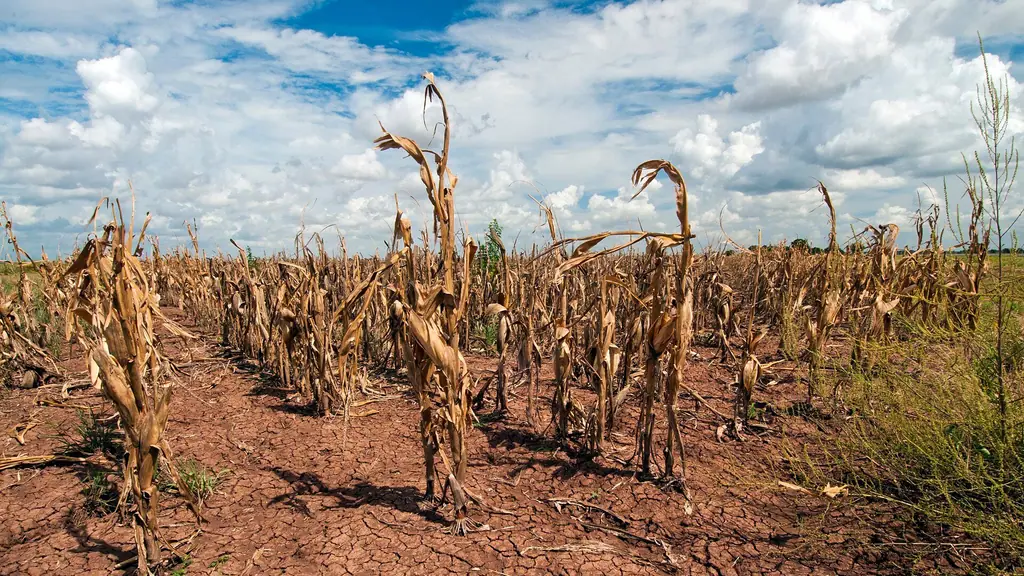
The IPCC's Sixth Assessment Report on impacts and adaptation concludes that climate change, including more frequent and intense extremes, has reduced food and water security (high confidence). Overall agricultural productivity has continued to rise, but climate change has slowed that growth over the past 50 years (medium confidence). Most negative effects have occurred in mid- and low-latitude regions, while some high-latitude regions have seen gains.
An econometric study by Ortiz-Bobea and colleagues (2021) put a number on this. Their baseline model suggests that human-caused climate change has reduced global agricultural total factor productivity by about 21% since 1961, roughly equivalent to losing seven years of productivity growth. The estimated effect was larger, around 26–34%, in warmer regions such as Africa and Latin America and the Caribbean.
Extremes and acute hunger
The IPCC finds that weather and climate extremes have exposed millions of people to acute food insecurity, with the largest impacts in parts of Africa, Asia, Central and South America, Small Islands and the Arctic (high confidence). Flood- and drought-related acute food insecurity and malnutrition have increased in Africa and in Central and South America (high confidence).
Sudden losses of food production, combined with less diverse diets, have increased malnutrition in many communities. Indigenous Peoples, small-scale food producers and low-income households are hit hardest, and children, older people and pregnant women are particularly affected (all high confidence).
Nutrition, not only calories
Climate change can also lower the quality of food. In field experiments reported by Myers and colleagues (2014), wheat, rice and other so-called C3 grains and legumes grown at the carbon dioxide levels expected around mid-century had lower concentrations of zinc and iron. C3 crops other than legumes also had less protein, while C4 crops such as maize were less affected. Because billions of people rely on these staples for micronutrients, this is a utilization problem that yield statistics do not capture. The authors note that differences between varieties suggest breeding could partly offset the effect.
What the future risks look like
The IPCC projects that climate change will put increasing pressure on food production and access, especially in vulnerable regions (high confidence). Key findings include:
- Between 1.5°C and 2°C of warming, risks to food security in vulnerable regions rise from moderate to high if there is little or no adaptation (medium confidence).
- At 2°C or more, risks become more severe, leading to malnutrition and micronutrient deficiencies concentrated in sub-Saharan Africa, South Asia, Central and South America and Small Islands (high confidence).
- Compound events matter. Above 1.5°C, more frequent concurrent extremes raise the risk of simultaneous maize losses in major producing regions (medium confidence). Heat also reduces people's ability to work outdoors, compounding crop losses (high confidence).
- Food safety is affected too, with more contamination of crops by mycotoxins and of seafood by harmful algal blooms (high confidence).
- Warming is expected to weaken soil health and pollination and increase pressure from pests and diseases in many regions (medium confidence). For more on pollination, see pollinators and food systems.
Food systems also drive climate change
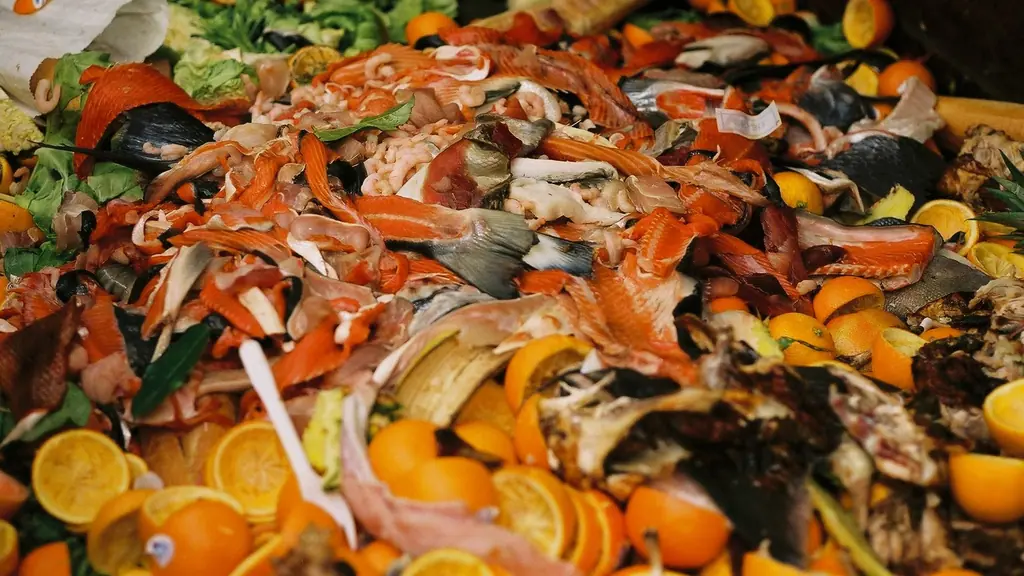
The relationship runs both ways. The IPCC Special Report on Climate Change and Land estimates that when pre- and post-production activities are included, the global food system accounts for 21–37% of total net human-caused greenhouse gas emissions (medium confidence). It also estimates that 25–30% of all food produced is lost or wasted, and that food loss and waste contributed 8–10% of total human-caused emissions in 2010–2016 (both medium confidence). Agriculture accounts for roughly 70% of global freshwater use.
This means that many responses can serve both adaptation and mitigation: reducing waste, shifting diets, and farming in ways that protect soils and water. Our article on how land use and climate change interact covers the emissions side in more detail, and reducing food loss and waste explains the SDG 12.3 target.
Responses that the evidence supports
The IPCC assessments point to a mix of farm-level, landscape and policy measures rather than a single solution.
On farms and landscapes
According to the IPCC, effective adaptation options for food systems include cultivar improvements, agroforestry, community-based adaptation, farm and landscape diversification, and urban agriculture (high confidence). Approaches that work with natural processes, including agroecological practices, can support food security, nutrition, livelihoods and biodiversity, though their effectiveness varies by context and they face barriers such as establishment costs and access to markets and knowledge.
Water management is central. On-farm water management, storage, soil moisture conservation and irrigation are among the most common and effective responses, but irrigation needs careful management to avoid depleting groundwater or salinising soils (medium confidence). See building drought resilience for practical approaches.
Across the food system
- Reduce food loss and waste, which lowers emissions and reduces pressure on land.
- Support balanced diets. The IPCC finds that adaptation strategies that reduce waste or support balanced diets bring benefits for nutrition, health and the environment (high confidence).
- Strengthen value chains. SOFI 2026 reports that activities after the farm gate account for 70–75% of what consumers pay for food, so investments in storage, cold chains, logistics and processing can lower the cost of nutritious food.
- Secure land tenure and market access. The land report finds that sustainable land management can be enabled by securing land tenure, improving access to markets and supporting collective action (high confidence).
Social protection and early warning
The IPCC also highlights policy mixes such as weather and health insurance, social protection, contingency finance and universal access to early warning systems. These do not prevent droughts or floods, but they reduce the chance that a bad season turns into a hunger crisis.
Key takeaways
- Food security has four dimensions, availability, access, utilization and stability, and climate change affects all of them.
- SOFI 2026 estimates that about 645 million people (7.8%) faced hunger in 2025, with Africa now home to the largest number.
- The IPCC finds that climate change has already reduced food security and slowed agricultural productivity growth, with the worst effects in low-latitude regions.
- Higher carbon dioxide can lower zinc, iron and protein in key staples, so nutrition is at risk as well as calories.
- Effective responses combine farm-level adaptation, waste reduction, healthier diets, social protection and secure land rights.
Frequently asked questions
Does climate change only reduce yields?
No. It also affects prices, incomes, food safety, the nutrient content of crops and the stability of supplies. The IPCC links climate extremes to increases in acute food insecurity and malnutrition, not only to lower harvests.
Are some regions benefiting from warming?
The IPCC notes that some high-latitude regions have seen positive effects on agricultural productivity. Globally, though, the net effect has been to slow productivity growth, and risks rise with each increment of warming.
Why is hunger falling if climate change is getting worse?
Hunger depends on many factors, including incomes, prices, conflict and social protection. SOFI 2026 describes the recent decline as real but fragile and uneven, and warns that weather extremes, conflict and reduced aid could undermine it.
Sources
- UN report: Global hunger levels ease for third consecutive year as regional disparities persist (SOFI 2026) FAO, 2026
- Food Security (Policy Brief, Issue 2) FAO, 2006
- Climate Change 2022: Impacts, Adaptation and Vulnerability. Summary for Policymakers IPCC, 2022
- Climate Change and Land: Summary for Policymakers IPCC, 2019
- Anthropogenic climate change has slowed global agricultural productivity growth Nature Climate Change, 2021
- Increasing CO2 threatens human nutrition Nature, 2014
How this article was made: researched and drafted with the help of AI tools, then checked against the sources listed above. Read our editorial policy. Spotted an error? Tell us.