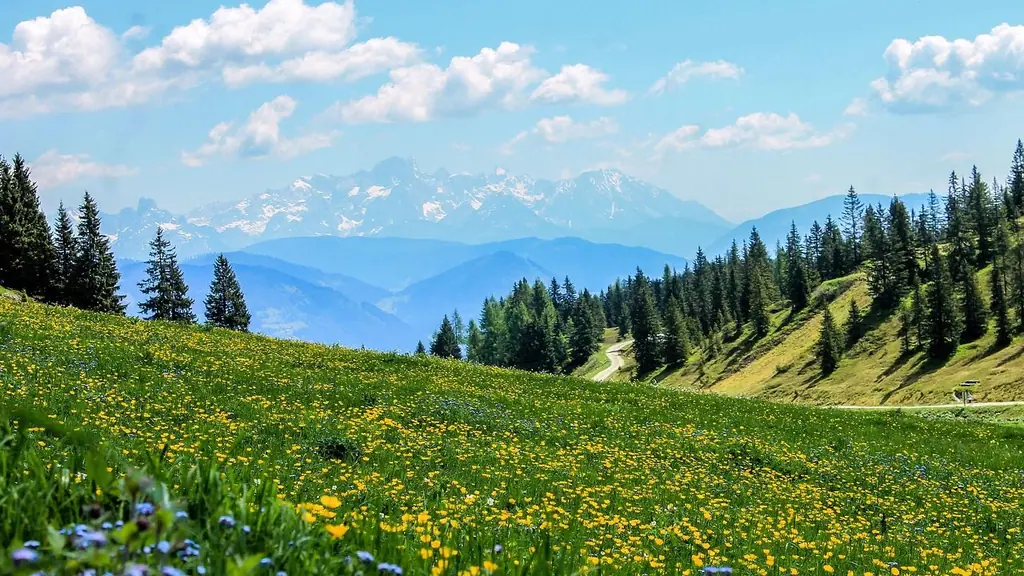
Sustainable Development Goal 15, often shortened to "life on land", is the part of the UN's 2030 Agenda that deals with forests, drylands, mountains, wetlands and the species that live in them. It commits countries to protect, restore and promote sustainable use of terrestrial ecosystems, manage forests sustainably, combat desertification, halt and reverse land degradation, and halt biodiversity loss.
This explainer sets out SDG 15's targets and indicators, explains how some of the trickier indicators are measured, and summarizes what the UN's latest progress reports say, with the year of each figure.
The targets of SDG 15
SDG 15 has nine numbered targets and three lettered targets that focus on finance and support. The official list is summarized below in our own words.
| Target | What it covers | Deadline |
|---|---|---|
| 15.1 | Conserve, restore and sustainably use terrestrial and inland freshwater ecosystems, especially forests, wetlands, mountains and drylands | 2020 |
| 15.2 | Sustainably manage all forests, halt deforestation, restore degraded forests, expand afforestation and reforestation | 2020 |
| 15.3 | Combat desertification, restore degraded land and soil, and strive for a land degradation-neutral world | 2030 |
| 15.4 | Conserve mountain ecosystems and their biodiversity | 2030 |
| 15.5 | Reduce degradation of natural habitats, halt biodiversity loss and protect threatened species from extinction | 2020 |
| 15.6 | Fair and equitable sharing of benefits from genetic resources, and appropriate access to them | None given |
| 15.7 | End poaching and trafficking of protected species, tackling both demand and supply | None given |
| 15.8 | Prevent the introduction of invasive alien species and reduce their impact | 2020 |
| 15.9 | Integrate ecosystem and biodiversity values into national and local planning and accounts | 2020 |
| 15.a | Increase financial resources from all sources for biodiversity and ecosystems | None given |
| 15.b | Mobilize resources and incentives for sustainable forest management in developing countries | None given |
| 15.c | Increase global support against poaching and trafficking, including local livelihoods | None given |
Two features stand out. First, several targets carried a 2020 deadline, so they have formally lapsed even though they remain in the framework. Second, many targets overlap with commitments under the Convention on Biological Diversity and the UN Convention to Combat Desertification, two of the three Rio conventions.
The indicators
Each target has at least one indicator, giving 14 indicator codes in total, from 15.1.1 to 15.c.1. Some, such as 15.4.2, 15.9.1, 15.a.1 and 15.b.1, have parts (a) and (b). Examples include:
- 15.1.1: forest area as a proportion of total land area.
- 15.3.1: proportion of land that is degraded over total land area.
- 15.5.1: the Red List Index, a measure of the extinction risk of assessed species.
- 15.a.1 and 15.b.1 (shared wording): official development assistance for biodiversity, and revenue and finance mobilized from biodiversity-relevant economic instruments.
How land degradation (15.3.1) is measured
Indicator 15.3.1 is calculated from three sub-indicators that the UNCCD also uses in national reporting. According to the UNCCD's reporting manual, these are:
- trends in land cover;
- trends in land productivity or functioning of the land;
- trends in carbon stocks above and below ground.
Under what the manual calls the one-out, all-out principle, a land unit counts as degraded if any one of the three shows a significant negative change, so each unit is classed as either degraded or not degraded. We explain the method and its limits in more detail in how land degradation is measured, and the policy goal behind target 15.3 in land degradation neutrality explained.
What the latest UN data show
The UN Statistics Division publishes an annual Sustainable Development Goals Report. The 2026 edition, released on 7 July 2026, concludes that across all the goals "meaningful gains have been made across the SDGs, but they remain uneven and insufficient." For SDG 15 specifically, the picture is mixed.
Forests: loss is slowing but has not stopped
According to the 2026 report's Goal 15 chapter:
- forests covered 33.3% of Earth's land in 1990 and 31.8% in 2025;
- net forest loss fell from 10.7 million hectares a year in the 1990s to 4.1 million hectares a year in 2015–2025;
- gross deforestation fell from 17.6 million to 10.9 million hectares a year over the same periods;
- forests have nonetheless shrunk by 41 million hectares since 2015.
Protected areas: gains have stalled
The same chapter reports that average protected coverage of key biodiversity areas reached 45% by 2025, up from 25% in 2000, but that progress has largely stalled since 2015.
Species: extinction risk keeps rising
The Red List Index fell from 0.80 in 1993 to below 0.75 in 2025, meaning that, on average, species are moving closer to extinction. The 2025 edition of the report noted that more than 47,000 species were threatened with extinction, including 38% of the 47,282 tree species assessed.
Land degradation: worsening
The 2026 Goal 15 chapter does not update the land degradation figure, so the most recent UN report figure comes from the 2025 edition. It reported that the global share of degraded land rose from 11.3% to 15.5% between 2015 and 2019, that at least 100 million hectares of land are degraded every year, and that around 1.5 billion hectares would need restoration to reach land degradation neutrality by 2030.
Invasive species: high and growing costs
The 2026 report estimates damages from invasive alien species at no less than US$423 billion in 2019, and says these costs have quadrupled every decade since 1970. Most countries have invasive-species provisions in plant health (98%), animal health (97%) and fisheries and aquaculture (90%) legislation, but only about 26% have dedicated invasive species laws.
Planning and finance
On target 15.9, 155 countries had established national biodiversity targets linked to development planning by 2025, according to the 2026 report. On finance, the 2025 report found that biodiversity-related official development finance rose from US$9.5 billion in 2015 to US$11.9 billion in 2023. However, flows with biodiversity as their principal objective fell by 17% over the same period, from US$4.6 billion to US$3.8 billion.
Summary scorecard
| Area | Latest UN finding | Year of data | Direction |
|---|---|---|---|
| Forest cover | 31.8% of land area | 2025 | Declining, more slowly |
| Protected key biodiversity areas | 45% average coverage | 2025 | Improving, but stalled since 2015 |
| Red List Index | Below 0.75 | 2025 | Worsening |
| Degraded land | 15.5% of land | 2019 | Worsening |
| National biodiversity targets | 155 countries | 2025 | Improving |
How SDG 15 connects to the global biodiversity framework
In December 2022, the CBD's fifteenth Conference of the Parties adopted the Kunming-Montreal Global Biodiversity Framework, with 4 goals for 2050 and 23 targets for 2030. In effect, its 2030 targets carry forward much of the agenda behind SDG 15's lapsed 2020 deadlines.
The first global review of that framework took place at the CBD's COP17 in Yerevan, Armenia, in October 2026. According to Carbon Brief's summary, the review warns that the 23 targets will not be achieved unless action accelerates, echoing the SDG data above. The underlying pressures behind these trends are explored in our guide to the five drivers of biodiversity loss.
Key takeaways
- SDG 15 has 12 targets and 14 indicator codes covering forests, land degradation, mountains, species, genetic resources, wildlife trade, invasive species, planning and finance.
- Several SDG 15 targets had 2020 deadlines that have passed. The Kunming-Montreal Global Biodiversity Framework now sets the main 2030 biodiversity targets.
- The UN's 2026 report shows net forest loss slowing to 4.1 million hectares a year in 2015–2025, but the Red List Index continues to fall and gains in protected areas have stalled.
- Land degradation, tracked by indicator 15.3.1, rose to 15.5% of land by 2019 according to the 2025 report.
Frequently asked questions
Who collects the data for SDG 15?
International agencies compile national data for each indicator and publish global estimates, which the UN Statistics Division brings together in its annual SDG report. For land degradation, for example, countries report the three sub-indicators to the UNCCD.
Why are some SDG 15 figures several years old?
Some indicators depend on satellite analysis and national reporting cycles that run every few years. Land degradation data, for example, come through UNCCD national reporting, so the latest global figure can lag the report year by several years, as the 2019 figure above shows.
Is SDG 15 on track for 2030?
Not overall. Some elements, such as slower net forest loss and more national biodiversity targets, are improving, but species extinction risk and land degradation are moving in the wrong direction.
Sources
- Goal 15: Protect, restore and promote sustainable use of terrestrial ecosystems UN Department of Economic and Social Affairs, 2026
- The Sustainable Development Goals Report 2026: Goal 15, Life on land UN Statistics Division, 2026
- The Sustainable Development Goals Report 2026 UN Statistics Division, 2026
- The Sustainable Development Goals Report 2025: Goal 15, Life on land UN Statistics Division, 2025
- PRAIS4 Reporting Manual: Strategic objective 1 UNCCD, 2026
- Kunming-Montreal Global Biodiversity Framework Convention on Biological Diversity, 2022
- COP17: Key outcomes agreed at the UN biodiversity conference in Yerevan Carbon Brief, 2026
How this article was made: researched and drafted with the help of AI tools, then checked against the sources listed above. Read our editorial policy. Spotted an error? Tell us.