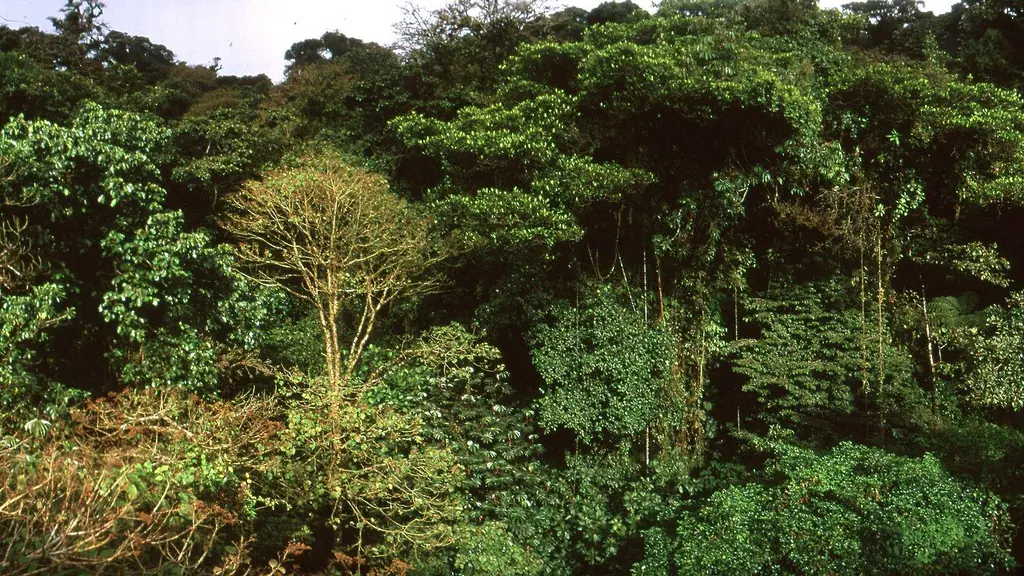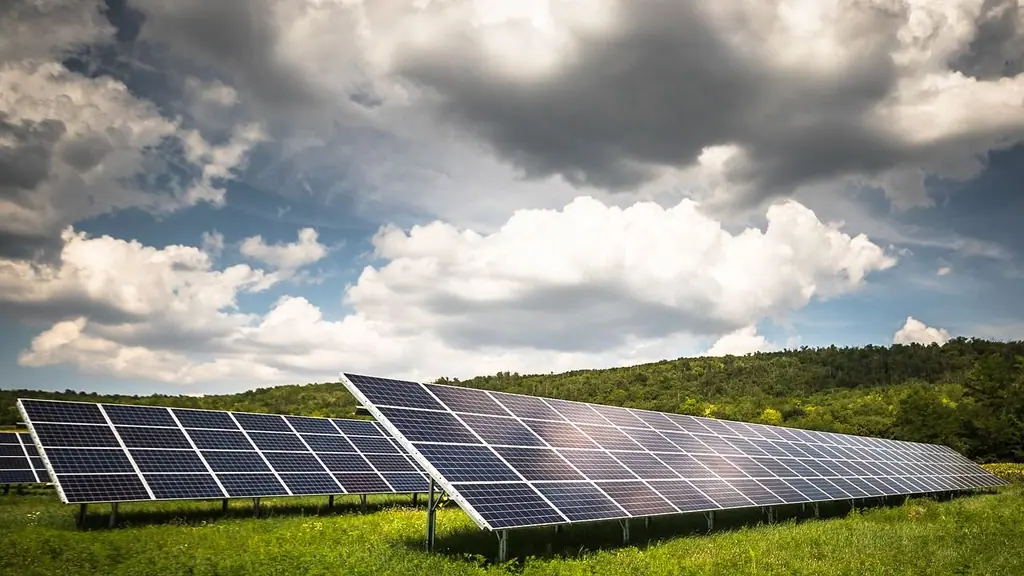
Restoring degraded land, managing forests sustainably or shifting farms to less damaging practices usually needs money up front, while the returns arrive slowly and are partly public goods. Two financial approaches are often proposed to bridge that gap: green bonds, which raise debt earmarked for environmental purposes, and blended finance, which uses public or philanthropic capital to make projects attractive to private investors.
This explainer describes how each tool works, how land projects fit in, and the limitations worth knowing about. It is general educational content and does not recommend any bond, fund or other financial product.
The financing gap they are meant to address
Private money is a small part of today's nature finance. According to Global Canopy's summary of UNEP's State of Finance for Nature 2026, about US$220 billion a year goes to nature-based solutions, roughly 90% of it from public sources and about 10% from private investment. The same report estimates that annual investment needs to rise to about US$571 billion by 2030. Green bonds and blended finance are two of the main ways policymakers hope to bring in more private capital.
What is a green bond?
A bond is a loan from investors to an issuer (a government, development bank, city or company) that is repaid with interest. A green bond is a bond whose proceeds are committed to environmental projects. In the most common type, which ICMA calls a standard green use of proceeds bond, investors have full recourse to the issuer, so repayment depends on the issuer rather than on the projects. ICMA also recognizes green revenue bonds and green project bonds, where investors are exposed to specific revenue streams or projects.
The Green Bond Principles
The most widely used guidelines are the Green Bond Principles published by the International Capital Market Association (ICMA). They are voluntary process guidelines, most recently updated in June 2025. They define green bonds as bond instruments whose proceeds, or an equivalent amount, are used exclusively to finance or refinance eligible green projects, and which align with four core components:
- Use of proceeds: money must go to eligible green projects with clear environmental benefits, described in the bond's legal documentation.
- Process for project evaluation and selection: the issuer explains how projects are chosen and which environmental objectives they serve.
- Management of proceeds: the funds are tracked so they can be traced to the projects.
- Reporting: the issuer reports on how the money was allocated and, ideally, on its expected impact.
The principles also make two key recommendations for transparency: publishing a green bond framework, and obtaining an external review.
Where land fits in
The Green Bond Principles list indicative project categories. Several are directly relevant to land: environmentally sustainable management of living natural resources and land use (including sustainable agriculture, climate-smart farm inputs such as drip irrigation, sustainable forestry, afforestation and the restoration of natural landscapes); terrestrial and aquatic biodiversity conservation; sustainable water management; and climate change adaptation.
In practice, however, land projects are often small, dispersed and slow to generate cash, so they tend to be financed indirectly, for example when a development bank or government issues a large green bond and allocates part of the proceeds to agriculture, forestry or watershed programmes.
How big is the market?
The European Investment Bank describes its 2007 Climate Awareness Bond as the world's first green bond. The market has grown enormously since. In its report on 2025, published in March 2026, the Climate Bonds Initiative recorded USD 8.1 trillion of cumulative green, social, sustainability and related labelled debt, of which USD 6.8 trillion met its own alignment criteria. These are the initiative's own tallies under its methodology, and other trackers report different totals.
Standards beyond the voluntary principles
Because the market relies heavily on self-labelling, regulators have started to add stricter options. The EU's European Green Bond Standard, set out in Regulation (EU) 2023/2631, is voluntary for issuers but ties the "European green bond" label to the EU taxonomy's detailed criteria for green activities. External reviewers under the standard are supervised by the European Securities and Markets Authority.
What is blended finance?
Blended finance is not a product but a way of structuring deals. The blended finance network Convergence defines it as the use of catalytic capital from public or philanthropic sources to increase private investment in sustainable development. It identifies four common structures:
| Structure | How it works |
|---|---|
| Concessional capital | Public or philanthropic investors accept below-market terms (for example, a first-loss position) to lower risk or cost for private investors. |
| Guarantees and risk insurance | Public or philanthropic actors guarantee or insure part of the investment on below-market terms. |
| Technical assistance funds | Grant-funded facilities help prepare projects or strengthen them after investment. |
| Design-stage grants | Grants pay for the design and preparation of a transaction. |
A land-sector example: the LDN Fund
The Land Degradation Neutrality Fund, managed by Mirova and launched at the UNCCD's thirteenth Conference of the Parties in Ordos, China, is an impact investment fund that blends public, private and philanthropic resources. It provides long-term, non-grant finance for commercially viable projects in sustainable agriculture, livestock management, agroforestry and sustainable forestry, and channels some capital through local financial institutions to smallholders and small businesses.
A separate technical assistance facility, managed by IDH with support from the Global Environment Facility and the French Development Agency, helps prepare transactions and reduce risk. Public anchor investors listed by the UNCCD include the European Investment Bank and the French Development Agency, alongside private and philanthropic investors. Our historical resource on the Land Degradation Neutrality Fund traces its origins, and our explainer on land degradation neutrality covers the policy goal it was designed to serve.
Limits and risks
Both tools are useful, but they are not magic, and the evidence base for their environmental impact is still developing.
For green bonds
- Labels are not outcomes. The Green Bond Principles govern process and disclosure. They do not by themselves guarantee that a project is better than what would have been financed anyway.
- Refinancing. Proceeds can refinance existing projects. ICMA recommends that issuers disclose the share of refinancing, but new money for new projects may be smaller than headline issuance suggests.
- Greenwashing risk. Self-labelled bonds with weak frameworks, no external review or poor reporting can mislead investors. Stricter standards such as the EU's aim to reduce this risk.
- Mismatch with land projects. Most green bond money goes to large, revenue-generating assets. Small-scale restoration rarely fits without an intermediary such as a development bank or a dedicated fund.
For blended finance
- Mobilization is hard to measure. It is difficult to show that private investors would not have invested anyway, and therefore that public subsidy was necessary.
- Bias towards revenue. Blended structures work best where projects can repay investors. Conservation that yields no cash flow still depends largely on grants and public budgets.
- Transparency and local participation. Convergence's State of Blended Finance 2025 flags the lack of private-sector mobilization strategies, underrepresented local investment, limited transparency and an underdeveloped ecosystem as barriers to scaling.
- Who bears the risk. When public money takes the first loss, taxpayers or donors absorb failures. That can be justified, but it should be explicit.
How to read a green or blended deal critically
Whether you are a student, journalist or practitioner, a few questions help separate substance from labels:
- What exactly will the money pay for, and is that described in public documents?
- Is the financing new, or does it refinance existing activities?
- Has an independent party reviewed the framework, and is post-issuance reporting published?
- What environmental indicators will be reported, and how will they be verified?
- For blended deals, what share is public or concessional, and what would have happened without it?
- Who on the ground (farmers, pastoralists, communities) benefits, and were they consulted?
For a wider view of how these tools sit alongside public funds, payments for ecosystem services and debt-for-nature swaps, see our overview of environmental financing mechanisms.
Key takeaways
- A green bond is debt whose proceeds are committed to environmental projects. ICMA's voluntary Green Bond Principles set out four core components: use of proceeds, project selection, management of proceeds and reporting.
- Sustainable land use, forestry and biodiversity conservation are recognized green project categories, but land projects are usually financed indirectly through larger issuers.
- Blended finance uses concessional public or philanthropic capital, guarantees or grants to draw in private investors. The LDN Fund is a land-sector example.
- The main risks are weak additionality, refinancing, greenwashing and limited transparency. Stricter standards and good reporting help, but they do not replace evidence of results on the ground.
Frequently asked questions
Are green bonds riskier or safer than ordinary bonds?
It depends on the structure. For a standard green use of proceeds bond, ICMA describes full recourse to the issuer, so repayment depends on the issuer, as with its other unsecured debt. Revenue and project bonds work differently. In every case the green label concerns how proceeds are used and reported, not repayment. This article does not offer investment advice.
Can a farmer or community group issue a green bond?
Rarely directly, because bond issuance has high fixed costs and requires scale. Small land projects usually reach bond markets indirectly, through governments, development banks, local financial institutions or pooled funds.
Is blended finance the same as impact investing?
Not exactly. Impact investing describes investors who seek measurable social or environmental results alongside a financial return. Blended finance is a deal structure in which public or philanthropic capital takes on extra risk or cost to attract private investors. An impact fund may use blended structures, as the LDN Fund does.
Sources
- Green Bond Principles: Voluntary Process Guidelines for Issuing Green Bonds (June 2025) International Capital Market Association, 2025
- Evaluation of the EIB's Climate Awareness Bonds European Investment Bank, 2021
- Sustainable Debt Global State of the Market 2025 Climate Bonds Initiative, 2026
- European green bond standard European Commission, 2026
- Blended Finance Convergence, 2026
- State of Blended Finance 2025 Convergence, 2025
- Land Degradation Neutrality Fund UNCCD, 2026
- State of Finance for Nature 2026 report launches Global Canopy, 2026
How this article was made: researched and drafted with the help of AI tools, then checked against the sources listed above. Read our editorial policy. Spotted an error? Tell us.